


In a small circle of about a dozen people, a breathwork exercise is being led in German. I don’t speak the language, but I can follow the context clues. We reach our hands outward like open stars, twisting then drawing them back to our hearts.
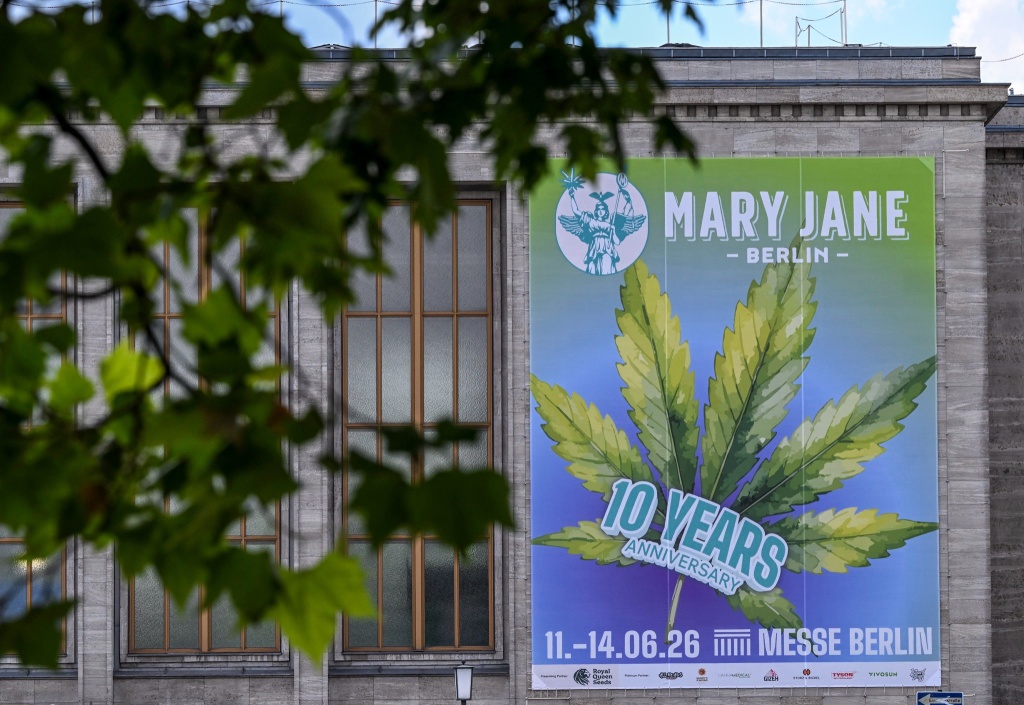
My group is in a “relaxation room” at Mary Jane Berlin, an annual event in Berlin, Germany, that has blossomed into the world’s largest cannabis festival. All around us, the weed world pulses with energy and noise. In the stillness of the meditation practice, I begin to get a lump in my throat and tear up from the weight of it all.
“The world is coming together for a plant, there is a universal language, and it is nature. I’m high with strangers in a foreign country. In the spiderweb of life, the cannabis flower is the connector.”
RELATED: The next cannabis “green rush” may not happen in America
The Age of Humboldt
Promoting a philosophy called Transcendentalism, the American poet Ralph Waldo Emerson believed that nature spoke a spiritual language that transcends human speech. In his 1836 essay, Nature, Emerson writes:
A subtle chain of countless rings
The next unto the farthest brings;
The eye reads omens where it goes,
And speaks all languages the rose.
Emerson was inspired by the German naturalist Alexander von Humboldt and called the 19th century “the age of Humboldt.” Humboldt pioneered the concept of nature as a “web of life.”
In 1949, Berlin was the epicenter of the Cold War, and its university was renamed to honor the naturalist and split into two places: Humboldt University of Berlin in East Berlin and the Free University of Berlin in West Berlin. Before that, in 1933, during the rise of the Third Reich, the plaza in front of the university was the site of Nazi students participating in a book burning and setting fire to 20,000 books that threatened the ideas of their “Aryan race.”
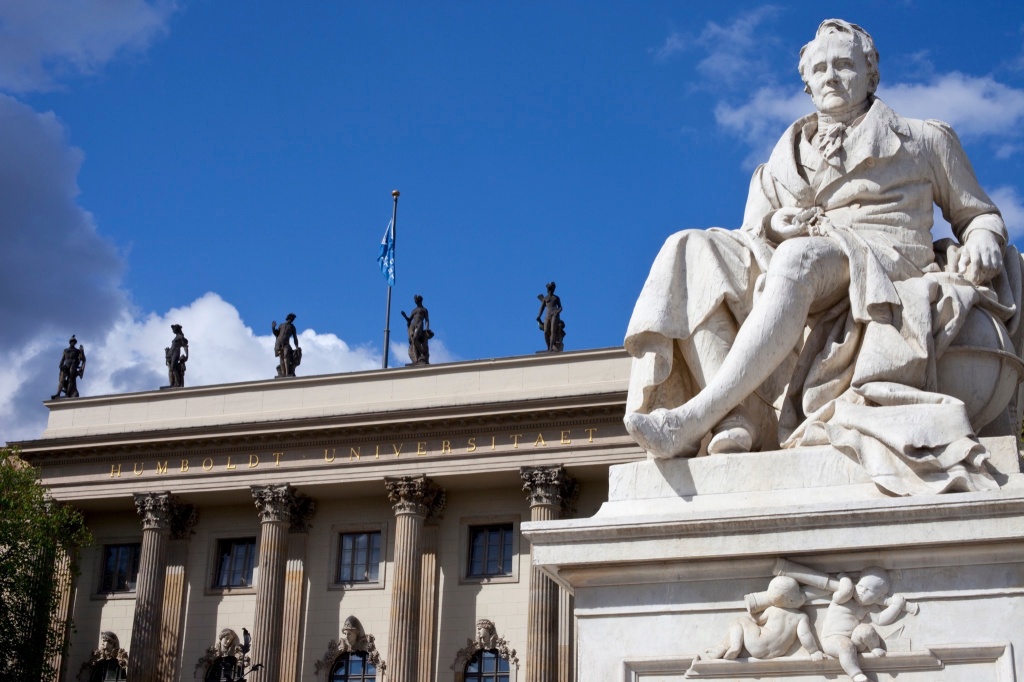
Back at Mary Jane Berlin, the Humboldt Seed Company (HSC)—based in California’s famous cannabis cultivation region, also named after the German naturalist—released seeds in collaboration with the family of reggae superstar Bob Marley. After the show, they took one of their collaborators, Dr. Machel Emanuel, a botanist at the University of the West Indies in Jamaica, and cannabis cultivation expert Ed Rosenthal to meet with researchers at Humboldt University in Berlin.
I’m staying in an apartment sponsored by HSC in the Sophie-Charlotte-Platz neighborhood, and most mornings in Berlin, I visit the organic grocery co-op LPG Biomarkt across the street. The morning of the University meeting, I run into Emanuel and the HSC crew getting breakfast.
RELATED: Sungrown tells a story: Harvest Report shows California’s cannabis shift
Cannabis in Germany was legalized for medical patients in 2017 and adults in 2024. Within the rules, people 18 and over are allowed to grow three plants and possess 50 grams of cannabis (either flowers or concentrates) at home. The law also allowed for cannabis social clubs, which can grow weed for up to 500 members.
When I see the HSC crew, I excitedly tell them about the cannabis seeds that are sold in the grocery store right before the checkout counter and in the section with other seed starters and plants.
“A three-month-long impulse buy,” jokes HSC Co-Founder and Chief Science Officer Ben Lind.
In 1978, a New York Times book review of Rosenthal’s book The Marijuana Grower’s Guide predicted: “after legalization, elementary botany classes could use this guide as a casebook for common plants.”
It appears this is now true.
Smoking & Sightseeing Along the Spree
On a boat ride on the Spree River, the main river that travels through Berlin, I meet Paul Barta, who was born in the Bavarian City of Regensburg but now lives in Berlin. He’s sharing a Sweatband OG from Karma Genetics, a seed company based in the Netherlands, that he grew indoors in a 64-liter pot of living soil.
“The legal part is still not too easy in Germany because you’re only allowed three plants,” he says. “At least you’re allowed some, but yeah, you’re quite strictly regulated.”
Barta also shares two types of dry sift hash: one from trim cured for three months and the other from cured flower. Both are Pink Fresca from Karma Genetics.
RELATED: Six European vacation destinations perfect for cannabis consumers
Down on the lower deck, Ua Aloha Maji plays the ukulele. Maji is a part of Sticky Fingers Seeds based in Maui, Hawaii, and is wearing a lei on his head made of lāʻī, or ti leaf.
“I made the lei over there by one of the canals through the city,” Maji says. “I sat there, and a red fox came up and said ‘hi,’ and a raven watched the whole time and was talking to me for a bit. When you make lei, you’ve gotta weave in the energy of the space and weave in the hopes and the protection value of the space.”
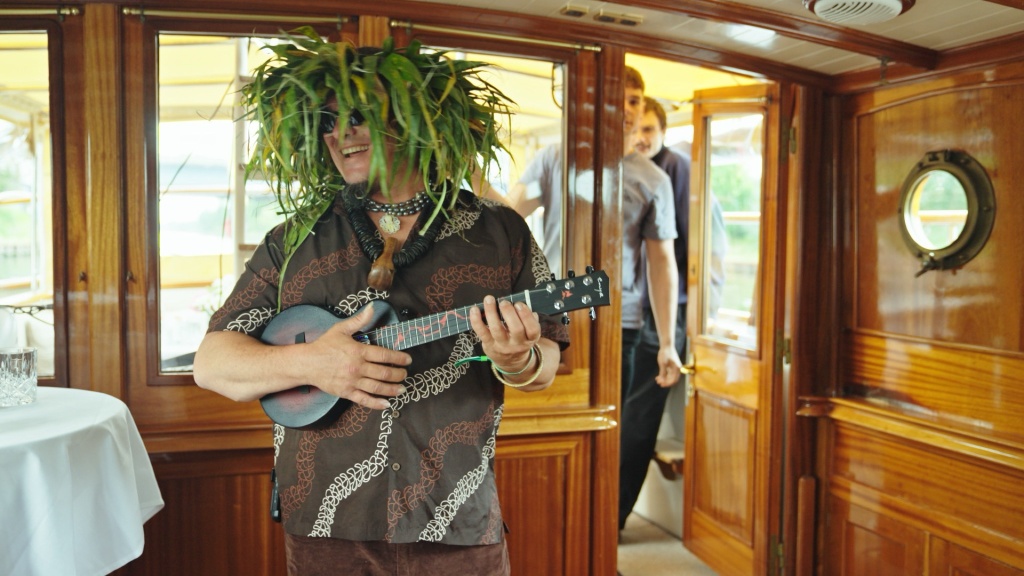
Lono is also associated with rain, which falls in heavy bursts during the Mary Jane festival that stretches over four total days in mid-June.
“Lono is the god of fertility and agriculture, and Lono is personified by the lei I wore here as well,” Maji says. “Agriculture, it’s a seed… [Cannabis] is planting a medicine that you can grow in your own yard.”
The Great Garden of the Universe
Since Germany reunified in 1990, Berliners have built parks in the city’s ruins. They have also retained their green spaces. A large park called the Tiergarten was once the hunting grounds of Prussian kings and is called the “green lungs” of the city.
At a HSC dinner in East Berlin, a fellow guest points out the trees, willows, and lindens, as well as the older buildings, which are cut in half, indicating that the whole area where we were dining had been bombed in World War II. The parks, he says, show that something good can come out of destruction.
The dinner is hosted by Lucas Huemer, an Austrian-born chef with a large red mustache who goes by The Baked Walrus on Instagram. Most of the dishes are cooked over wood fires, which are located outside on the rooftop of the restaurant space.
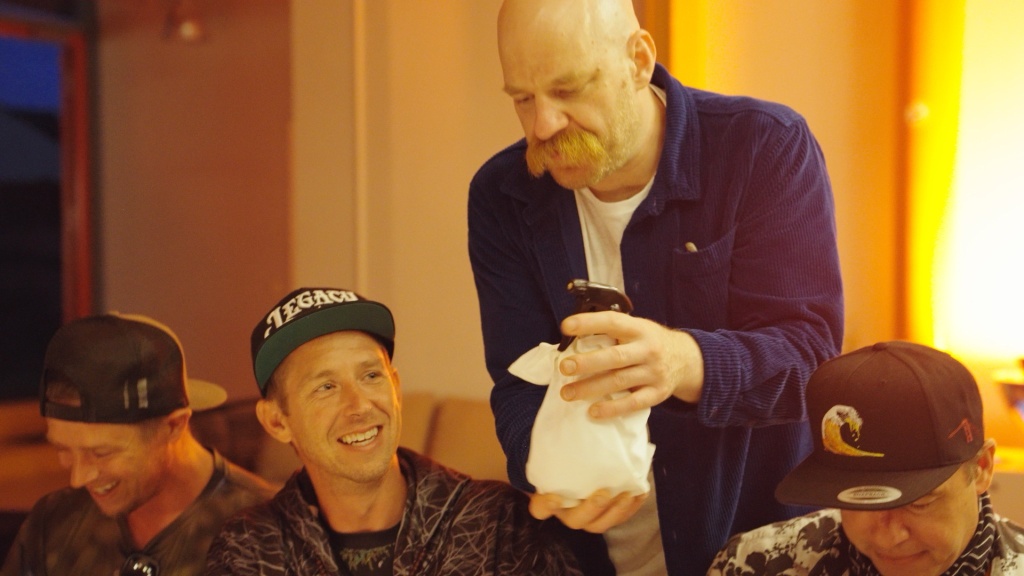
Certain elements of the dinner are infused with terpenes. The star of the night is Huemer’s famous burnt Basque cheesecake, topped with delicate white elderflowers and spritzed with an elderflower spray that’s been infused with HSC’s signature strain, Blueberry Muffin.
“Just like you make lavender essential oil, you make cannabis essential oil, which is just an aromatic hydrocarbon,” Lind says. “It’s the smell, the essence. I call it ‘the dawn’s light’ because it’s almost like not even of this world.”
RELATED: The ‘drama weed’ effect: How Toad Venom became 2026’s hottest strain
I’m seated next to Frank Halgert of Feelgood Farmers. Halgert lives in a German town of less than 1,000 people about three hours away and offers a service where he travels to cannabis social clubs across the country to wash hash. One course of the dinner is grilled white asparagus, which Halgert says is in season for a short period.
I’ve already had the dish once on this trip, when Rosenthal explained that the asparagus is grown by covering the crop with hay so it can’t develop chlorophyll. The white asparagus season ends on June 24, which is a midsummer festival called Johannistag, or St. John’s Day in Germany.
Ancient folklore holds that plants reach their peak in magical, protective, and medicinal potency on this day. Celebrations include wreath building and bonfires to cast out spirits.
Communion with a Witch
A rising star in the cannabis community is Shelly Rogers Johnson, known online as A Good Witch. She’s at the Mary Jane show wearing a conical crown, a purple witch hat, and taking photos with fans. In her Instagram bio, Rogers Johnson describes herself as “your Internet G’ma dropping daily life advice,” and it’s understandable why she’s built such a large following.
She smiles with her eyes when she tells me, “This developmental cycle is crone. I’d rather be a witch.”
“I’m trying to relieve the cumulative suffering of man,” Rogers Johnson says when I ask her what she’s doing at Mary Jane. “We beat ourselves up, we divide ourselves. I’m trying to get people to look within and find their spirit united with the divine.”
View this post on Instagram
After a battle with cancer, Rogers Johnson recreated herself as an artist. She was selling her paintings on the main street in Ventura, California, where she’s based, but when the COVID-19 pandemic hit, she had to convert from street sales to online sales. When her paintings didn’t gain much traction online, her husband said, “Let’s sell you,” and Rogers Johnson created her persona as a good witch.
“Everybody’s just going so fast, they’re not processing the information that they’re getting, and I think that’s the value of weed,” she says. “At age 18, I sat out on my porch, and I said, ‘That’s what this is for, for me to think about how I feel, what I did, what I learned from it, and what’s my plan?’ It’s just sitting back long enough to reflect on your behavior and on your creation.”
Being a witch, she says, means she is able to manifest the life of her dreams.
Breaking Down Walls
Mary Jane takes place in a city defined by its borders and walls. During an influencer event hosted by Puffco on the night before the festival, Mary Bailey, the managing director of Last Prisoner Project, passes around her phone for people to speak with Ishmael Lira, who is serving a life sentence in the U.S. for a federal cannabis offense.
Lira’s spending his 49th birthday at a federal prison in Terre Haute, Indiana, and when I ask him how he’s doing, he jokingly says he’s enjoying all the wonderful amenities of a world-class resort.
“He’s a really funny guy, and somehow, despite all these challenges he’s had in life, he’s retained his positive vibe and his sense of humor,” Bailey says.
RELATED: An industry built by showing up—and why we can’t stop now
Within a bio that he wrote, Lira says he’s on a journey “to become a better ‘me’ that molds, shapes, and tempers the qualities and character I wish to exude after being incarcerated for 20 years.”
Then he quotes Leo Tolstoy, the author of War and Peace, which was among the thousands of books burned in Nazi book burnings in 1933.
“I strive to live by Leo Tolstoy’s words, ‘Everyone thinks of changing the world, but no one thinks of changing himself,’” Lira writes.
Cannabis is now a worldwide industry, but many people who shaped what became a global commodity remain stuck in the web cast by prohibition. A famous quote by Humboldt reads: “There are three stages of scientific discovery: first people deny it is true; then they deny it is important; finally they credit the wrong person.”
Bailey says that events like Mary Jane offer cannabis prisoners hope.
“I started going to international cannabis conferences a couple of years ago, while I was doing this Last Prisoner Project work, and when I would tell the prisoners that I was communicating with, where I was going, and what I was doing. They’re like, ‘What?’ and they’re fascinated by it, and it excites them because they’re stuck in a cell,” she says. “Things are changing in cannabis across the world, and it really gives them hope that things will be changing for them too.”