


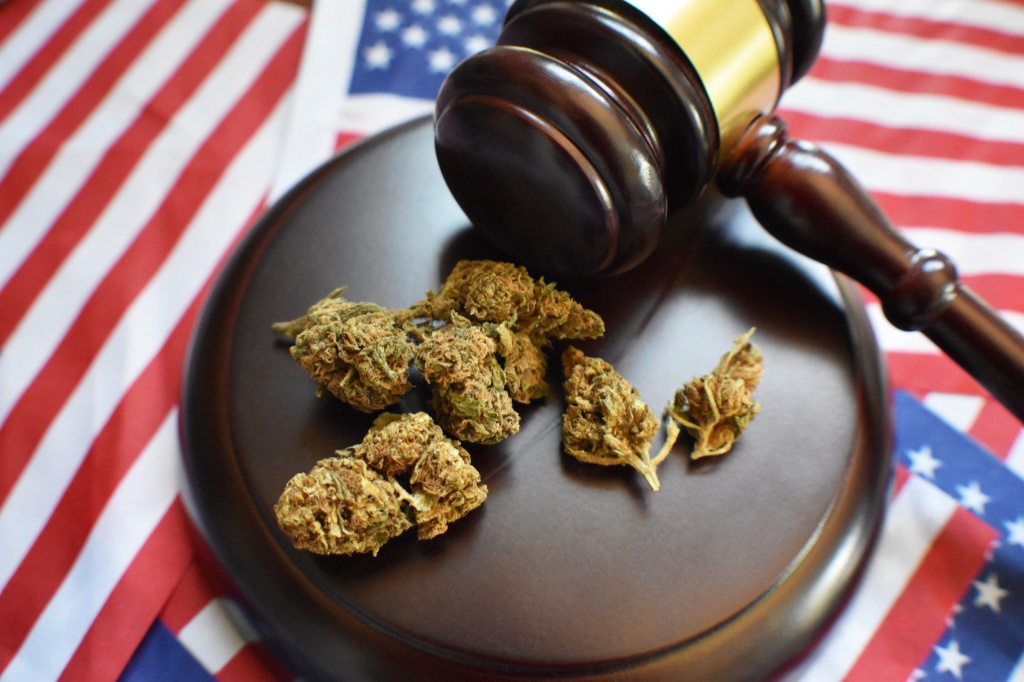
The Drug Enforcement Administration’s (DEA) marathon hearing on whether to move cannabis from Schedule I to Schedule III has officially concluded, but the federal rescheduling process is still far from over.
The proceedings centered on the Justice Department’s proposal to reclassify cannabis, which is based on the Department of Health and Human Services’ finding that the plant has a currently accepted medical use in the United States. State-legal medical marijuana has already been moved to Schedule III, but that does not include adult-use.
RELATED: The cannabis vape debate just got more complicated
Following the conclusion of the DEA’s cannabis rescheduling hearings, the process now shifts from witness testimony to written filings. On July 16, Chief Administrative Law Judge Derek Julius issued an order giving participating parties until August 17 to submit optional post-hearing briefs and proposed corrections to the hearing transcripts.
The post-hearing briefs may include closing arguments and responses to issues raised during the proceedings. Parties are not required to file one, however, and choosing not to submit a brief won’t count against them, according to Julius’s order. Proposed transcript corrections are limited to transcription errors, not to changes in testimony.
Once those filings are complete, Julius will prepare a recommended decision on the proposed rule to move cannabis to Schedule III under the Controlled Substances Act. That recommendation is advisory only. The final decision on whether to move forward with rescheduling will ultimately rest with DEA Administrator Terry Cole. Julius did not provide a timeline for when either his recommendation or the agency’s final decision will be issued.
RELATED: How a little-known federal rule could make cannabis seeds illegal
If approved, rescheduling would move cannabis from Schedule I to Schedule III, recognizing accepted medical use while keeping it federally controlled. The change would not federally legalize cannabis, but it could increase research and would eliminate the federal tax burden created by IRS Code Section 280E for state-licensed cannabis businesses and could expand opportunities for research.
For now, the testimony has ended, but one of the most closely watched cannabis policy changes in decades remains several steps away from a final decision.