


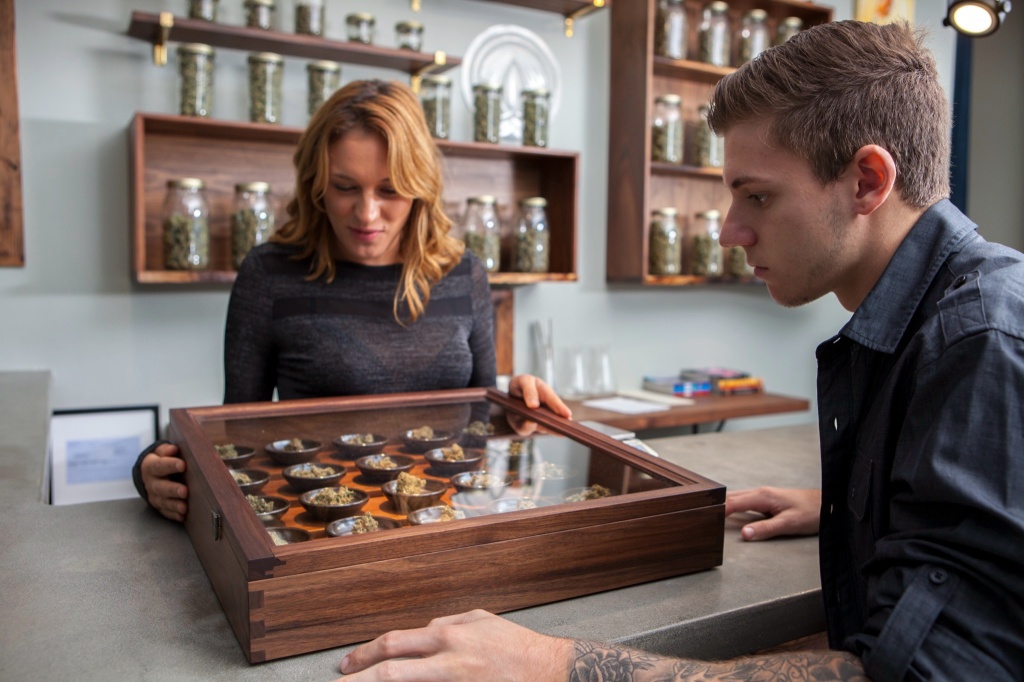
Being a first-time dispensary shopper can feel intimidating. Step inside a cannabis shop and you’re surrounded by unfamiliar terms, hundreds of products, and THC percentages that you may have no idea how to understand.
The good news is budtenders aren’t there to judge your questions—at least, they shouldn’t be. In fact, a lot of them wish more people would ask them.
We spoke with a few budtenders to find out what they wish every first-time shopper knew before stepping up to the counter.
RELATED: Budtenders spill: The weirdest questions customers ask
Don’t shop by THC alone
If there was one message every budtender we interviewed agreed on, it’s to stop chasing the biggest THC number.
“THC percent is not as important as you think,” said Aidan Israel, lead budtender at Housing Works Cannabis Co. “Try to focus more on your needs during and after consumption and base your purchase off a strain that will suit these needs. The strongest potency doesn’t always mean it will be your perfect fit.”
That sentiment was echoed across the board.
“I see customers come in loving a strain I show them, but immediately reject it when they see THC percentages,” said California-based budtender Marie Vallejo. “Take a second to think about the other essential cannabinoids and terpenes before chasing a high you’re trying to replicate. Your endocannabinoid system might be lacking in CBD, CBN, CBG, etc. That’s how you know that it’s time to balance your system if increasing the THC isn’t working. Focusing on THC percentages alone makes the shopping experiences more difficult.”
RELATED: Dear Labby: What is THC inflation?
Cade Payton, a budtender at Social Dispensary Golden in Colorado, emphasized the importance of letting consumers fully engage with the products through all their senses.
“It’s helpful to smell the plant. At Social, we still pride ourselves on offering deli-style flowers wherever we can,” Payton said. “That experience allows our customer to see and smell the flower. We encourage customers to take their time and experience as many strains as they’d like before making a selection. We jokingly tell customers, ‘The nose knows.’”
Your budtender isn’t trying to sell you the most expensive product
Premium price tags can be tempting, but several budtenders stressed that quality isn’t determined by cost alone.
Israel said he’s seen $25 eighths outperform flower marketed as “top shelf,” and according to Soriano, “Just because a product is priced high doesn’t mean it equates to it also being ‘top quality.’”
Instead of shopping by hype alone, consider the grower, terpene profile, freshness, and your own preferences.
Ask questions…and be kind
First-time shoppers sometimes worry about asking “dumb” questions, but Payton says there really aren’t any.
“We are only here to help the customer have the best experience possible,” he said.
Whether you’re curious about tinctures, dosing, or the difference between live resin and rosin, taking a few extra minutes to chat can help you leave with a product you’ll actually enjoy.
RELATED: Do cannabis users pay more for insurance? What to know
Vallejo also hopes customers remember there’s a real person behind the counter.
“Always be nice to your budtender. If you can’t afford it with tax, go for option B. Don’t take your frustrations on your budtender if you want to spend only $20 for an ounce of bud,” Vallejo said.
Start low and enjoy the experience
Cannabis isn’t a race.
Soriano recommends starting with a low dose and gradually increasing as needed, admitting she’s even “greened out” before. The experience is different for everyone, and finding what works for your body takes a little experimentation.
And that’s perhaps the biggest takeaway of all: your budtender isn’t there to quiz you. They’re there to help you discover what works for you.