


Outdoor cannabis cultivation in California is experiencing a shift in terms of where it’s grown. Traditionally found on small farms in Northern counties where geographic isolation led to a natural cover from authorities, the bulk of outdoor herb in 2025 was attributed to large license holders in Southern California. This geographic change in where cannabis is cultivated comes nearly a decade into California’s legal adult-use marketplace.
RELATED: Drag icon Laganja Estranja’s new weed strain is loud, citrusy, and Pride-ready
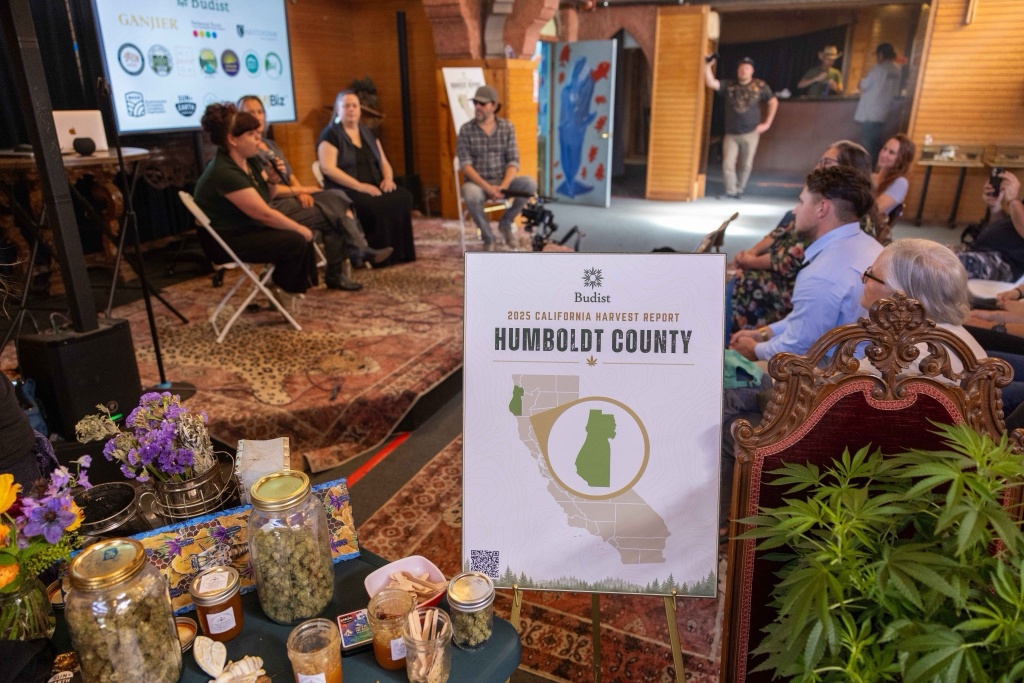
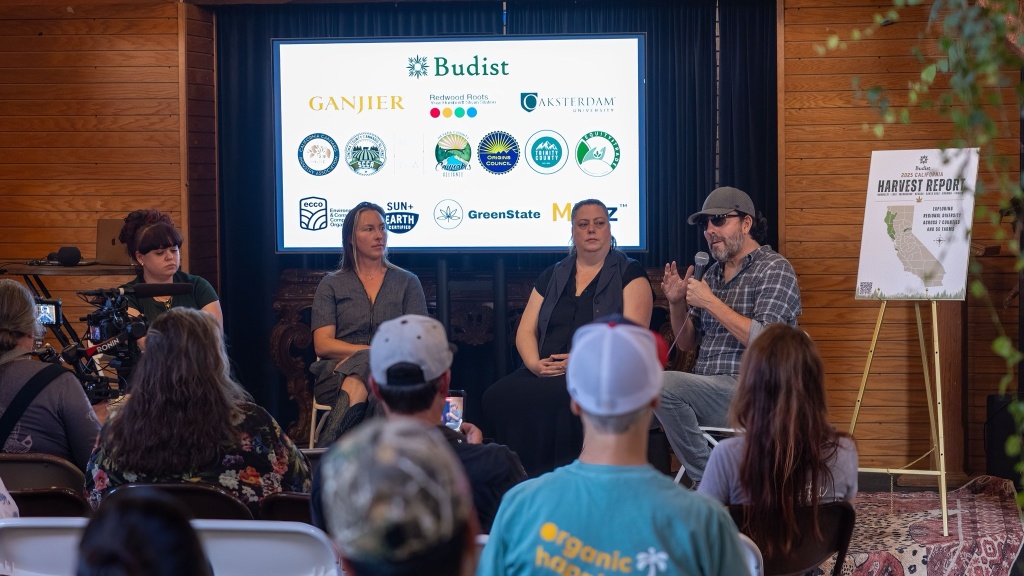
To boost a craft market for flowers grown in spots including the world-recognized Emerald Triangle, Budist—a cannabis review platform—presented its 2025 Harvest Report at an event held in Berkeley, Calif., on May 16. Highlighting the regional identity of weed-growing regions, the report looked at seven counties in Northern California and showed that while outdoor cultivation is increasing, the percentage of outdoor licenses held by these counties has dropped overall.
“Counties with more and larger licenses have eaten away at these historical cultivation counties’ share of the outdoor cannabis harvest,” the report reads.
Harvest Report co-author Caleb Chen said that every county the report examined—Humboldt, Trinity, Mendocino, Sonoma, Lake, Nevada, and Santa Cruz—lost its share in the total California cannabis market in 2025, with the exception of Mendocino.
“There are other counties in California that are staking all sorts of licenses,” Chen said while later highlighting Santa Barbara and Kings counties as areas that are growing the bulk of outdoor cannabis flowers in the state.
Using data points from the California Department of Cannabis Control (DCC), the report shows that in 2025, the licensed outdoor harvest accounted for roughly 47 percent of the harvested wet weight of cannabis in California. That year, the seven counties featured in the report accounted for less than 29 percent of the sungrown supply.
“For contrast, in 2020, the outdoor harvest accounted for 38 percent of all reported harvested wet weight in California,” the report reads. “Back then, these seven historic cultivation counties accounted for just over 50 percent of the state’s total outdoor harvest.”
RELATED: From Humboldt to the Heartland: Emerald Triangle cannabis finds new life
Numbers from the DCC show that the state produced over 5 million pounds of cannabis by weight within the outdoor and mixed-light licenses in 2025. Spikes in production are seen in July, when the Spring and Summer light-dep runs come in, and October, when the full-term outdoor plants are harvested. The DCC doesn’t compile data that would reveal the most popular strains that were grown in 2025. It’s information that’s also not included in the harvest report, which Chen estimates includes only five percent of the licensed farms in the areas it features.
“Trust it’s on my wishlist to quantify, but the data is just too fugazi to do so properly,” Chen wrote in an email. “We do share which cultivars each farm felt performed best on their farm, though! Since we only surveyed a small percentage of licensees in each county, I don’t feel comfortable making any sort of sweeping claims on which cultivars were more popular when or where.”
Bringing Sungrown Into the Light
Inspired by the annual grape crush reports in the wine industry, the 2025 Harvest Report represents the second iteration of Budist compiling outdoor cannabis harvest data. The first report, covering the 2024 session, was released earlier this year. Chen said that this time, a big surprise came in the difficulty he found in getting farmers to participate, something which he attributes to authorities previously using survey information against small farms.
Overall, the summer of 2025 was colder and wetter than 2024. Areas in the report saw anywhere from twice as much rain to six times as much rain from 2024 to 2025. Wet weather, Chen said, led a lot of producers to harvest their plants early. Harvesting early reduces the chance of mold, but also means the flowers won’t reach peak ripeness, and lowers the percentages of the flowers’ cannabinoids and terpenes overall.
“We still see farmers that are growing from seed,” Chen said, adding that another trend showed preferences within the counties to work with nurseries and cannabis genetics that are proven to work in their areas.
“A Culture of Connoisseurship”
The main concept behind the Budist platform, according to its co-founder and CEO Jocelyn Sheltraw, is “creating a culture of connoisseurship.”
“We’re focused a lot on the craft market because that’s where we feel that there’s a story to tell,” Sheltraw said. “This is our heritage. This is our culture.”
RELATED: From blinkers to video games: California targets next-gen weed vapes
Claudio Miranda, co-founder and COO of Budist, agreed.
“When it comes to flower, to Joceyln’s point, there’s a richer story to tell because you have regionality and you can start to talk about terroir and appellations and things that the report covers,” Miranda said.
While the report does include hard numbers in terms of production and plant counts, it also looks at aspects of terroir, aka the unique environmental factors of specific growing regions.
Fruit & Gas
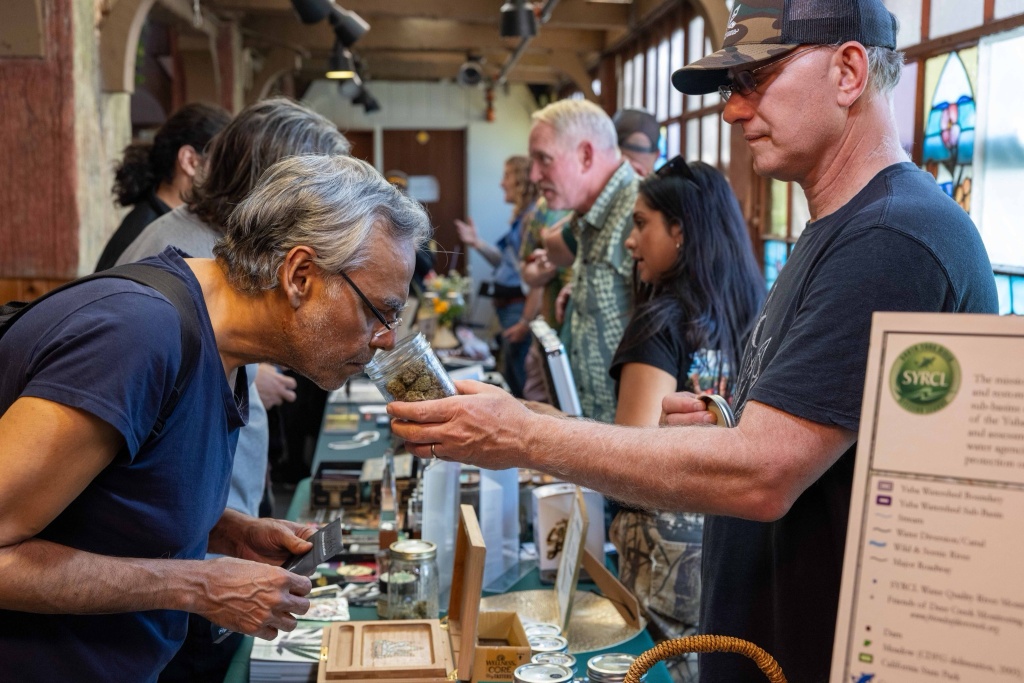
At the launch event held at the Chapel of the Flowers, a selection of farmers in the report were present to showcase the flowers of the 2025 harvest. One of the selections from Mendocino County-based Greenshock Farms, a Pink Rider, burst with the pungent aroma of a ripe honeydew melon.
Greenshock’s Skunk Gas smelled like straight motor oil. Trinity County’s Sol Spirit also stood out with a Burmese Mimosa, which smelled like sweet grapefruit.
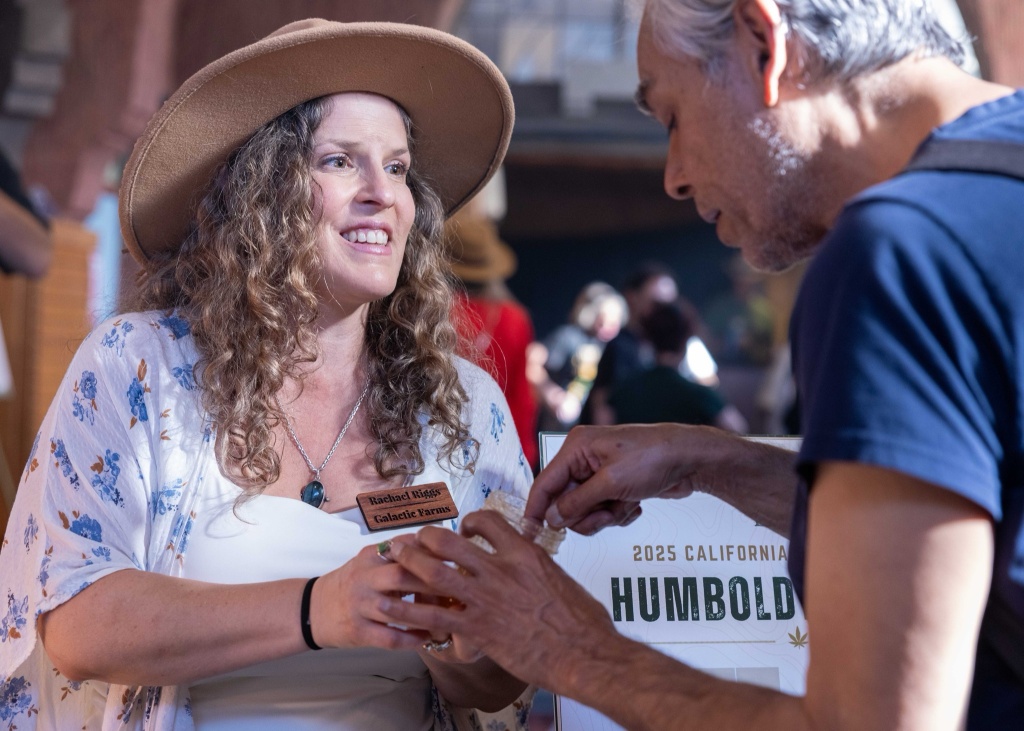
Rachael Riggs, who runs Galactic Farms in Humboldt County alongside her husband, Indy Riggs, was sampling honey she grew on their farm alongside whiffs of some of their signature strains, including their version of an OG Kush phenotype, Ogre Kush, that they’ve named Under the Stars. Also present was Tina Gordon of Moon Made Farms of Southern Humboldt County with selections such as Peace and Love, a cross of Hawaiian Fanta and Pineapple Wonder.
Diana Garman, the executive director of the Nevada County Cannabis Alliance, manned a table that showcased her organization, which represents sungrown cannabis producers like Cole Chapman’s High Hill Cannabis, a farm that utilizes living soil near downtown Nevada City.
All of the farms at the Budist gathering promoted their experience and cultivation methods as a way to boost the reputation of their flower. With weed, a customer’s value expectation involves not only how much money they spend, but how the weed makes them feel, said Ramon Garcia, co-founder of the Equity Trade Network, a collective of legacy and social equity cannabis operators.
RELATED: Storage is sexy: Get to the Bag shows how pot packaging transcribes cannabis culture
“The struggle between corporate America and the legacy operators that you’re seeing here is happening because when you start doing something just for money, you cut corners,” Garcia said.
“What we do outdoors in living soil, it can’t be duplicated,” he continued. “And for those small farmers up there that have been doing this for 20-30 years, they know their soil, they know their micro-climates, they understand the weather, they know what strains work better on this side of the hill or that side of the hill. And it makes a difference in the product, in your impact, in how you feel in the end.”