


Praise be to Croptober, stoners.
Harvest season has returned to America’s cannabis heartland of Humboldt, Mendocino and Trinity Counties—the fabled Emerald Triangle. Some of the world’s best buds finish up in the funky fields. And some of the most talented, award-winning farmers in the game tend them.
But how exactly do these terp wizards do it?
RELATED: Mark Twain’s ‘hasheesh’ awakening
We visited three farms in California’s sungrown cannabis market, among the most influential weed markets in the world. These three brands would need a U-Haul trailer to hold all the combined trophies they’ve won over the decades.
Here are their secrets to growing California’s best outdoor pot.
Secret #1—Custom-selected cannabis genes
“Please do not touch the buds,” says the farm manager who let us into the garden at Greenshock Farms in Mendocino County, which has won over 50 awards and counting.
“And no lit cherries,” says the farm’s publicist, warning of fire danger in the September heat.
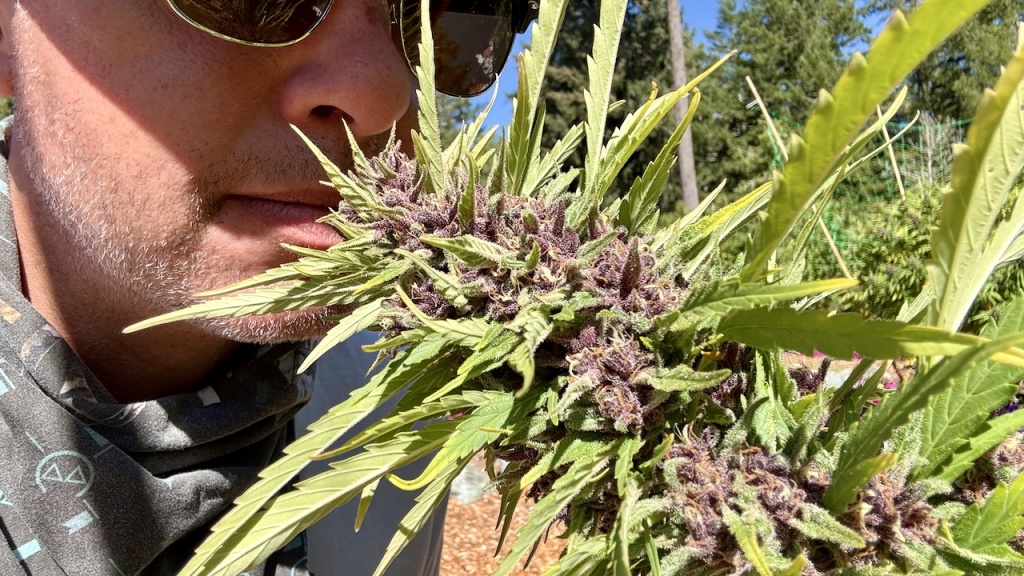
We are on a forested slope of hundreds of verdant plants reeking of skunk, gasoline, and tropical fruit. Nary a single yellow leaf is in sight.
Greenshock Farms’ founder Mark Greyshock walks us deep into the pungent jungle and demonstrates how he hand-pollinates his California State Fair Cannabis Awards 2026 Golden Bear-winning Pink Rider.
“I think cannabis just makes the world a better place,” Greyshock says, explaining his passion.
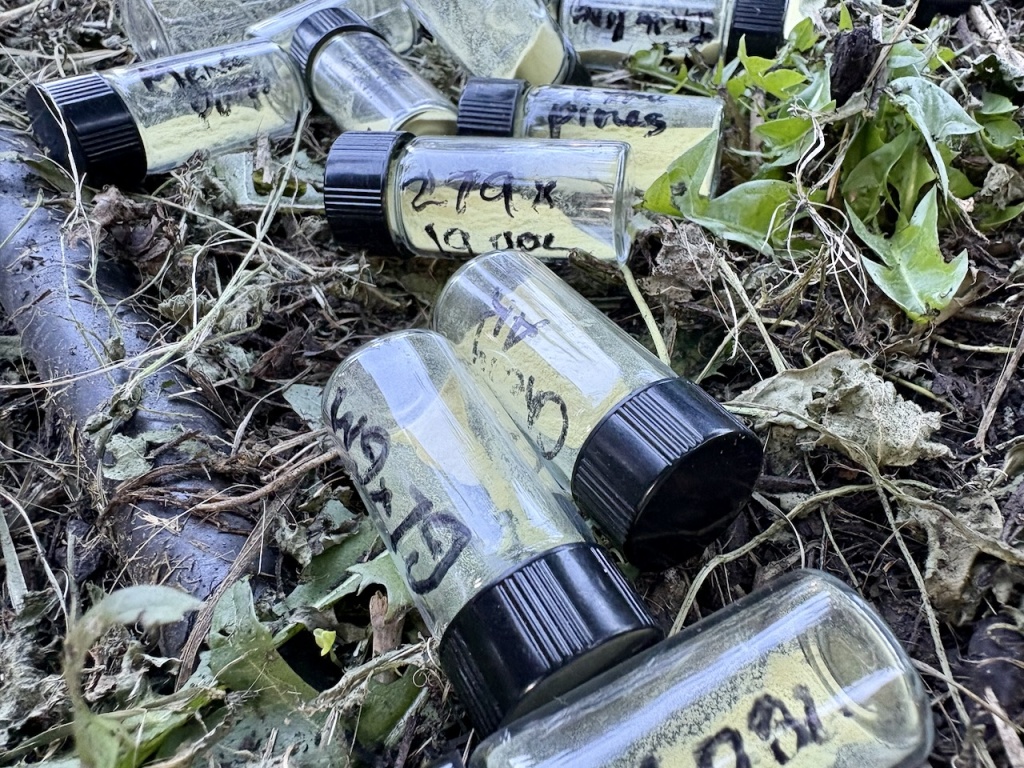
He dabs a Q-tip into a little glass vial filled with a light yellow powder—pollen from a cross of his Passion Orange Guava and this piney strain called In The Pines.
“[Large factory farms] are in it for the money; they don’t do everything as perfect as they can. We do,” he says.
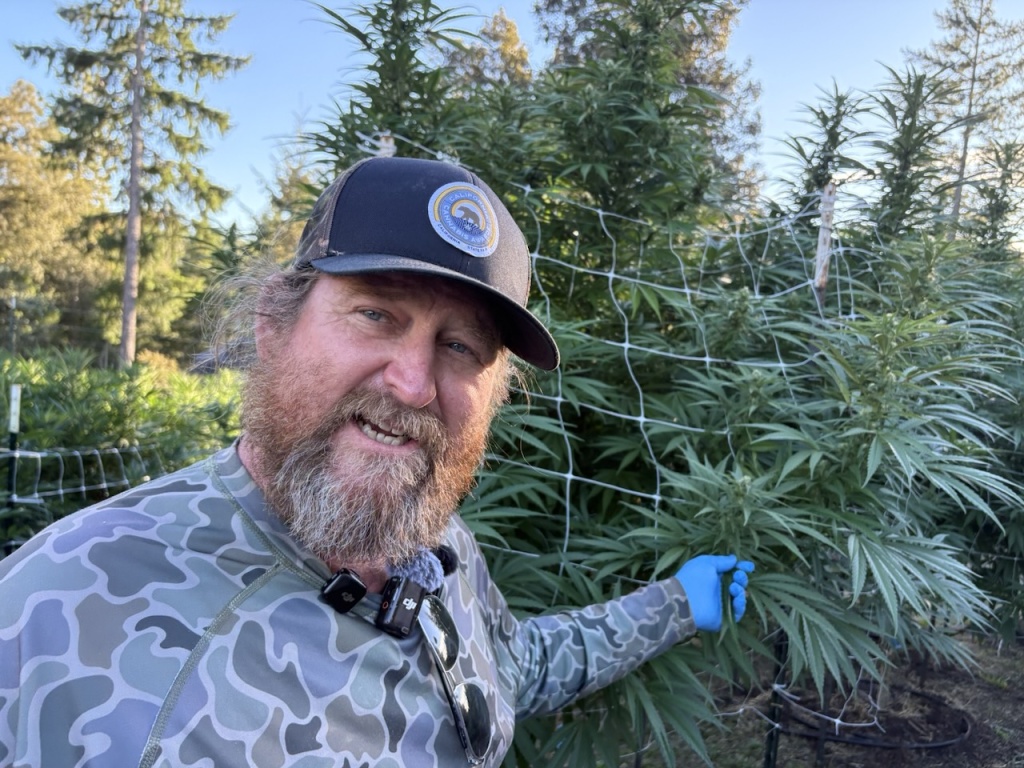
Wearing a trucker hat and a long-sleeved, camo-print UV-blocking shirt, Greyshock gives off the vibes of the stoner forest wizard Tom Bombadil from “The Lord of the Rings.” He’s got an easy smile, a laid-back attitude, a big, wiry red beard, ruddy, sunburned cheeks, a bit of a belly, and a deep affection for nature.
Above him, a red-headed woodpecker pecks away for beetles in a barren pine, and two blue Stellar’s jays shoot by to get a better view of the scene.
Greyshock lightly daubs the Q-tip laden with pollen to the bud of the female receiver plant. She looks like an ’80s rocker gal—white hairs poofing straight outward, ready to catch a grain of pollen and make a seed.
Greyshock has won three coveted California State Fair Golden Bears for the best weed in the state. The metal ursines watch him from his bedside as he sleeps.
Greyshock has also won Emerald Cups nine years in a row before legalization, and he’s sold weed to Dr. Dre’s crew, who were the ones that gave him the brand name “Greenshock,” as in, “Woo-hoo! Here comes Mr. Greenshock.”
RELATED: What the California State Fair Cannabis Award winners say about the weed world
Mark’s not-so-secret sauce is built on custom plant breeding.
Greyshock selects males and collects pollen on a sister farm in Nevada County, and brings the pollen over to his Mendocino County spot to try new stuff out. He walks through his fields, seeing things us mortals cannot. All the test plants are numbered.
“Look at 28 … 36 … 33 … the 25, the 34, … the trichome taco on this one. … The ease of growing these ones,” he says.
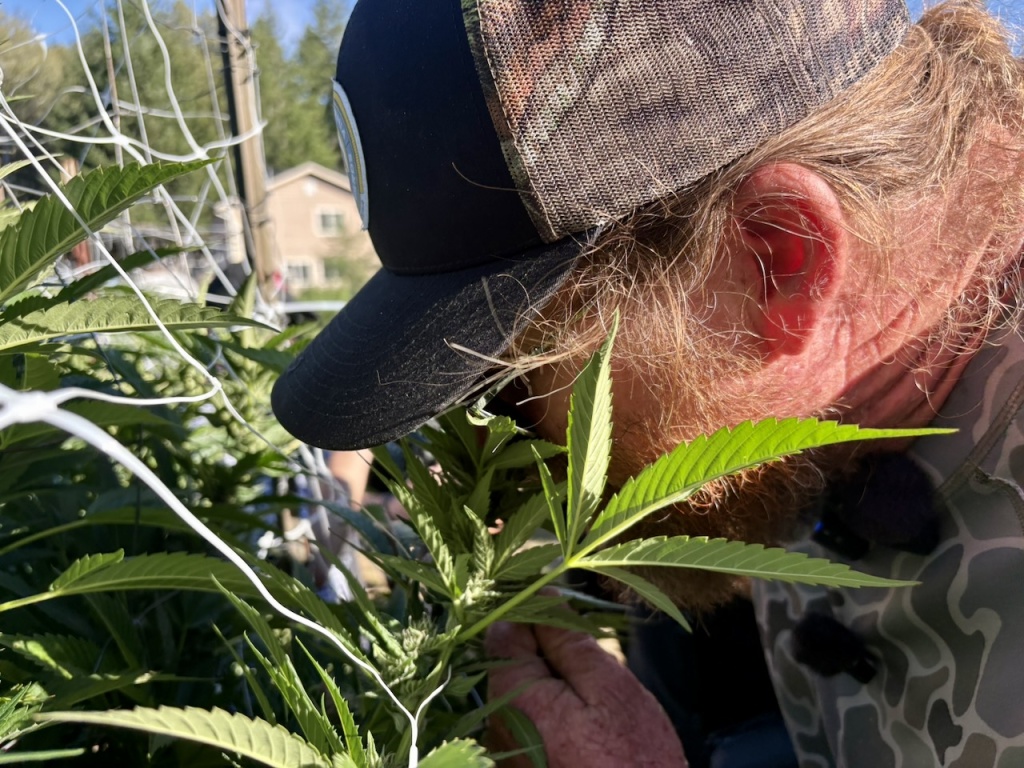
He sticks his entire face into a strain called Galactic Gas. “This plant can express every smell in nature,” Greyshock adds.
So what is he breeding for? These days it’s straight gas.
Greyshock got bored winning trophies with his fruity work, so now he’s after the most pungent, offensive aromas around. His award-winning Double Lantern combines Green Lantern x Double OG Chem x Long Valley, Royal Kush. It took a gold medal with 5.2 percent essential oil and 27% THC. Double Lantern hit a state-high 2 percent caryophyllene, the stanky essential oil used to train drug detection dogs.
Not only does Greyshock want the rowdiest-smelling plants, but also ones attuned to his climate.
Greenshock Farms sits 20 miles from the foggy Mendocino coast, ensconced in evergreens that also pump moisture into the air. An inch and a half of rain fell in August, but not a spot of mold blights the 327 plants on the 10,000-square-foot grow site. Greenshock plants have to be mold-proof, he says.
“We embrace the rain,” Greyshock says. “It washes everything clean.”
RELATED: Forget apples—this California farm is offering U-pick hemp
Greyshock combines breeding informed by decades of trial and error with “no-till” soil beds that haven’t been turned in years. He recalls learning to grow in native soil from early guerrilla grows in Santa Barbara’s canyons. His team hand-applies compost teas to boost soil life, and runs fertilizer in lines through the beds.
“I’m a big believer in the Earth,” he says.
And lastly, his team knows how to do less. For example, they don’t strip off the plants’ fan leaves, as some others do. The big leaves are where the plants store nutrients, he explains.
“Each one of these leaves is a food pellet.”
Secret #2—Obsessive attention to detail
You want to grow great weed, but are you ready to scoot on your butt under a grizzly bear-sized pot tree and start manicuring by hand? On 9,999 square feet of cultivation area with 750 plants that need tending? In the 100-degree summer heat?
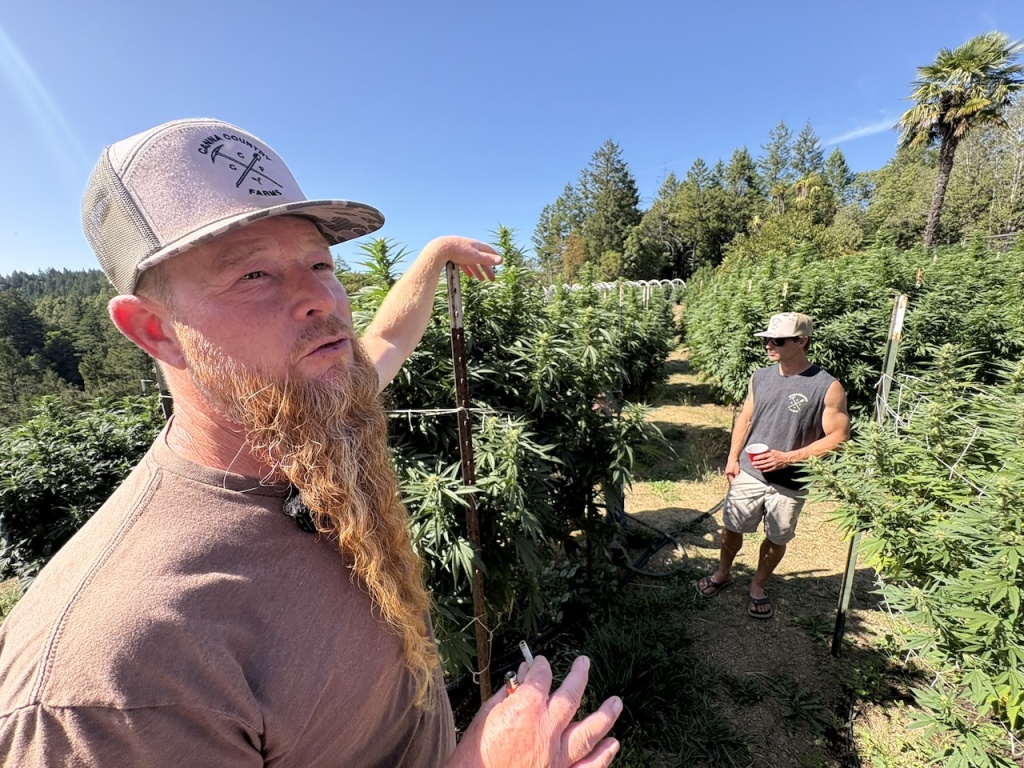
Canna Country Farm operator Ted Blair and his sons are passionate enough to. We’re out in the southern Humboldt County hills, off the grid, back up a steep dirt road, when Blair rumbles up on an ATV. His long, twin-tipped chin beard flies in the wind past his shoulders, like he’s the fourth member of ZZ Top. Dragonflies buzz across the ridge of great green sentinels set into a valley yellowing in the fall heat.
Canna Country is probably most famous for Canna Country #26, a fruity cross of Forbidden Fruit x Cherimoya. It tests at a moderate 16 percent THC with really high myrcene and ocimene—a great-smelling, great-feeling weed that sells out each year. Just like Greyshock, Blair hunts for new, improved varieties that work with his location and grow style.
RELATED: A hit of hope: Oakland Ballers become Oaksterdam Blazers
The essence of breeding is knowing what plants to toss out, he says. “The kill list is the most important part.”
But what stands out at Canna Country is how Blair and his adult son hand-tend the big happy trees. They’re trying to grow only A-grade bud these days, as there’s no profit in the B-grade or C-grade stuff. That means getting out into the fields with a pair of clippers and removing the lowest, most shaded, unproductive bud sites from each plant.
The big beautiful gals look like they’re wearing skirts. Air can pass through the inside of the plant while bugs can’t climb up as easily into the canopy.
Then Blair shows off something uniquely valuable in the Emerald Triangle under legalization—a huge drying space. He calls it his “unicorn” drying room. Getting permits to put up structures to dry your pot has been a nightmare in these counties. Farmers regularly bemoan their lack of drying room. Many turn to dragging shipping containers onto their lots to get the job done.
By contrast, Blair has a former neighborhood gym and dance studio that’s 2,400 square feet, over 30 feet tall, and grandfathered in under county law. Tarps black out the gym windows, and fans whirl. A basketball hoop hangs in a corner, mirrors line the walls, and branches of dank dry on 40-foot-long lines strung across the entire room.
Shockingly, there’s no air conditioning or heating. We’re off the grid on solar power, with two-ton batteries for the house. The drying room’s shaded, hillside locale uses ambient conditions alone. By contrast, indoor growers spend a fortune on air conditioning and dehumidifiers down in scorching Sacramento or Los Angeles.
Secret #3—Storytelling as survival
You can’t grow the best sungrown pot in the world if you can’t find a buyer and make enough money to stay in business. Selling the crop has become an existential crisis for Humboldt County’s veteran growers. They’re a five-hour drive from San Francisco, often beyond cell range, and the price of weed has tumbled from $5,000 per pound at its peak in the ’90s to an average of $334 this September, according to data provided by Cannabis Benchmarks.
Pot doesn’t sell itself anymore. People want to buy a story.
RELATED: A new generation of Mellowz: Compound Genetics expands a fan favorite
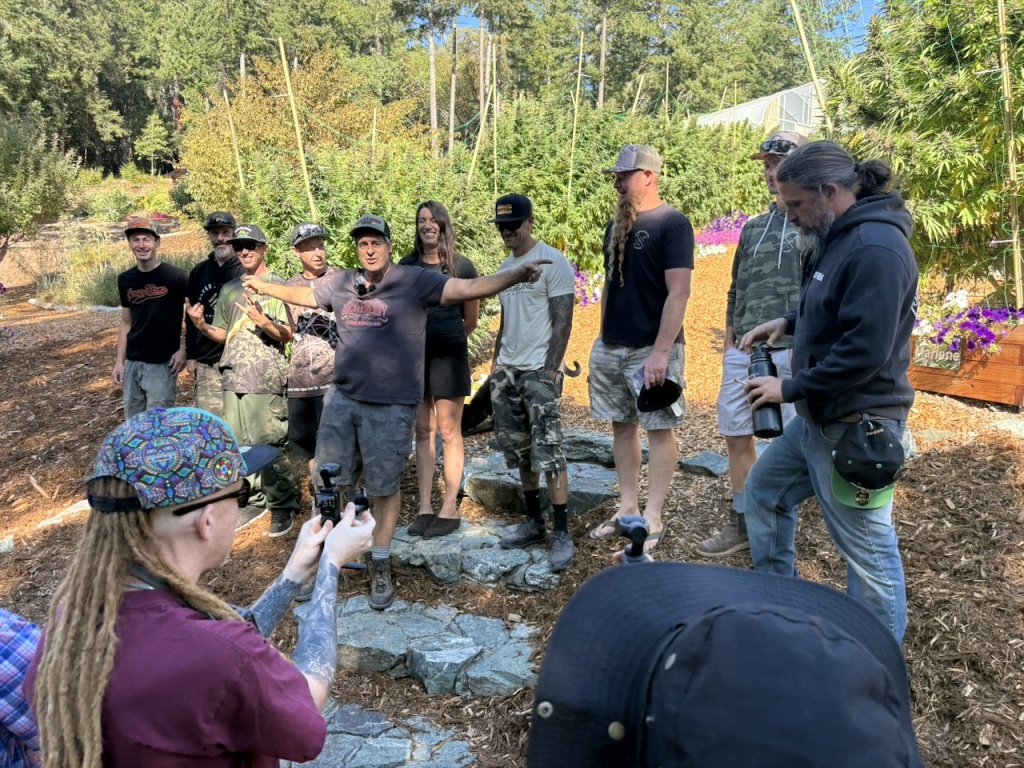
One farmer that’s emerged as a key storyteller with boutique weed to match is John Casali at Huckleberry Hill Farms in southern Humboldt County. He stands on his hillside, flanked by the prettiest plants in the world, plus his best grower friends over the decades, telling his story to a pool of 40 journalists from 10 countries on Sept. 11.
Casali chokes up talking about coming out of the shadows after a lifetime of hiding, getting busted and doing an eight-year stint in federal prison for weed.
“We lived in fear. We would run into the woods when the helicopters came,” he says. “I had a 9 mm pistol held to my head.”
It was Casali’s mom who taught him how to grow. He loved afternoons after school alone in the garden with her, and he loved growing weed. He begged for his own garden, he says. At 15, he produced 11 pounds from 10 plants. Mom sold it and used the $12,000 profit as a down payment on a property for him. Casali had found his calling, but eventually the feds found his plants.
After the raid and his federal trial, Casali’s mother passed away while he was doing his federal mandatory minimum 10-year sentence. He wasn’t there to say goodbye or grieve her.
“The hardest part of being in jail is how much your loved ones worry about you,” he explains.
In a weird way, Huckleberry Hill Farm is an altar to aching, unprocessed loss. Inside the tough, tall man resides a young boy in a garden after school—forever missing his mom.
Huckleberry Hill is easily the prettiest pot farm I’ve ever seen. It’s got a woman’s touch.
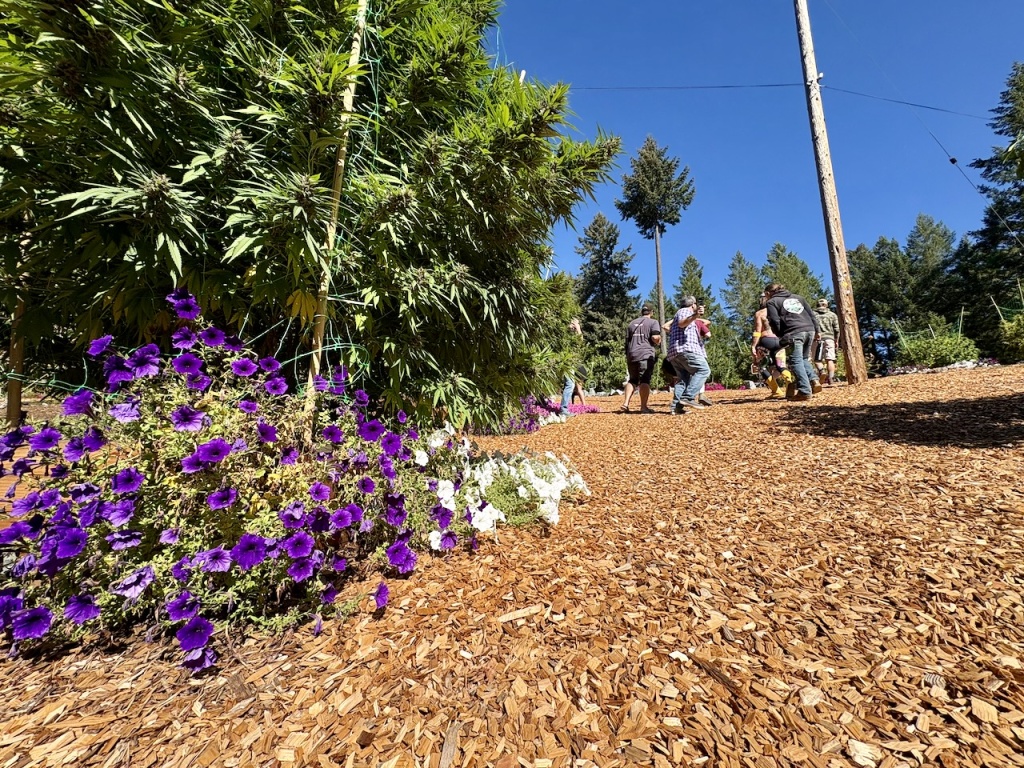
Huge, purple rockets of buds erupt from deep green leaves tinged with the yellow of fall. Bright pink, purple, and white companion plants flower at the feet of each tree. A fresh layer of wood chips marks the walkways. Huckleberry Hill is the opposite of corporate “standard operating procedure.”
“It wasn’t about an S.O.P., but TLC,” Casali says.
RELATED: The wavelengths of weed: Fig Farms show the spectrum of cannabis is vast
Casali retells how his top-hit strain, Whitethorn Rose, came from his mom’s strain Fruit Loops. He credits his best friend for keeping Fruit Loops alive in a garage for eight years while he sat in prison.
This year, Whitethorn Rose grows worldwide thanks to seeds moved through Tangled Roots Seed Bank. Many of Casali’s longtime friends grow Whitethorn Rose crosses like Rose Fuel, Ridgeline Rose, and Back Rowz.
Sharing the Whitethorn story is the main goal for Tangled Roots, which organized this pot grower press junket. With our travel and expenses covered, it’s one of the first junkets of its kind despite eight years of legal sales. And it’s an attempt to keep these farmers afloat.
Investor-backed mega-grows in Central California have usurped the primacy of the Emerald Triangle. One Carpinteria, Calif. company aims to produce weed for $95 per pound, undercutting Triangle farmers and flooding the market with mids.
By contrast, the assets of Huckleberry, Greenshock, and Canna Country are less fungible: heirloom genetics, local know-how, trophies, passion, the public’s goodwill, and the stories. Storytelling leads to consumer recognition, retail sell-through, better wholesale prices, and survival, they say.
Jason Gellman, Casali’s friend from nearby Ridgeline Farms, says, “The storytelling has really helped us make it through.”
After the hillside talk, Casali’s partner, Rose Moberly, has us all sit down in the heat and the wood chips and searing sun while she leads a sound bath. She circles a crystal bowl with a stone wand and draws out this clear, strong, insistent tone.
Eyes closed, sitting cross-legged, we breathe deeply. Rose thrums a huge, hanging gong, and deep, pure sound waves wash over us. Our minds quieted; we all teleport out of the buzzing, chirping, burbling hillside.
“Sound can be a portal,” Rose says softly in the void. We tap wells of energy, focus, and, god dammit, even inner peace. In that astral plane, the pot plants begin to whisper, “Pretty groovy, right?”
Super-groovy, weed. Super-groovy, indeed.