


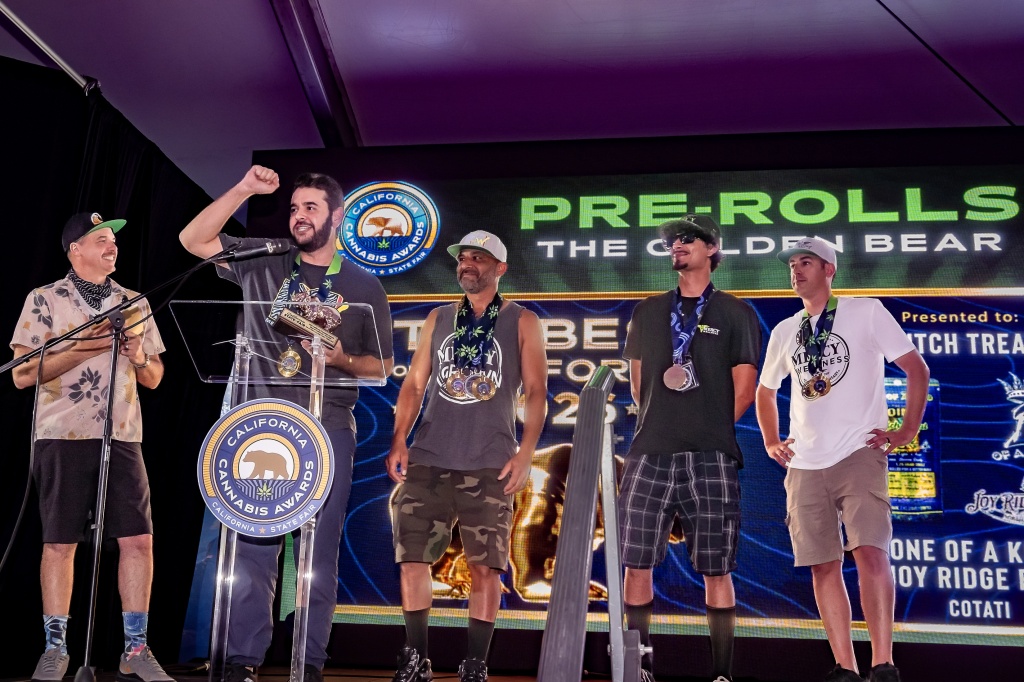
If the future still happens here first in California, what do the California Cannabis Awards at the CA State Fair foretell for global weed culture?
If you study all the medalists and trophy winners from the July 18 awards ceremony, some clear trends stand out: doing your own breeding work; tapping into natural, living soil outdoor farming techniques; and braving awkward government meetings.
Here are some findings from Sacramento to take back to deploy in other cannabis communities worldwide.
RELATED: A hit of hope: Oakland Ballers become Oaksterdam Blazers
Proprietary cannabis strains dominate the winner’s circle
You don’t get to the winner’s circle by copying someone’s homework in 2026.
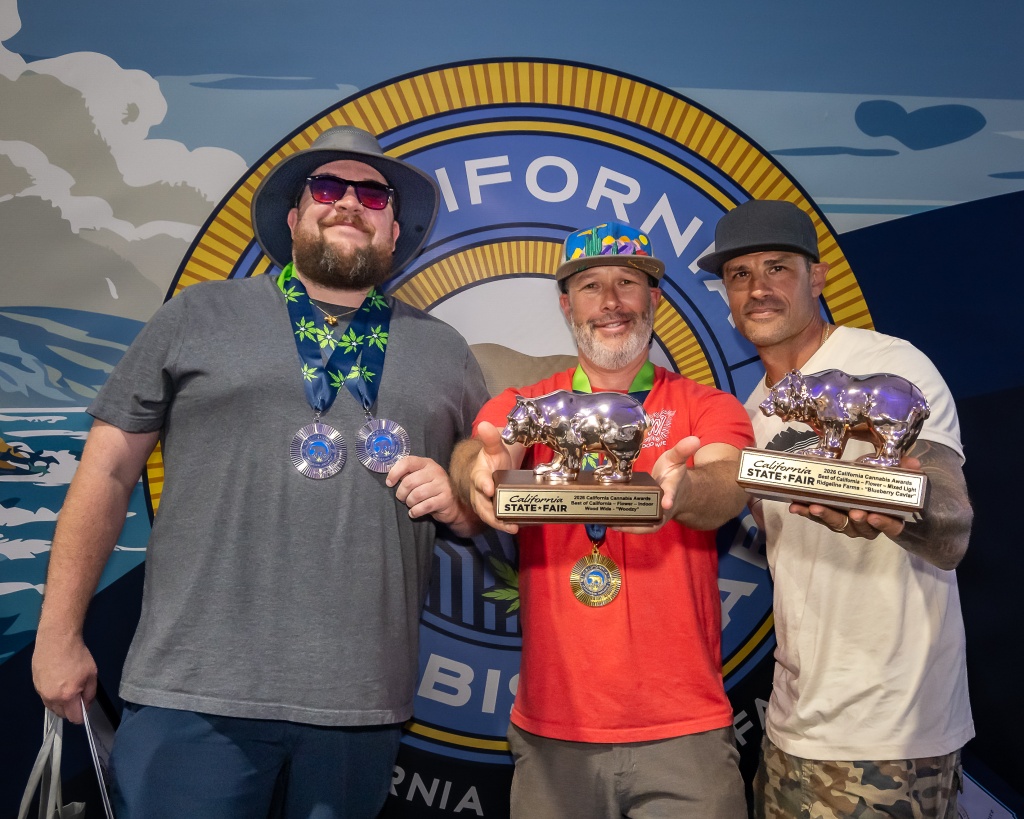
All three of the top awards in flowers—the Golden Bears for indoor, outdoor, and greenhouse (also known as mixed-light) buds—went to farmers who grew strains they made themselves.
Wood Wide High Craft won the Golden Bear for indoor with Woodzy—their Zkittlez cross to an undisclosed strain. Wood Wide High Craft keeps using Woodzy to best their bros, even though they grow more widely available strains like RS-11 and LANTZ.
Ridgeline Farms won best greenhouse flower in the state with Blueberry Caviar, an in-house cross of Grape Gas x LANTZ. Rapper and weed mogul Berner helped Ridgeline’s Jason Gellman make the final selection of the varietal that became Blueberry Caviar. Until this month, the Blueberry Caviar was not commercially available in seed form. Ridgeline just launched packs of regular Caviar seeds on Tangled Roots this July.
Probably the coolest story is Pink Rider, a one-of-one genetics from Greenshock Farms, which won best in the state for outdoor. We judged the competition blind, and while it was easy to pick out many existing popular strains from the collection, Pink Rider was a dark horse.
Pink Rider is a Jack Herer x Skunk crossed to Greenshock’s own Tropical Sleighride. Tropical Sleighride had made a name for itself by winning Emerald Cups.
RELATED: The wavelengths of weed: Fig Farms show the spectrum of cannabis is vast
Marc Greyshock, founder of Greenshock Farms, recalled how the Jack Herer x Skunk parent came from a rambling, paranoid grower type who chewed his ear off for two hours with conspiracy theories. Marc patiently listened, smoking bong loads, and then at the end of the call, the grower said, “Hey, I have something really special to send you.”
“And you know what? All his stuff was pretty right on,” laughed Greyshock.
Living soil delivers award-winning flavor and terpenes
You don’t get to the winner’s circle by growing the same way as everyone else.
Moon Valley of Santa Rosa, CA distinguished itself with back-to-back Golden Bears in both cartridges and concentrates by growing their own proprietary strains in no-till living soil indoors.
RELATED: Ladies who lunch: The Herb Somm brings cannabis to the table
This time-consuming technique is tough to scale. Moon Valley brought tons of dirt inside the grow rooms and started an ecosystem of microbial and bug life. Some of the most aromatic, flavorful flowers come from not simply feeding plants, but the plant itself farming microbes.
Living soil can be unwieldy. One bad bug outbreak can set you back. But when all your competition grows the same-same—it pays to grow different.
San Francisco’s Snowtill also grows in living soil, and medaled in the state fair.
Cannabis integration into mainstream culture pays off
The fifth annual California Cannabis Awards at the California State Fair demonstrated the power of community integration. No other state fair has a weed section and contest on California’s scale.
Wearing Hoka shoes, shorts cut above the knee and a polo shirt, Tom Martinez, CEO of the State Fair, proudly welcomed the weed community July 18. The idea made sense since pot is a top cash crop for the Golden State, which holds nine of the top 10 agricultural counties in the entire U.S.
“I am damn proud to give cannabis this platform and its rightful place at the state fair,” he said.
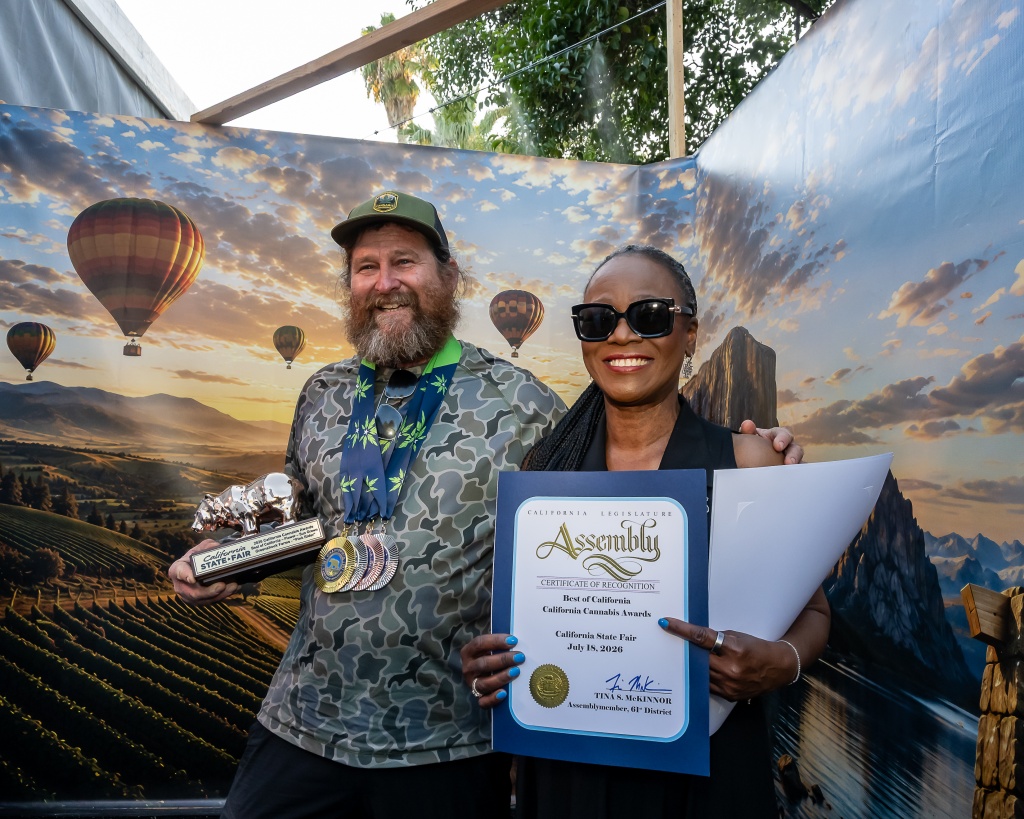
Assemblywoman Tina McKinnor (D-Inglewood) hung out backstage, handing out commendations to the winning farmers.
Dale Gieringer, longtime freedom fighter with California NORML, said, “This type of gathering would have been unimaginable 30 years ago.”
It was inconceivable even six years ago. Insiders said it took years of cajoling local and state agencies to bring the Cannabis Experience to life.
Amy Jenkins, executive director of the California Cannabis Operators Association, recalled backstage how she had to help draft special legislation allowing events like the State Fair’s cannabis experience.
RELATED: A different kind of movement: Champelli fuses fine art, cannabis, and streetwear
The vibe has improved markedly over the last five years—adding a smoking area, and then a sales counter from Embarc, and more amenities like giant fans and misters. In 2026, it’s the very peaceful, refined, and demure oasis in an otherwise blazing and cacophonous fairground. More than 700,000 people attended the State Fair in 2025.
Just look at the national contrast:
- New Yorkers are still doing deals in Washington Square Park on 4/20.
- Washington State lacks adult-use home growing, while California launched a home growing competition in its state fair. The first Home Grow Golden Bear went to Diego Fernandez for his Dolato s1.
- Oregon never legalized on-site consumption.
- Massachusetts is voting on a legalization repeal initiative—yikes.
More integration is to come, like San Francisco’s new cannabis cafe bill, and the return of Grass Lands at the Outside Lands Music Festival.
The Highest Critic, Caleb Chen, said: “This is California, we have something incredibly special here.”
So that’s some free game from the weirdo Left Coast in 2026: Hoe your own row; get your hands dirty; keep pushing for equal rights—and you too can enjoy weed valhalla in this lifetime.
Or just visit us in California.