


A federal provision that most cannabis consumers have never heard of is poised to potentially upend the seed and genetics market this fall, and the companies that supply America’s growers say the rule is written so vaguely that no legitimate business can comply with it.
The fight over Section 781 comes down to the narrow window between now and November 12, 2026. The provision was almost certainly never meant to criminalize a dormant, THC-free seed, but unless that single line is struck, that’s exactly what it will do, potentially putting decades of preserved genetics, the livelihoods of small breeders, and a home grower’s ability to simply start their next plant on the wrong side of federal law.
RELATED: The weed vape debate just got more complicated
What Is Section 781?
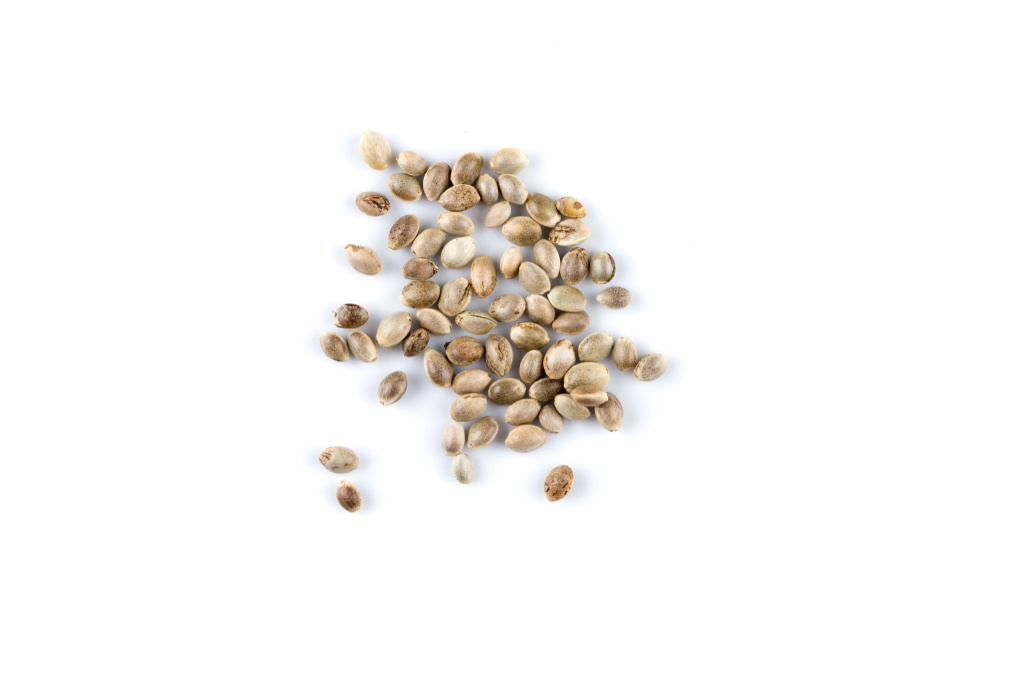
It’s called Section 781. Tucked into last year’s federal spending package and signed into law on November 12, 2025, it quietly rewrites how the government treats cannabis seeds and genetic material. Beginning November 12, 2026, seeds and other genetics that produce flower testing above the federal 0.3 percent THC limit, the line that legally separates hemp from marijuana, will be classified as Schedule I controlled substances. That’s the same federal tier as heroin, and under the new rule, a seed could land there before it’s ever put in the ground.
Why the THC Standard Is Almost Impossible to Predict
Erin Walloch, CEO of CannaJoy, a Minnesota seed bank and cannabis dispensary, said there’s no reliable way to predict a plant’s THC expression from a seed: genetics, environment, and other factors all play a role.
“Restricting businesses from purchasing or selling seeds after November creates direct economic harm for small operators across the nation, including our mom and pop seed bank and dispensary,” Walloch said.
RELATED: Veterans need more than permission to access cannabis
The ripple effects, she noted, reach well beyond the grow room.
“Restrictions disproportionately affect microbusinesses, local seed sellers, and independent breeders in the state and throughout the country,” she continued. “The reclassification of seeds directly affects our small business since seeds are a retail product, a great entry point for new growers, and crushes repeat purchases from growers returning for their next batch of seeds.”
What’s at Stake for U.S. Cannabis Seeds
Walloch believes that the proposed restrictions on THC in seeds are unfair and could negatively impact her small business.
“If businesses can no longer buy seeds from out of state or sell them after November, that revenue disappears immediately,” she said. “For some businesses, this means online seed sales stop, in-store seed inventory becomes unsellable or limited, as well as fewer customer visits tied to the home-grow season.”
Without reliable access to outside seed suppliers, a number of factors negatively impact the market. For example, there are often fewer varieties available in emerging markets, which will limit supply as well as slow innovation. It will be more challenging for businesses and home growers to source unique genetics. All of this also reduces breeding diversity, again stifling genetics and innovation.
“Cannabis seed sales are a legitimate revenue stream for Minnesota businesses, including ours, and often serve as an entry point for customer education, home cultivation, and long-term brand relationships. Limiting access to seeds removes an important retail category and reduces customer traffic for licensed operators,” Walloch continued.
RELATED: Seniors are already using cannabis – policy needs to catch up
“We have had over 100 events in the last two years focusing on home growers, education, support, resources, and community building,” Walloch added. “Removing the option to sell seeds in addition to creating a community around the seed would greatly impact our small business and home growers throughout the state.”
The legislation also restricts access to genetics. Small businesses rely on diverse seed sourcing to build unique offerings adapted to local growing conditions. Cutting off seed access reduces innovation, limits consumer choice, and disproportionately harms small businesses that do not have large in-house breeding programs or extensive existing genetic libraries.
These restrictions may also strain existing inventory, reduce taxable sales, and push customers toward unregulated or out-of-state markets instead of supporting licensed local businesses.
Why Supporters Say Section 781 Is Needed
Section 781 didn’t emerge in a vacuum, and opponents say the case for tighter seed rules deserves a fair hearing. The push for stricter regulation reflects a broader effort to address what critics call the “hemp loophole,” which they argue is an unintended consequence of the 2018 Farm Bill, which legalized hemp as cannabis containing no more than 0.3 percent THC.
In the years since, that definition has fueled a booming market in intoxicating hemp-derived products. Supporters of stricter regulation, including some state regulators, public-health advocates, law-enforcement groups, and even parts of the licensed cannabis industry, argue that the loophole puts unregulated intoxicants on shelves and undercuts the legal market.
RELATED: Cannabis rescheduling: what we know—and what we don’t
From that vantage point, regulating genetics by their eventual output has a certain logic. If the goal is to keep intoxicating cannabis inside a regulated system, then seeds bred specifically to produce high-THC plants, sold under a “hemp” label but capable of yielding what is functionally “marijuana”, can represent a real diversion pathway. Tying a seed’s status to the plant it produces, challengers contend, closes a gap that some operators have used to their advantage.
The disagreement, in other words, is less about the goal than the method. Most stakeholders on both sides say they want a well-regulated cannabis market. The fight over Section 781 is whether this particular mechanism draws the line in the right place, and whether it can be written to target bad-faith diversion without sweeping up the legitimate breeders, researchers, and home growers who make up the backbone of the seed trade. Much will depend on implementing regulations and guidance that have not yet been finalized.
The ASIGA Coalition and Its Legal Fundraiser
A coalition called the American Seed Innovation and Growth Alliance (ASIGA), breeders, farmers, researchers, and medical-sector operators, has launched a public GoFundMe campaign to fund the legal and legislative work needed before the deadline, covering statutory analysis, repeal strategy, lobbying, and economic impact reports. The group’s pitch is blunt: there are only so many weeks left before the law takes effect, and undoing the damage afterward will be far harder than preventing it now.
ASIGA’s proposed fix is far narrower than the fight surrounding it. The alliance isn’t asking Congress to reopen the hemp debate or unwind the bill’s new consumer-safety rules—it’s asking for a single deletion. Its amendment would strike the seed-inclusion language from H.R. 5371: the clause that denies hemp status to viable seeds taken from plants testing above 0.3 percent THC, sweeping those seeds under the federal restriction even though the seeds themselves contain none.
RELATED: Cannabis rescheduling: what we know—and what we don’t
(C) EXCLUSIONS.—Such term does not include —
“(i) any viable seeds from a Cannabis sativa L. plant that exceeds a total tetrahydrocannabinols concentration (including tetrahydrocannabinolic acid) of 0.3 percent in the plant on a dry weight basis.“
Cut that one line, ASIGA argues, and the core problem disappears. Because seeds carry no THC, removing them from a cannabinoid restriction corrects what the group calls a basic category error, protecting the American plant breeders and farmers whose work depends on the free exchange of genetics, while leaving every other safety provision in the bill fully intact. It’s a technical amendment, not a rollback.
What Happens Next Before the November 12 Deadline
For now, trade groups are pressing congressional offices for a technical fix or a delay, betting that bipartisan interest in agriculture opens a path to amendment. That path may be opening.
Industry groups, including the American Seed Innovation and Growth Alliance (ASIGA), are coordinating legal and legislative responses and accepting contributions through a public fundraiser to support that work ahead of the November 2026 deadline.
None of this means the concern behind Section 781 is illegitimate. There is a real case for keeping intoxicating hemp inside a regulated, tested, and age-gated system. The objection isn’t to that goal, it’s to a rule that, as written, can treat a dormant seed as a controlled substance based on what it might someday grow into. That’s why the fix on the table is a narrow one: a technical amendment to H.R. 5371 that removes viable seeds from the cannabinoid classification.
Whatever Congress ultimately does, the months ahead will shape whether the genetics at the foundation of America’s hemp and cannabis industries are treated as the basis of a legitimate trade or as a liability to be managed. For now, that question remains open, and, importantly, still up for debate.
*This article was submitted by an unpaid guest contributor. The opinions or statements within do not necessarily reflect those of GreenState or HNP. The author is solely responsible for the content.