


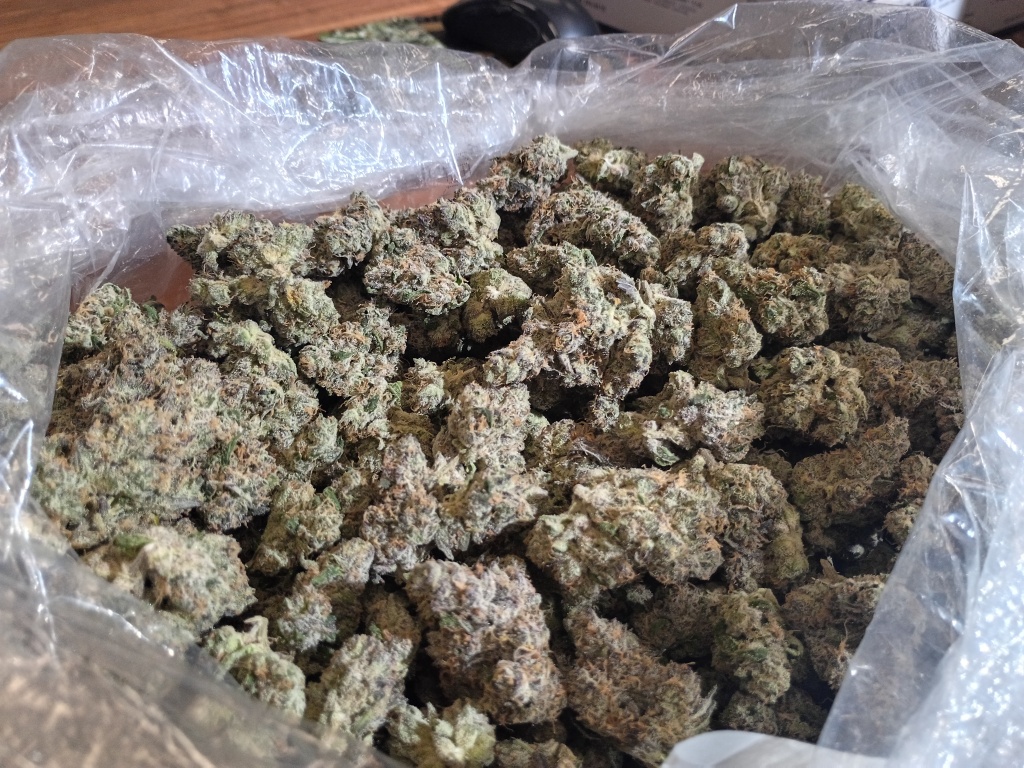
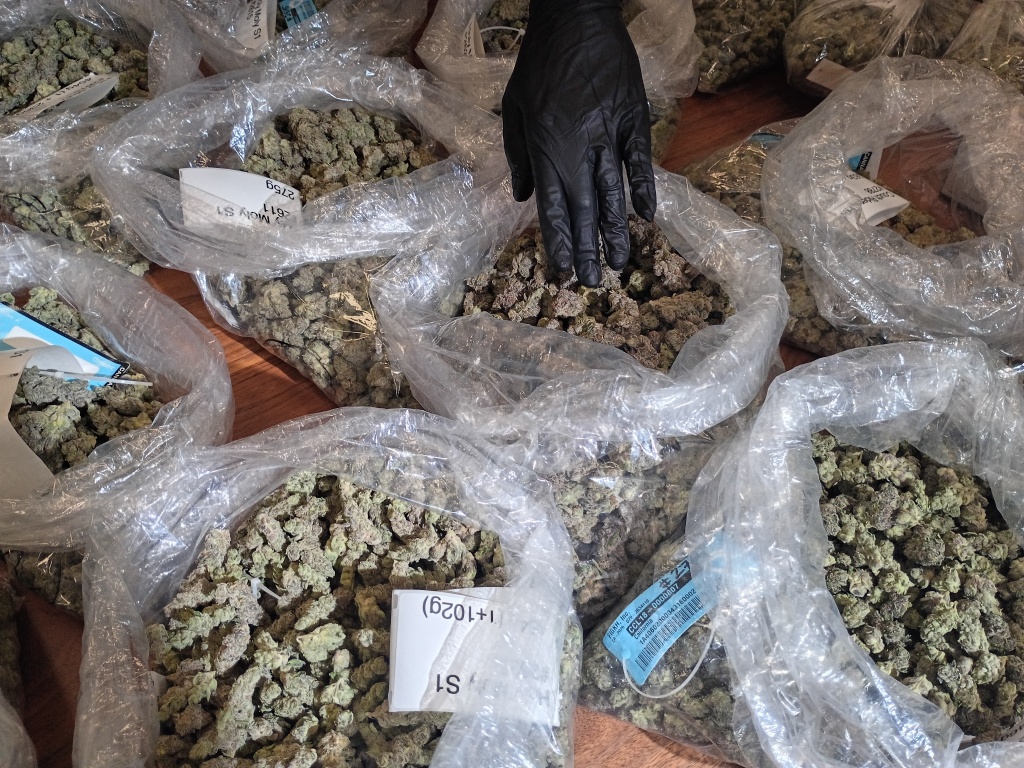
The breeding and selection process to create new types of cannabis is no joke. At the Fig Farms headquarters in Oakland, California, there are eight different bags of Holy Moly! spread out on a large boardroom table. It’s the Fourth of July, and our fireworks are the flame that’s been laid before us.
RELATED: From Jamaica to Humboldt: The collaboration behind two new Bob Marley strains
Our group is dipping our noses into bags filled with flowers and pulling out buds with gloved hands to look at them more closely. In the end, we will have seen and sniffed at least 100 different types of weed. It’s enough to make you go, as famed cannabis genetics expert David Downs says, “noseblind,” and at Fig Farms, this process happens almost six times per year.
“It’s like stepping into a different dimension of Holy Moly!” Mike Doten, chief operating officer of Fig Farms, says of the motivation to create the flower spread before us. “What’s it like on a different wavelength, or what could it have appeared to us as?”
Generations of Dank
Holy Moly! is a special flower for Fig Farms. Crossed with Animal Mints, it is the daughter of Banana Fig, the award-winning strain that put them on the map, and the granddaughter of Purple Fig, their very first strain.
Cannabis plants come in male and female forms; males produce pollen sacs, and females produce flowers. Putting pollen on flowers makes seeds that contain genetic information from both parents.
RELATED: Sungrown tells a story: Harvest Report shows California’s cannabis shift
When grown from seed, cannabis plants express different physical characteristics, and each bag of Holy Moly! we’re looking at is a different expression, also known as a phenotype.
Phenotypes grown from seed can be male or female, and these can be crossed to create an F1 generation.
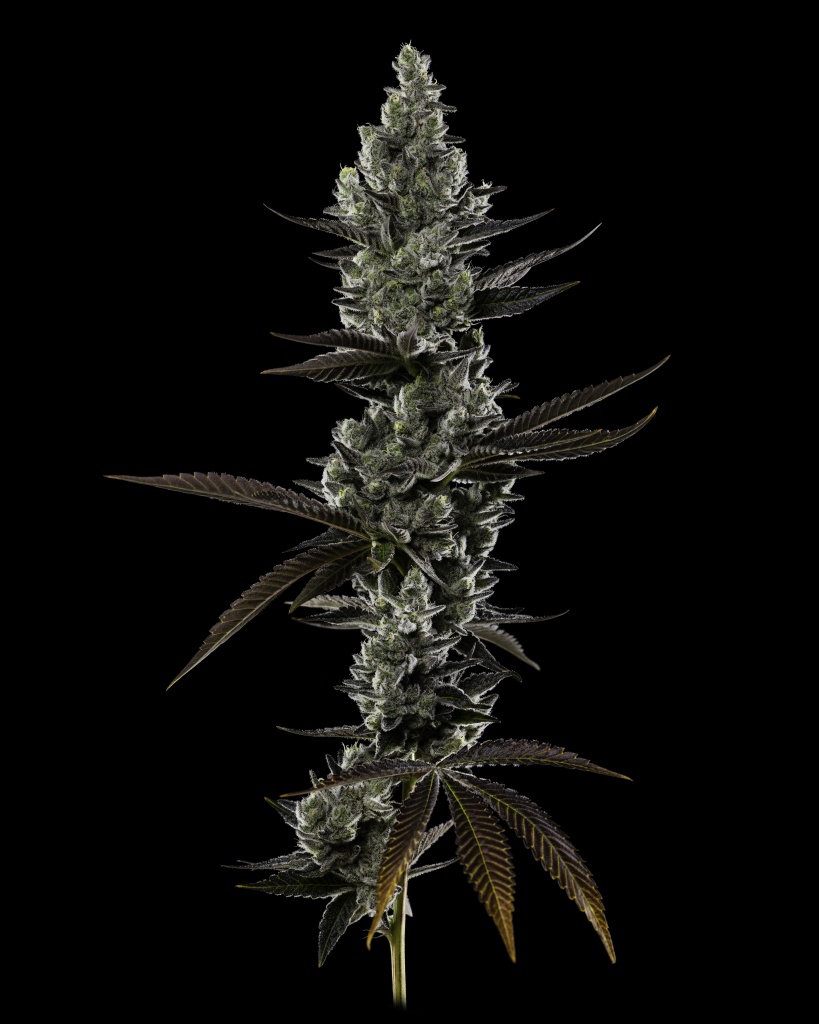
The Holy Moly!s we are evaluating are S1s, a breeding term that means they are the first selfed generation. Fig Farms used a spray of silver nitrate and sodium thiosulfate to induce a female plant to produce pollen, then used that pollen to pollinate the same female. This process ends with feminized seeds that produce nearly 100 percent female plants, since the pollen that fertilizes them carries only female chromosomes.
“It’s fun to see what they look like, is there a better version?” Doten says of the Holy Moly! S1s. “To me, everything is not quite as good as the originals, but very different.”
The New New
The R&D process at Fig Farms is extensive. Doten does some quick math and calculates that, with around 200 different flowers Fig Farms produces for R&D almost every other month, the award-winning cultivator and breeder is creating three and a half new types of cannabis per day.
Doten has invited a small group, including myself, to smell the samples on the Fourth. The crew includes Downs and Christina Perpetua, aka CP, who does sales in Northern California and the Central Valley for UpNorth Distribution, which helps bring Fig Farms to market.
RELATED: Storage is sexy: Get to the Bag shows how pot packaging transcribes cannabis culture
The differences are subtle, but I hone in on two of the Holy Moly! S1s that I like best: selections #2603 and #2604. Sugary and fruity with just a little cocoa, I smell Tootsie Pop in #2604, but #2603 is not as sweet; it’s more earthy and savory with a note of bittersweet chocolate. Both samples are about the same color of pistachio green, with dense, elongated buds that foxtail out a bit, displaying the signature look of Fig Farm flowers.
Perpetua picks up apples and bananas on her favorite Holy Moly! S1 selections and tells me customers like to see new versions of strains they already know and love.
Downs points out that there’s a lot to consider when evaluating strains.
“The definitive thing for me is smokability and taste,” he says. “Your eyes could be deceiving. I’m looking for loudness and distinction right now.”
In terms of distinction, Downs picks up on other cannabis flowers beyond the Holy Moly! S1s that are his standout selections. He also notes a few rare sightings that are unlikely to go into production, a Lavender Jack from Bodhi Seeds and a Holy Moly! crossed with a Mendo Purps F2.
RELATED: This low-odor cannabis flower could make smoking more discreet
I fell in love with a Honey Banana x Strawberry Guava from Bloom Seed Company that smells and tastes like a tropical smoothie.
I also discovered Fig Farm’s in-house crosses built from a standout strain I had yet to try: Whole Fruits, a combination of Compound Genetics’ Apples & Bananas and Backpack Boyz’s Lemon Cherry Gelato, bred by Backpack Boyz and Round Table Selections. A phenotype of Whole Fruits selected by Fig Farms, Cherry Martinelli, has it all in terms of looks, aromas, and taste.
The offerings on the table at Fig Farms were vast on the day of my recent Fourth of July visit. Fig Farms can’t possibly deliver everything that they grow out in the name of creative expression to the marketplace, but I’d bet on Cherry Martinelli delighting cannabis smokers soon. Make sure to jump on it if you see it; the waves of flavors in cannabis can ebb and flow rapidly, but like the Beach Boys sang, “Catch a wave, and you’re sitting on top of the world.”