


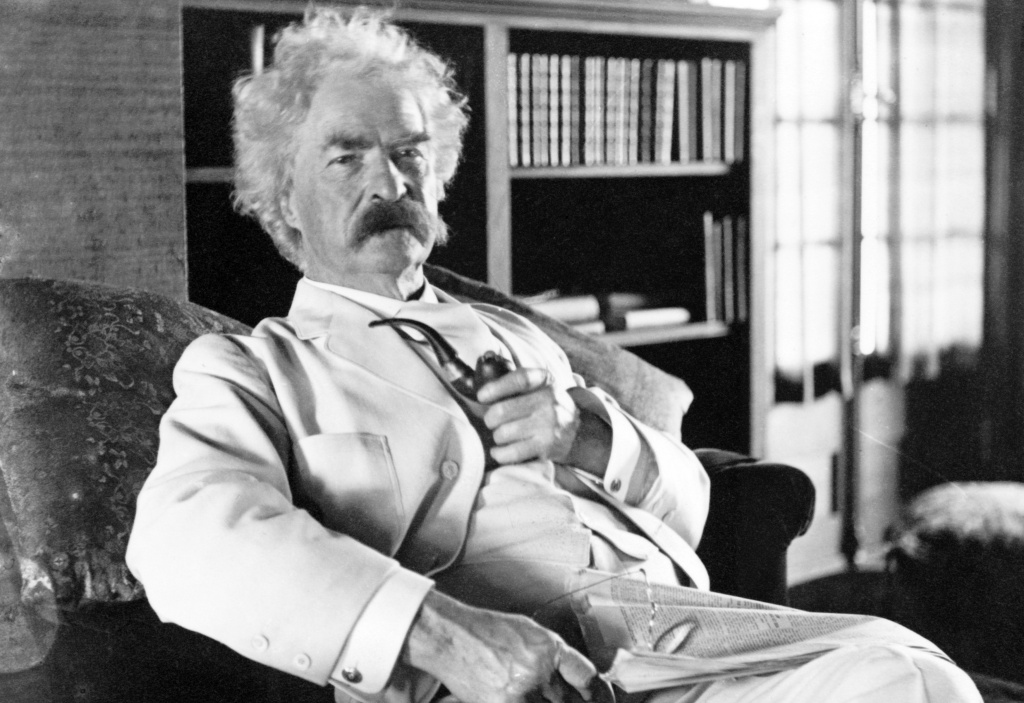
More than 150 years ago, the streets of San Francisco were a bawdry boil. In the 1860s, saloons, gambling dens, and brothels dotted tent cities around Portsmouth Square. And on Sept. 18, 1865, a small article appeared in the newspaper with a headline referencing America’s first full-length experiential drug book: The Hasheesh Eater.
The article reports that Mark Twain and another writer had been seen walking up Clay Street under the influence of “hasheesh.” It’s a short, unattributed piece of writing which cannabis historian and author Ellen Komp argues marked the moment Twain began his journey to become a world-recognized literary humorist.
RELATED: A backyard grower just made California cannabis history
Hasheesh Eaters.
It appears that a ‘Hasheesh’ mania has broken out among our Bohemians. Yesterday, Mark Twain and the ‘Mouse-Trap’ man were seen walking up Clay street under the influence of the drug, followed by a ‘star,’ who was evidently laboring under a misapprehension as to what was the matter with them. The ‘experiences’ of the twain may be looked for in the next issue of the Californian.
– San Francisco Dramatic Chronicle, September 18, 1865
Komp explained that the “Mouse-Trap man” was Tremenheere Lanyon Johns, a columnist for the Californian, and the “star” was most likely a policeman.
She calls the newspaper item Twain’s “Stoned Stroll,” and commemorated the anniversary of the event with a hash-fueled walking tour on its 161st anniversary, Sept. 17.
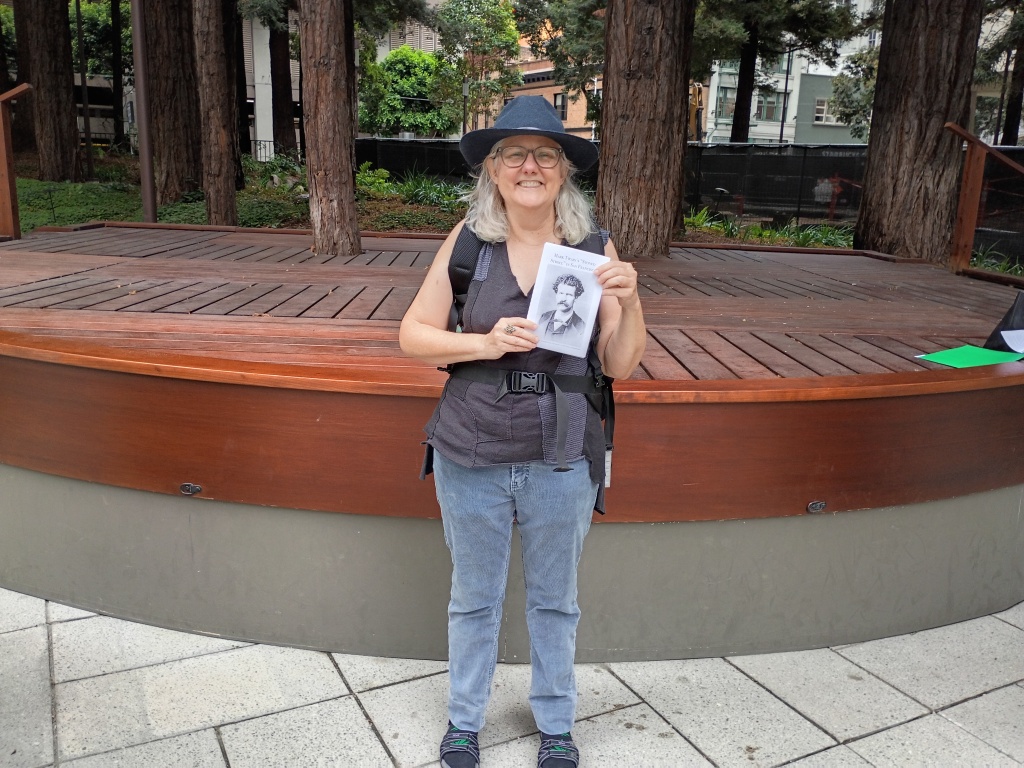
Starting in Mark Twain Plaza, at the base of one of San Francisco’s most recognizable pieces of architecture—the pyramid-shaped Transamerica Tower—the tour included the former site of a drug store that sold “hasheesh” tinctures and candies.
Was it myself or my alter ego Hollandbuds who smoked hash on the streets, browsed the shelves of City Lights Bookstore for their drug lore, and walked through a portal at a North Beach smartshop that took me to the San Francisco apartment that houses one of the world’s largest collections of psychedelic literature behind a closet door?
The hash rosin gummy I ate at the Church of Mother Gong makes the experience a little fuzzy, but the collection of cannabis ephemera and the stories I heard were very real and, with a bit of enhancement from the substance that’s turned on writers like Twain, still very much alive.
The Golden Era
Before the Civil War and long before Hunter S. Thompson went gonzo, Fitz Hugh Ludlow described the fantastical trips he took by taking large doses of “hasheesh” tincture. His stories in The Hasheesh Eater influenced John Hay, President Lincoln’s private secretary, who would later go on to be Secretary of State for presidents McKinley and Roosevelt.
They also influenced a young newspaper reporter, Samuel Clemens, an ex-steamboat captain who began calling himself Mark Twain in February 1863. This smoke circle runs deep; Clemens knew Hay and Ludlow, and they all wrote about “hasheesh.”
Twain and Ludlow met in San Francisco in 1863. They both had writing featured in San Francisco’s first literary weekly newspaper, the Golden Era. And on Nov. 22, 1863, Ludlow published a glowing review of Twain in the Golden Era, writing that when it came to “funny literature,” Twain was a “school by himself.”
“Ludlow was a writer, a senior writer, and someone Twain admired, and he had written a book called The Hasheesh Eater,” Komp said at the beginning of the Stoned Stroll tour in the Transamerica Redwood Park. “At the time, cannabis tinctures, hashish tinctures, were available for sale at places like C.F. Richards & Co., which is right at the corner of Clay and Sampson Street, not a half a block away from here.”
RELATED: What the California State Fair Cannabis Award winners say about the weed world
Komp explained that shortly after the newspaper account was published, Twain wrote a letter that prominent Twain historian Robert Hirst has called the most important letter the author ever wrote.
“Right after he was observed stoned on the street, he wrote to his brother and said, ‘I have had a ‘call’ to literature, of a low order—i.e. humorous. It is nothing to be proud of, but it is my strongest suit…’” Komp said.
Self-Advertising?
The 1937 Marijuana Tax Act marked the end for cannabis tinctures that had been widely produced and available in American pharmacies since the 1850s. As part of Komp’s presentation, she noted that C.F. Richards & Co. took out ads in the Chronicle in 1872 promoting “magic conserves” of hash. That year, the paper published a personal ad which Komp speculates may have been placed by a C.F. Richards & Co. publicist.
Fannie—I DID TRY THE HASHEESH; I will be there to-night. FRED.
– San Francisco Chronicle, October 25, 1872
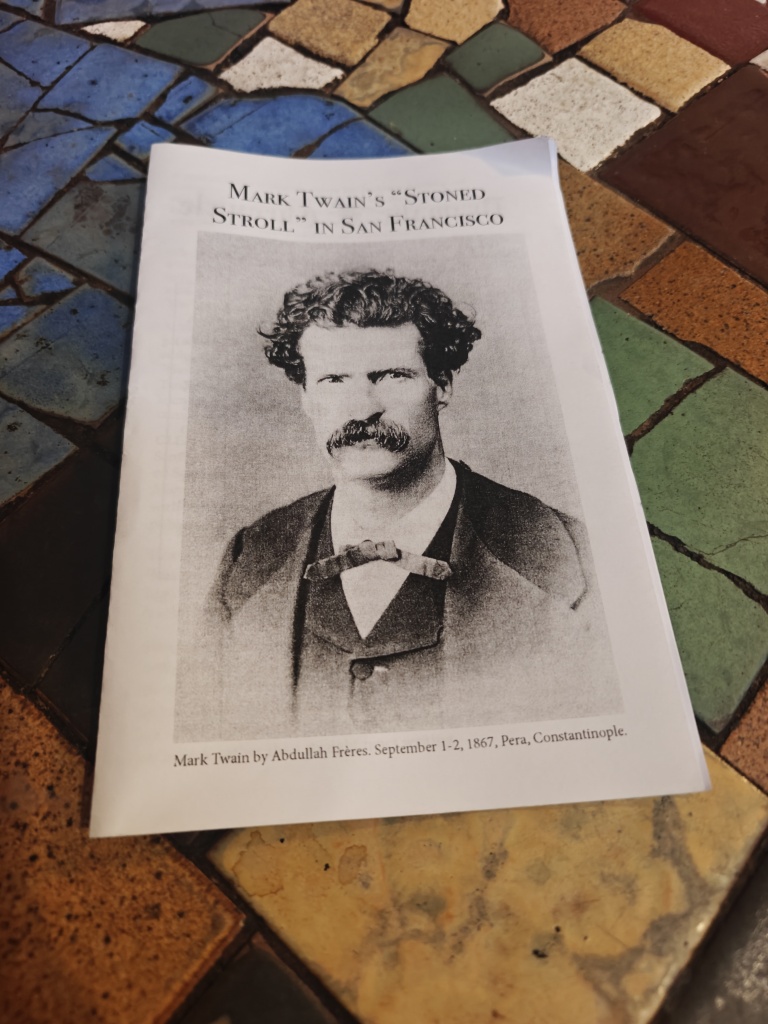
“Perhaps Fred tried hasheesh at Fannie’s suggestion, or so it would appear,” Komp wrote within a pamphlet printed for her historical “hasheesh” walking tour. “Or perhaps an inventive public relations person placed the ad themselves.”
In much the same way as the ads, the account of the “Stoned Stroll” in the San Francisco Dramatic Chronicle—which later became the San Francisco Chronicle—could be read like a promotional post for Twain’s writing.
Did Twain write the article himself as a teaser for his stories to come?
It’s not impossible or implausible. Research Komp conducted shows Twain wrote for the Dramatic Chronicle in 1865 and 1866. And in 2015, researchers for the Mark Twain Papers and Project closely examined the style of many unattributed articles in the Chronicle and verified Twain was the scribe.
My Stony Guardians
Alongside me on last week’s hash stroll up Clay Street were Komp, fellow cannabis journalist and author David Downs, and cannabis activist Bram Goodwin.
Komp took us through Chinatown streets draped in red lanterns to the “birthplace of the city” plaque at 823 Grant Avenue, where Captain William A. Richardson built a tent made from the sails of his ship. Then we wandered into North Beach via Jack Kerouac Alley to visit City Lights Bookstore, which published The Hasheesh Eater in 1979.
RELATED: A hit of hope: Oakland Ballers become Oaksterdam Blazers
After I purchased a few books from other “hasheesh” inspired writers of the past, our group made a quick detour into the screenprint studio, SFOG, before walking across Grant Street to Professor Seagull’s Smartshop and its adjoining art gallery and community space, the Church of Mother Gong.
Sitting in a room lined with ethereal oil paintings of female forms in artistic alternative dimensions, we were joined by Niko Savelli. Savelli sat down for an interview with Downs about the new hash from the company he represents, Master Makers, and offered us gummies made with Whitethorn Rose live rosin that tasted like the watermelon Bubble Yum gum of my youth.
Energized by the hash following through my lungs and now in my stomach, I decided to take the bonus excursion with Komp, a visit to the home of cannabis historians and activists Michael and Michelle Aldrich.
The Dope Place
I first interviewed Michael Aldrich almost a decade ago about his home archive of 600 VHS tapes documenting marijuana media coverage called the Dope Tapes.
Michael Aldrich is too big a figure to distill here. He’s a cannabis activist, writer, and historical collector. His book The Dope Chronicles is a collage work of drug imagery and text pulled from newspapers, including the San Francisco Chronicle, that Aldrich tells me his collaborator acquired when he bought a train car filled with papers.
The Fitz Hugh Ludlow Memorial Library, the world’s formative collection of the writings of America’s first experiential cannabis writer, is now housed within the Aldrich’s studio apartment.
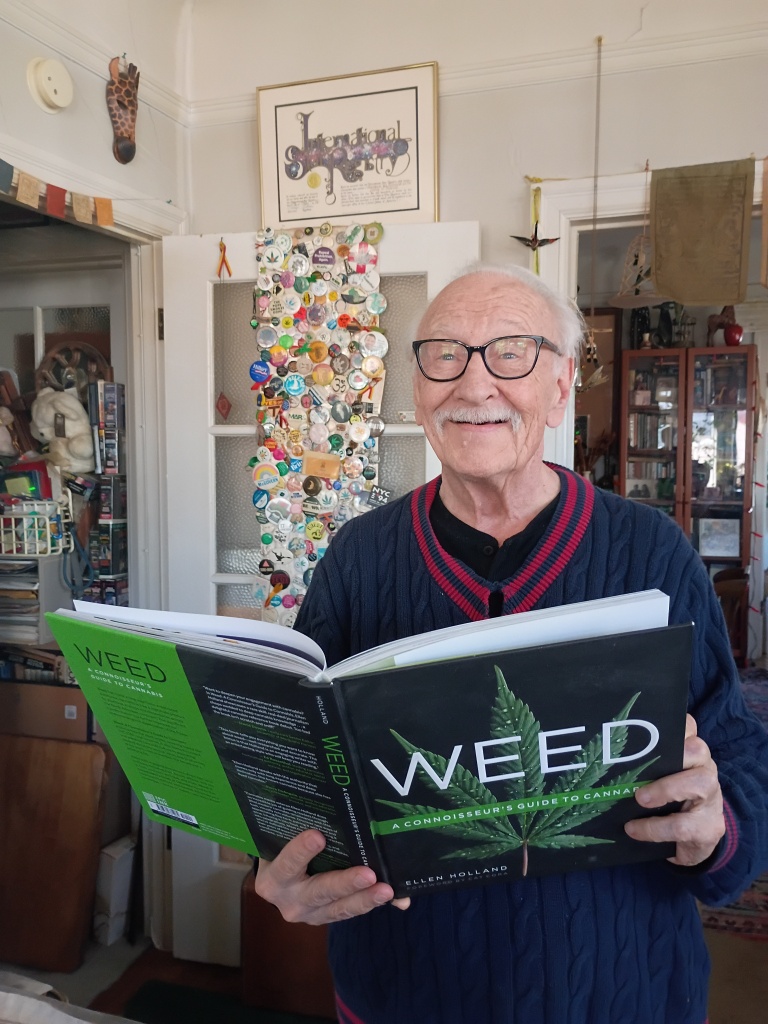
After smoking a joint together last week, Michael Aldrich showed me his first edition of The Hasheesh Eater and a poem called Hemp that Gary Snyder dedicated to him in the 1975 Pulitzer Prize-winning book Turtle Island.
Amongst his ephemera is a copy of my book, Weed: A Connoisseur’s Guide to Cannabis, and Komp’s book written under her pseudonym Nola Evanglista, Tokin’ Women.
The adventure was as thick as the smoke! I spent all day talking about cannabis writing from the past, with cannabis writers from the present.
Evoking the literary salons of the Bohemian era, the hash floated me through the sea of San Francisco and here to the end of my tale; thanks for strolling along.