


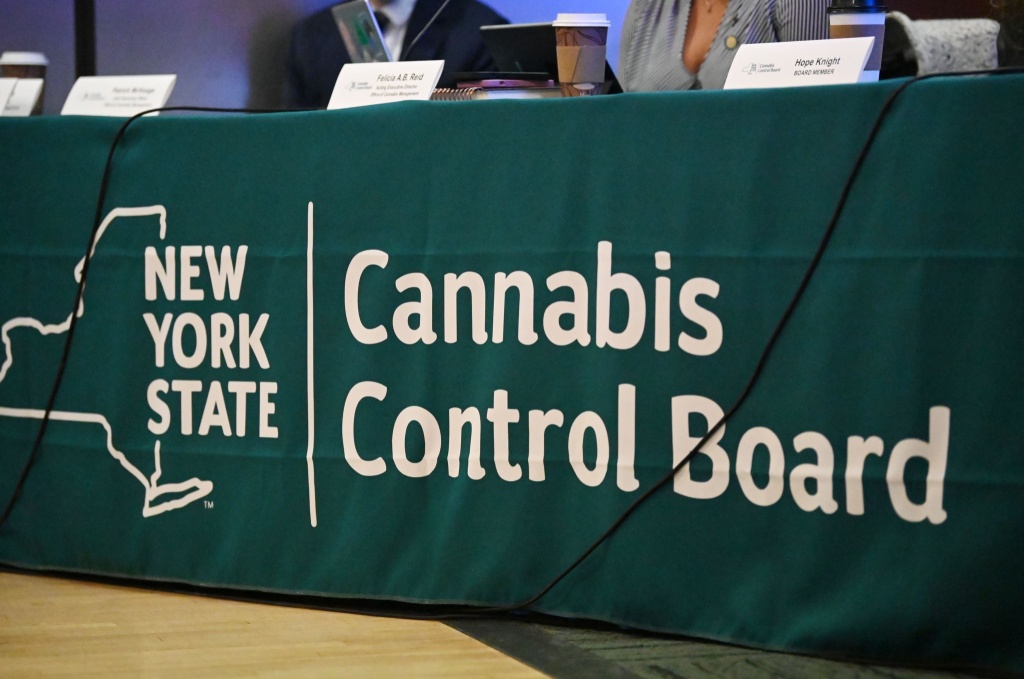
Despite strict supply-chain rules, many legal cannabis states struggle to keep unregulated products off the market. Illegal products aren’t limited to the illicit market or unlicensed smoke shops. They can also enter licensed dispensaries through a practice known as inversion. New York is taking aggressive action against the practice—but regulators still face significant enforcement challenges.
RELATED: Your weed dispensary may be illegal – here’s how to tell
Gov. Kathy Hochul signed the Cannabis Supply Chain Integrity and Anti-Inversion Act into law earlier this month. The bill calls for a penalty of up to $10,000 per day as well as potential product seizure. Inversion has long been prohibited under cannabis regulations, but New York is the first state to specifically codify the practice in statute and establish dedicated penalties.
Inversion is problematic because illicit cannabis products are typically untested, meaning they may contain pathogens or other contaminants. Bill sponsor Assemblyman Landon Dais told MJBizDaily the legislation was designed to protect New York operators and consumers.
“This is a supply-chain integrity bill and a product-safety bill. Products grown by New York farmers and producers are passing stringent testing and don’t have heavy metals or harmful chemicals.”
Catching up on enforcement
New York’s cannabis industry has faced multiple allegations that illicit products entered licensed channels. A high-profile case in 2025 involving a manufacturer accused of renting its space and license to unlicensed operators led to an embargo of several brands, causing chaos in the market. The case was ultimately dropped, leading to a major shake-up at the state’s Office of Cannabis Management (OCM).
It can be difficult for consumers to verify whether a cannabis product originated within the legal market. Most legal cannabis states require extensive supply-chain tracking, documentation, and testing to verify product safety and authenticity.
New York only recently began implementing a statewide seed-to-sale tracking system despite launching adult-use sales in 2022. Industry observers have long argued that the absence of a comprehensive track-and-trace platform made it more difficult for regulators to identify potential inversion and other supply-chain violations
RELATED: From blinkers to video games: California targets next-gen weed vapes
Kaelan Castetter, policy director for the Empire Cannabis Manufacturers Alliance, believes the new Metrc system will help combat the state’s inversion problem.
“Seed-to-sale tracking is one of the most important tools regulators have to detect potential inversion because it allows them to follow cannabis through every stage of the regulated market,” Castetter told GreenState. “The more complete and accurate that data is, the easier it becomes to identify inconsistencies, investigate suspicious transactions, and verify that products are coming from their stated source.”
Castetter said enforcement can be challenging because regulators must piece together records from multiple licensees and prove a product’s true origin differs from what was reported. He said the new law gives regulators another tool to pursue violations.
“By creating clearer statutory prohibitions and definitions around inversion, the bill would make it easier for regulators to use seed-to-sale data and other evidence to identify violations and take enforcement action when products cannot be legitimately traced back to their licensed source,” Castetter explained.
RELATED: Weed might be secretly changing your taste buds – here’s how
Despite the robust penalties and “get tough” approach to combatting inversion, regulators still face an uphill battle. And while officials have been given permission to conduct warrantless administrative searches of cannabis and hemp operators in the state, it’s going to take a lot of time and resources to defeat inversion for good.
Other states grappling with inversion will likely watch New York closely as they consider similar enforcement measures.
