


Have you ever looked at a cannabis product and wondered, “What do the numbers on this sticker mean?” It turns out they’re more important than you might think.
Cannabis labs test regulated products for cannabinoid potency and terpene content (reported in percentages) and to ensure they’re free from banned pesticides and contaminants. The lab report is crucial information meant to protect consumers from adulterated products and instill trust and confidence.
RELATED: This is what most people get wrong about hemp THC products
Many people have questions about cannabis testing. How does it work? Is it legit? What does a COA mean?
To help shed light on the wide world of cannabis testing, GreenState is introducing a new series called Dear Labby. Produced in conjunction with ACS Laboratory, a leading testing facility in Florida, Dear Labby breaks down your burning questions in a digestible and accessible way.
Do you have a question about cannabis testing? Email us at editor@greenstate.com
Question: Is “THC inflation” a real thing?
Yes, THC inflation, or falsely exaggerating potency levels, is very real. Studies across the legal market show that retail cannabis labels are routinely inflated—sometimes by as much as 25 to 35 percent or more.
This false advertising occurs in part because of a practice known as “lab shopping.” Because high THC numbers drive sales, some producers seek out labs that manipulate testing protocols or utilize non-compliant methods to boost potency scores artificially.
RELATED: This is why weed hits your friend differently than it hits you
For example, some laboratories aggressively dry flower samples before testing to increase the reported THC percentage. This process inflates potency levels because removing water reduces the sample’s weight without changing the amount of THC present. THC then represents a larger percentage of the sample by weight.
Brands can publish the higher “dry weight” number instead of the lower “as received” number, even though consumers purchase flower in its “as received” state. The graphic below helps illustrate what we mean.
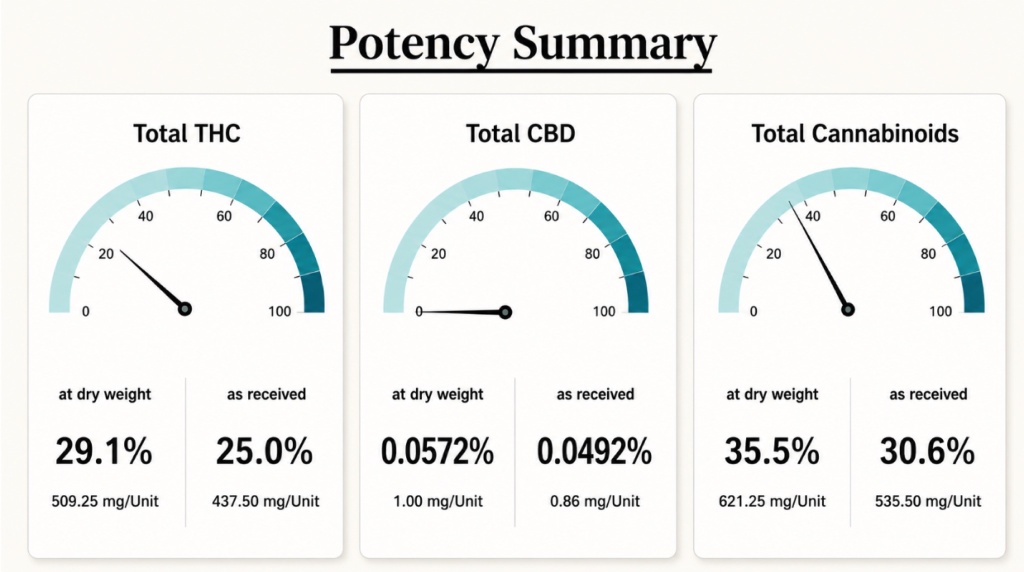
*This is a sample lab report illustrating one method for THC inflation. It is not a real report and makes no claims about any particular labs or dispensaries.
At ACS, we have consistently called for stricter oversight, standardized testing methods, and state enforcement to penalize this practice. The most important job a lab does is to ensure a product is safe and accurately labeled. Producing misleading or fake data hurts patients trying to dose correctly and destroys trust.
*This article was submitted by an unpaid guest contributor. The opinions or statements within do not necessarily reflect those of GreenState or HNP. The author is solely responsible for the content.