


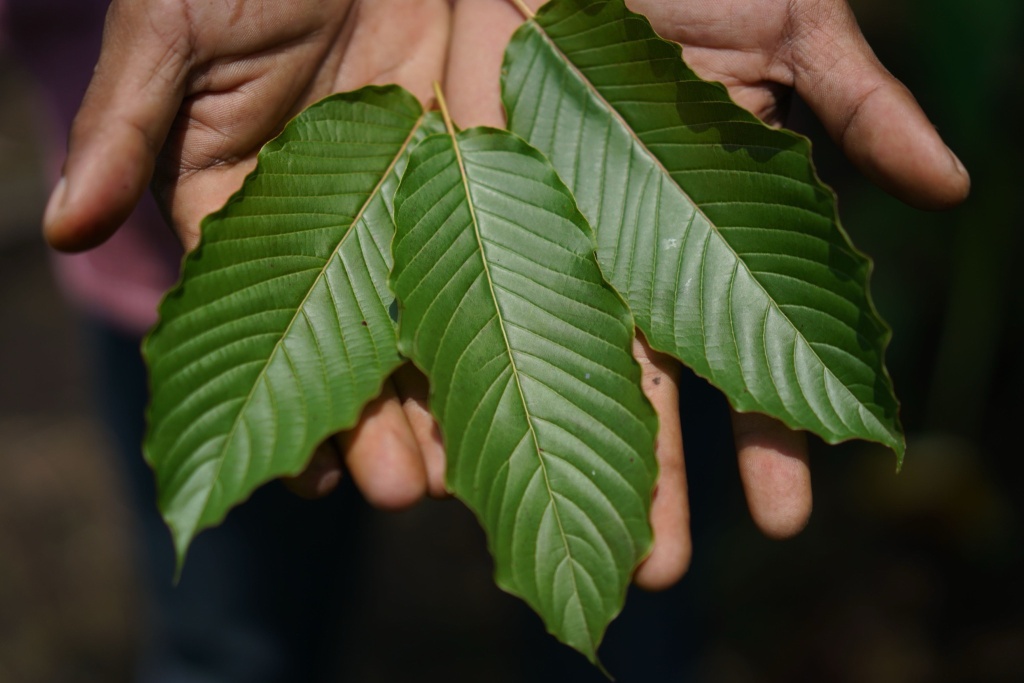
As federal cannabis rescheduling looms on the horizon and more states across the country begin rolling out regulations for legal psychedelic therapy, health officials have increasingly been targeting a centuries-old psychoactive plant with newly introduced measures of prohibition. Kratom is a leafy green botanical native to Southeast Asia which acts on the opioid receptors and is noted for its ability to offer pain relief and euphoria to the more than two million Americans who are estimated to use it each year – and it is this ancient plant medicine which is being increasingly scrutinized as a key issue in the often contradictory framing of drug policy reform.
RELATED: What a decade in cannabis legalization taught me about psychedelics
While many have looked to the current administration for expeditious federal cannabis rescheduling and lenience towards natural medicine policy reform under shifting federal health leadership, increasing bans on hemp products and rising prohibition of natural leaf kratom suggest that drug policy reform may be backsliding in more areas than it is progressing. Since it was never scheduled under the Controlled Substances Act in the United States, kratom has become a frontrunner in the legal psychoactive plant market.
Its two primary alkaloids are mitragynine and 7-hydroxymitragynine, and it’s the latter of these two that has caught the attention of health authorities and regulators after producers have introduced exponentially more potent products using synthetic ‘7-OH’. Over the last year, health authorities have launched a crackdown against 7-OH products in the wake of a series of unsettling reports about the addictiveness and potential dangers of the synthetic opioid, which has been called “13 times more potent than morphine” in a letter written by the FDA.
While 7-hydroxymitragynine occurs naturally in trace amounts in kratom, many of the products drawing regulatory scrutiny are synthetically concentrated versions.
The rising pushback against synthetic 7-OH products has cast a pall upon the kratom market itself, with health authorities across various counties currently considering restrictions against the sale and distribution of kratom products alongside their synthetic derivatives.
RELATED: In cannabis vs. hemp, this is the real enemy
As of March 25, the state of Connecticut has implemented a ban against kratom products and required stores to remove any remaining inventory from shelves. The domino effect of prohibition is poised to spread across state lines, signaling an escalation of the war on plant medicine. Kansas has a similar bill that has passed legislation and is awaiting the governor’s action to be signed into law. Several other states and counties are also currently moving the needle on the natural leaf kratom market regulation or proposed prohibition in the wake of the 7-OH product bans.
“The press often conflates 7-OH with kratom, and as a result, we’re seeing increasing prohibition against natural leaf kratom,” says kratom industry operator Soren Shade of Top Tree Herbs.
“If existing kratom regulations can be overturned and replaced with bans, it’s actually easier for marijuana regulations to get overturned and replaced with bans too,” he continues.
Such is also the case in Nassau County, New York, where lawmakers passed a bill banning the sale of all kratom products and synthetic counterparts in March. As of last week, new legislation has been introduced in neighboring Suffolk County – a district that makes up two-thirds of Long Island – to potentially ban kratom products, signaling a domino effect in the region.
“The propaganda surrounding natural kratom leaf is reaching ‘Reefer Madness’ levels again,” says Travis Doupe of The Mock Pit, a non-alcoholic bottleshop that sells kratom in Huntington Station, New York.
Kratom bans part of wider ‘war on plants’
Kratom is a staple of the kava bar scene in New York that serves as a ‘third space’ for people to congregate together and enjoy alternatives to alcohol. Kava is a mild psychoactive root traditionally used in the South Pacific islands to induce relaxation and promote social bonding. Together, kava and kratom have become the backbone of a rising trend towards public venues offering alcohol alternatives for people who want to socialize and relax without the hangover.
While New York public health officials have raised concerns about the addictiveness of kratom and its reported potential liver toxicity, a community of kratom users and small business owners is working to educate the public about the utility of the plant and its role in helping to shape the alcohol alternative market.
“What we’ve built is a beautiful community of people who can meet, work, and relax away from a bar setting. In 2026, it’s sad to think they are suppressing this vibe and trying to ban a safe and natural plant,” continues Doupe.
RELATED: Meet the trauma survivor quietly shaping Colorado’s psychedelic future
Other members of the kratom community in New York see the potential ban of kratom as classic government overreach. For these small business owners who have helped shape the alcohol alternative movement by creating ‘Third Spaces’ offering legal psychoactive plants like kratom and kava tea, the specter of a crackdown on kratom products poses the threat of undermining the local community connections and values they champion.
“Nassau County’s ban on the sale of kratom supersedes both state and federal regulations. County Executive Bruce Blakeman is threatening up to one year of jail time for selling a plant that is 100 percent legal in the rest of New York State,” says Eric Ott of Roots Kava Bar in Long Island.
“In a state where cannabis was legalized, and psilocybin therapy frameworks are being considered, one of the biggest counties in the state is considering a ban on kratom. The war on plants that we thought was over is actually coming back masked as public safety in an overreach response to cracking down on totally unnatural synthetic drugs like 7-OH,” says Robert Lattig of Roots Kava Bar.
The Make America Healthy Again movement under Secretary RFK Jr. signaled to supporters a seeming openness to moving the needle on legal access to natural medicines and psychedelic therapies, but there is mounting evidence to suggest that this administration is not as receptive to policy reform as previously imagined. The crackdown against 7-OH, being extended to potentially ban the sale and distribution of kratom at large in various counties, showcases the domino effect of shifting public and political opinion on natural healing modalities.
In an era when the War on Drugs has been revealed to be an instrument of political power rather than a public health provision or scientifically-grounded framework, kratom has become a ‘canary in the coal mine’ for what could amount to more overreach than ever in regards to the prohibition of psychoactive plants.
*This article was submitted by an unpaid guest contributor. The opinions or statements within do not necessarily reflect those of GreenState or HNP. The author is solely responsible for the content.
