


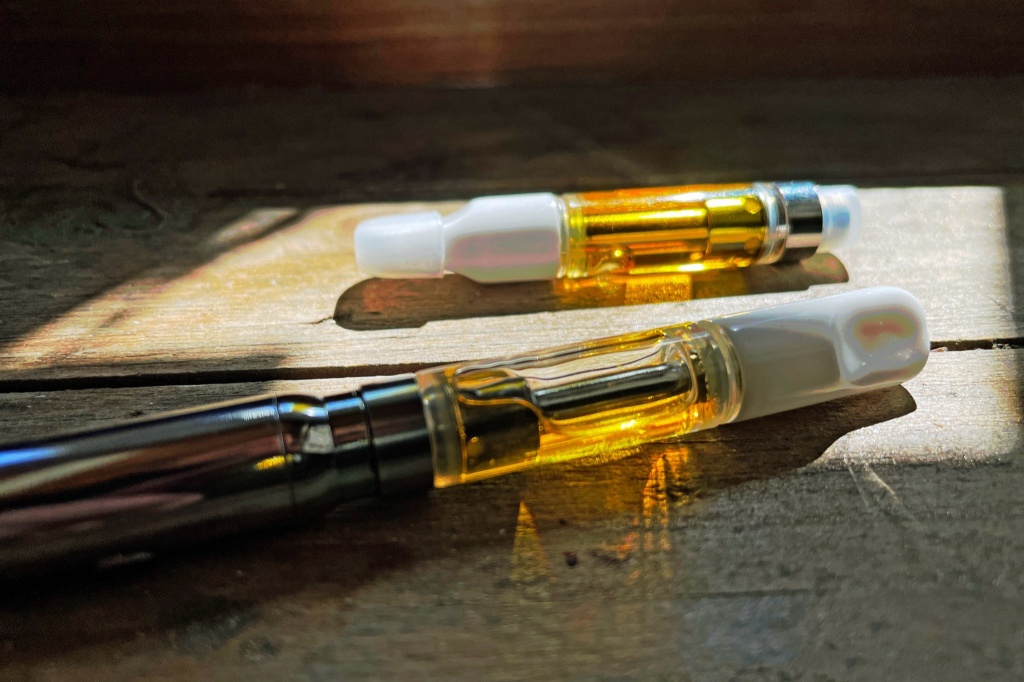
Criticizing public health campaigns that equate the harms of vapes with smoking, Cal NORML recently released a study that asserts vapes are safer than joints. The study looked at two types of vape pens, disposable and refillable. The vapes were filled with live rosin that contained more than 80 percent THC and faced off against pre-rolled joints containing 23 percent THC.
RELATED: Here’s why Cookies put 3 vapes in your vape
The study, which was conducted by NN Analytics in San Diego, California, then used a “puffing machine” to test a dozen key toxic emissions and concluded that vape pens “emitted significantly cleaner emissions than the joint for almost all toxins tested.”
“We’re interested in the health of our consumers, and we want them to have the safest possible modes of ingestion,” Cal NORML director Dale Gieringer said of the recent study. “The anti-smoking people are afraid of this because they’re scared that we will actually come up with things that are safer than smoking.”
The Cal NORML study looked at cannabis concentrates, but falls in line with another recent study that examined vaping cannabis flowers. Both studies showed vaping cannabis may be less risky than combusting.
Not Smooth Like Butter
That nasty smell you get when butter starts to burn is acrolein. It’s a potent irritant to the eyes and lungs. Acrolein is a chemical that the French used in tear gas in World War I, and it’s also found in the smoke of nicotine and cannabis. Another noxious chemical that comes with combustion is benzene, which is in gasoline fumes, motor exhaust, and smoke from cigarettes and cannabis.
“The vape completely suppressed benzene and acrolein, two highly noxious compounds that appeared at levels above safe exposure limits in the joint,” the Cal NORML study reads.
Studies on the health of vape pens containing cannabis concentrates are limited. Gieringer pointed out that Cal NORML’s recent study only looked at two vape pens, while there are hundreds of different models.
RELATED: From blinkers to video games: California targets next-gen weed vapes
Heating is the main culprit in terms of vapes releasing more toxins than joints, and the Cal NORML study recommends an investigation into the effects of different higher temperatures. The study notes that California tests cannabis vapes for heavy metals, including nickel and chromium—used for vape heating coils made of nichrome wire—but notes in this report and a previous study that “these tests can’t detect metals that leak into the concentrate later during use of the device.”
Within an article published by SFGate in 2024, Dr. Laurie Vollen, a Bay Area-based physician who provides medical cannabis recommendations, expressed concerns that cannabis vape pens could expose consumers to heavy metals.
So, Vapes are Okay, but are Additives?
In 2018, as the senior editor of Leafly, David Downs identified that vitamin E acetate was used as a cutting agent in cannabis vapes and released into the unregulated cannabis market nationwide. This led to vaping-related lung injuries in 2019 and 2020, known as the EVALI (e-cigarette or vaping product use-associated lung injury) crisis. Downs’s reporting led to awareness and bans of the chemical used in cosmetics within cannabis vape pens in regulated markets.
Studies like those conducted by Cal NORML and investigative journalism like that conducted by Downs have led to changes in cannabis vaping products as it becomes clearer what might be hazardous.
“Nobody uses vitamin E acetate anymore,” Gieringer said.
RELATED: Your vape’s THC number is lying to you
“When vapes started out, cannabis vapes sort of modeled themselves on tobacco vapes in many ways, and they used the same kinds of additives,” Gieringer continued. “In particular, there are a couple of other additives, which are flavorless, called PEG, which is polyethylene glycol, polypropylene glycol. These are two other so-called safe food additives that do, however, produce a certain amount of toxins when you heat them up, not as many toxins as you get in smoke, typically, but some. But people stopped having those additives altogether, to my knowledge, in cannabis states.”
While asserting cannabis vape pens are still safer than joints, the recent Cal NORML study recommends that further research on cannabis vape pens look at “the effects of differing concentrate composition and additives.”
When asked directly if Cal NORML’s pro-pot stance would be looking for positive coverage of cannabis vape pens, Gieringer responded that the organization is interested in the health of consumers and having the safest possible methods of cannabis ingestion.