


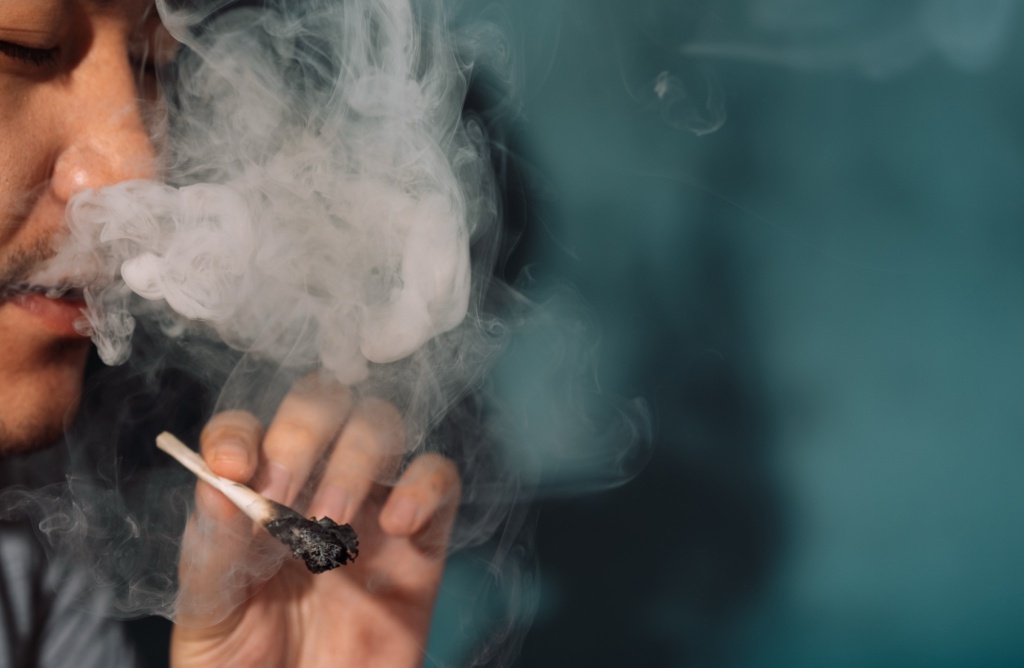
Cannabis is widely used therapeutically, and often viewed as a healthier alternative to other intoxicants, but it’s not without its risks. Smoking in particular may produce harmful byproducts, while using a lighter when you rip a bowl could cause butane vapor to enter your lungs. For those who want the instant effects of inhalation, a new smoking vs vaping study suggests a potentially healthier alternative.
RELATED: This is why weed hits your friend differently than it hits you
Research conducted by dry herb vape maker Pax suggests that vaporization may reduce harmful combustion byproducts by up to 99 percent. The California company compared aerosols from a smoked joint with those from a Pax Flow at its highest temperature, finding the device produced fewer potentially harmful compounds.
These compounds include formaldehyde and benzene, carcinogens linked to lung irritation, cardiovascular stress, and increased cancer risk over time.
The paper says burning cannabis exposes it to temperatures up to 900°F, causing chemical changes. By comparison, the vaporizer uses an oven to heat cannabis to about 419°F, which the study says eliminates many harmful byproducts.
How the study measured smoking vs vaping weed
The Pax research team generated smoke and vapor using consistent amounts of cannabis under a standardized “puffing protocol.” They captured aerosols on Cambridge filter pads and submitted them for analysis.
The team tested for harmful combustion byproducts, including carbon monoxide, volatile organic compounds (VOCs), and polycyclic aromatic hydrocarbons (PAHs), using established air quality methods. They then compared the amounts of each toxicant produced by burning versus heating cannabis.
RELATED: Do cannabis users pay more for insurance? What to know
After testing for 16 harmful or potentially harmful compounds (HPHCs), the team found smoke contained far higher concentrations than vapor. The study also suggests vaporization preserves and delivers cannabinoids and terpenes more efficiently than combustion, which destroys some compounds and dilutes the rest with byproducts.
The study was limited to a single strain of cannabis and only compared one temperature of vaporization to burning a joint. The authors contend that the results would be the same no matter how the flower was lit.
“When cannabis burns, it produces smoke, and that smoke contains the vast majority of harmful byproducts,” explained Richard Rucker, PhD, director of product integrity at Pax. “This dynamic would be similar whether someone is smoking a joint, bowl, or bong—because the core issue is combustion itself.”
Independent research is needed to verify the Pax team’s results, but the preliminary findings are notable and align with other experiments suggesting vaporization reduces concentrations of harmful chemicals. However, peer-reviewed research is needed to determine whether dry herb vaporizers really are safer.
