


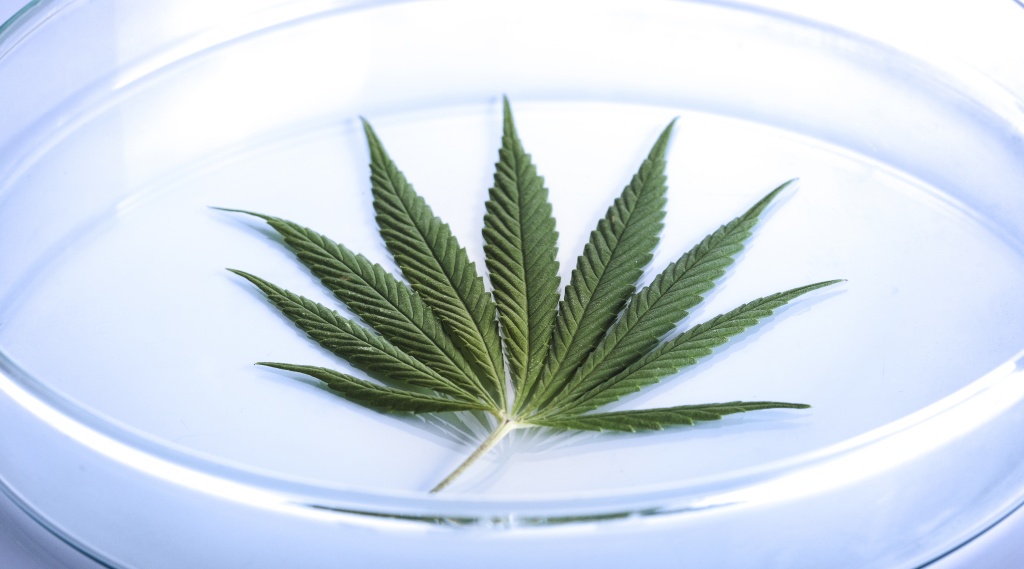
A lot must happen for a cannabis plant to create compounds like THC and CBD. A cannabis plant’s life cycle lasts several months, and how much THC or CBD ultimately shows up can vary. Scientists are exploring ways to produce cannabinoids at scale without growing entire cannabis plants, potentially offering an alternative to conventional cultivation. Now, researchers are looking at silver as an option.
RELATED: Legal weed may have an unexpected workplace benefit
According to a paper published in BMC Biotechnology, researchers successfully produced small concentrations of THC and CBD from cannabis callus cultures using silver nanoparticles.
Callus cultures are masses of relatively undifferentiated plant cells; unlike mature cannabis flower, they lack the specialized structures, like trichomes, where cannabinoids are typically made.
The scientists exposed the cannabis cultures to microscopic silver particles (AgNPs) at three different concentrations: 5 milligrams per liter, 10 milligrams per liter, or 20 milligrams per liter. Researchers produced the nanoparticles using cultures of a yeast called Yarrowia lipolytica.
After four weeks of treatment, scientists found that higher concentrations of the silver nanoparticles were associated with greater cannabinoid production. The cultures that received 20 milligrams per liter produced THC concentrations of 0.31 percent and CBD concentrations of 0.26 percent.
While the concentrations were tiny compared with those found in cannabis flower, the experiment showed the cells could be coaxed into producing cannabinoids.
“This is the first report demonstrating the effectiveness of biogenic AgNPs in inducing cannabinoid biosynthesis in C. sativa L. callus cultures,” the paper authors wrote.
RELATED: Cannabis is legal in most states – why are arrests rising?
The researchers believe the nanoparticles acted as an elicitor, signaling the plant cells to produce THC and CBD. They pointed to increased activity of the THCAS and CBDAS genes, which are involved in cannabinoid production. At the highest nanoparticle concentration, THCAS activity increased 7.5-fold while CBDAS increased 2.5-fold.
“Large-scale cannabinoid production in conventional agriculture is limited due to extensive land requirements, irrigation requirements, pests and diseases, and reliance on agrochemicals,” the researchers explained.
The study authors added that the results show promise in producing valuable compounds from medicinal plants, in what they called “plant cell factories.”
The results come from a pharmaceutical lens; many cannabis advocates argue there are more benefits from whole plant extraction thanks to a theory called the entourage effect. This is the idea that all of the parts of the plant work better in concert.
However, as more researchers seek to create cannabinoid-based prescription drugs, it would make sense for them to seek production methods to make CBD and THC in a lab, not a farm. Could silver be behind the THC of the future? Time will tell.
