


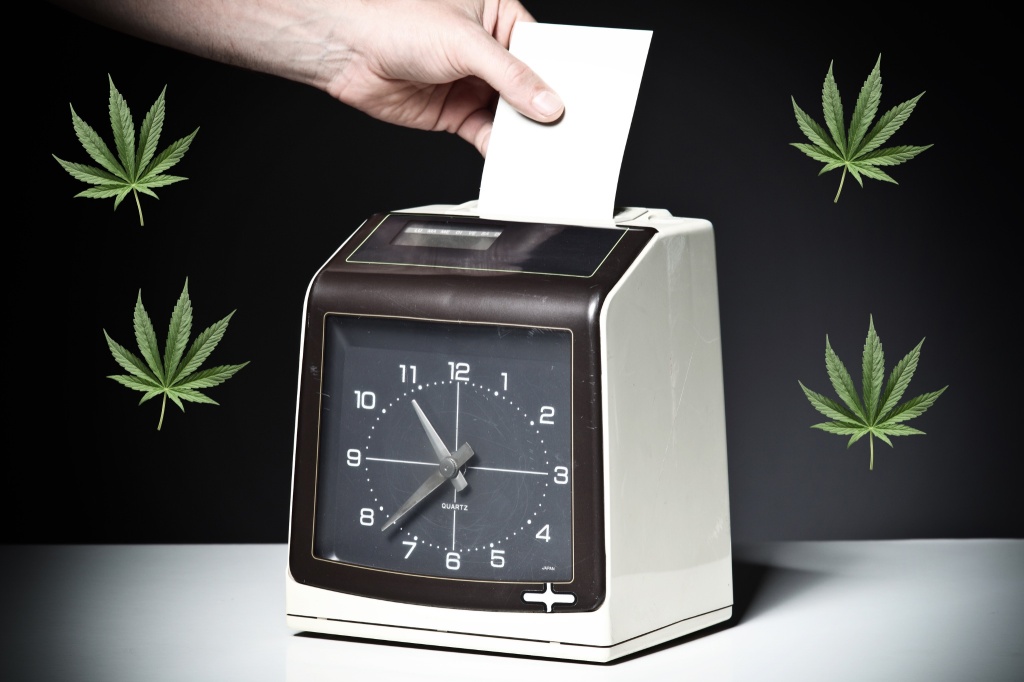
Legal medical cannabis may be doing something employers might not expect: keeping more workers on the job and in good health.
A new study published in the Journal of Workplace Behavioral Health found that medical cannabis decriminalization was associated with a roughly 6.9 percent reduction in the likelihood of health-related workplace absences. Researchers analyzed more than 20 million responses from the Current Population Survey, spanning January 1990 through March 2025.
RELATED: Employers are testing for cannabis again – here’s why
The effect wasn’t evenly distributed: some of the largest reductions appeared among people whose jobs put serious demands on their bodies, like manual laborers and machine operators, as well as workers in agriculture, construction and manufacturing.
“What was especially interesting was where the association was the strongest. Workers in physically demanding occupations and industries experienced the largest reductions in health-related absences,” study co-author Patryk Babiarz, associate professor at the University of Georgia, told GreenState. “That pattern is consistent with the possibility that access to medical cannabis helps some workers manage chronic pain or other conditions that can make physical work difficult.”
Pain might be part of the picture
Why those workers? Pain may be part of the story.
“One plausible explanation is pain management. Physically demanding work can contribute to chronic pain, inflammation, and musculoskeletal problems,” Babiarz said. “Because cannabis may help some workers manage these symptoms, access to medical cannabis could make it easier for them to remain on the job rather than take time off because of illness or injury.”
But there’s an important caveat: researchers couldn’t determine whether individual workers actually used cannabis, let alone what products they used or what conditions they were treating. As a result, the study identifies a relationship between medical cannabis laws and absenteeism, but it doesn’t necessarily prove that cannabis itself caused workers to miss less work.
RELATED: Marijuana in the mail? This state says it could happen
The 6.9 percent figure also needs context; fewer than one percent of workers in the sample reported a health-related absence during the survey reference period.
“The results should not be read as a blanket endorsement of cannabis legalization,” Babiarz said. “Cannabis use can carry meaningful health and safety risks, and impairment is an especially serious concern in jobs involving driving, heavy machinery, or responsibility for other people’s safety. Our goal is to provide evidence about one potential consequence of these laws so that the broader discussion of their benefits and costs can be better informed.”
Medical and recreational laws tell different stories
Interestingly, researchers found no statistically significant effect from recreational cannabis legalization.
“Medical and recreational cannabis laws likely affect workers in very different ways,” Babiarz said. “Medical cannabis programs are specifically intended to provide access for people treating qualifying health conditions, including chronic pain.”
RELATED: Could pilots legally use cannabis someday? FAA seeks answers
Recreational legalization, by contrast, expands access across a much broader population and for reasons beyond symptom management.
Next, researchers hope to pair cannabis-law changes with more detailed information about individual consumption and workplace records, potentially helping answer the question this study can’t: whether symptom management is actually what’s keeping workers from calling out sick.