


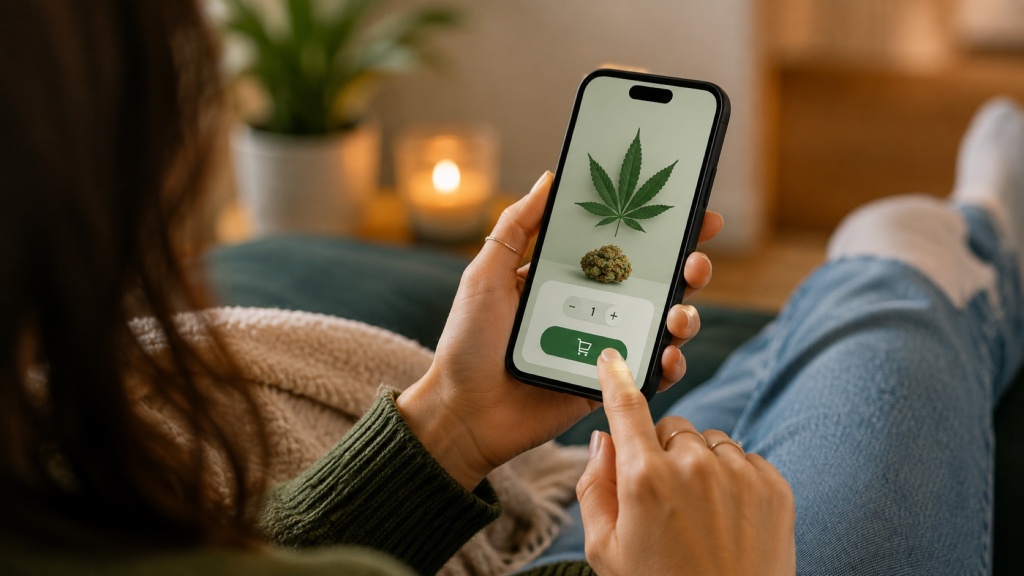
Ordering dinner for delivery takes about 30 seconds, but ordering cannabis is a whole different beast. Age and identity verification, purchase limits, inventory tracking, chain of custody, payment processing, driver licensing, insurance, and state reporting are just some of the requirements that can come with getting a legal cannabis order from a dispensary to someone’s front door.
RELATED: Too many dispensaries are missing one important thing
Drop, a queer women-founded technology company launching in Denver, wants to take much of that work off retailers’ plates.
“Cannabis delivery has a strange problem: consumer demand exists, dispensaries want to offer it, and licensed drivers want the work, but the infrastructure connecting all three is incredibly fragmented,” Drop CEO and cofounder Kat Savoy said.
Savoy founded Drop alongside chief technology officer Teri LeBlanc. Rather than asking individual dispensaries to build and manage their own delivery operations, the platform connects consumers, retailers, and licensed transporters while handling much of the complicated stuff in between.
“Drop’s job is to abstract that complexity away. The dispensary should be able to do what it already does well: sell cannabis and pack an order,” Savoy said. “We handle the infrastructure required to get that order legally and reliably from the store to the customer’s door.”
So, how does Drop work?
Consumers browse dispensary storefronts through Drop’s online marketplace, where inventory, pricing, and availability are synced directly with each retailer’s point-of-sale system. Once an order is placed, Drop handles age and identity verification, purchase-limit checks, and confirmation that the delivery address is legally eligible. The dispensary packs the order, marks it ready, and dispatches a licensed driver.
RELATED: Weed’s biggest buzzkill finally has a fix
Drop is also integrated with Metrc, Colorado’s seed-to-sale tracking system, so it can automate compliance reporting throughout the delivery process.
“What the dispensary keeps is the job they already had. Pack the order, hit ready,” LeBlanc said. “Everything else is ours: drivers, vehicles, insurance, dispatch, two rounds of identity verification, address legality, per-delivery state paperwork, payment collection, and reconciliation.”
Delivery could also bolster social equity cannabis businesses
The founders see another potential impact in Colorado’s social equity transporter program.
The state created transporter licenses to give people disproportionately impacted by cannabis prohibition an opportunity to participate in the legal market. But according to Savoy, a license without steady orders, dispensary relationships, technology, and infrastructure may create a job rather than a scalable business.
“To really create wealth, these licenses need the opportunity to become actual businesses,” Savoy said. “We should be talking about an operator building a fleet, employing five or ten people, doing hundreds of deliveries, and generating $20,000 or $30,000 a month, and then continuing to grow from there.
“That’s when you’re creating jobs, building equity in a business, and creating something that can actually change a family’s economic trajectory. And delivery is fundamentally a density business.”
RELATED: Cannabis consumers want more than just “good weed”
Drop also hopes that aggregating demand across multiple retailers can give independent transporters the volume necessary to build fleets, hire employees, and grow.
“If social equity is the goal, that’s ultimately the outcome we should be trying to create,” Savoy said. “It should be measured by how many of those license holders are still operating profitable businesses five or ten years later. If Drop can help turn those licenses into sustainable businesses with real order volume and real income behind them, that’s a much more meaningful version of social equity.”
Denver is only the starting point. Drop’s platform was built with a rules engine that can adjust compliance requirements by location, potentially allowing the company to adapt as it enters other regulated markets.
“The bigger vision for Drop is helping make cannabis accessible to every adult who can legally buy it, across the United States,” LeBlanc said.
Her ideal future for cannabis delivery is decidedly less complicated than the technology required to make it happen: a cozy night at home, with Drop arriving at the door “alongside some DoorDash.”