


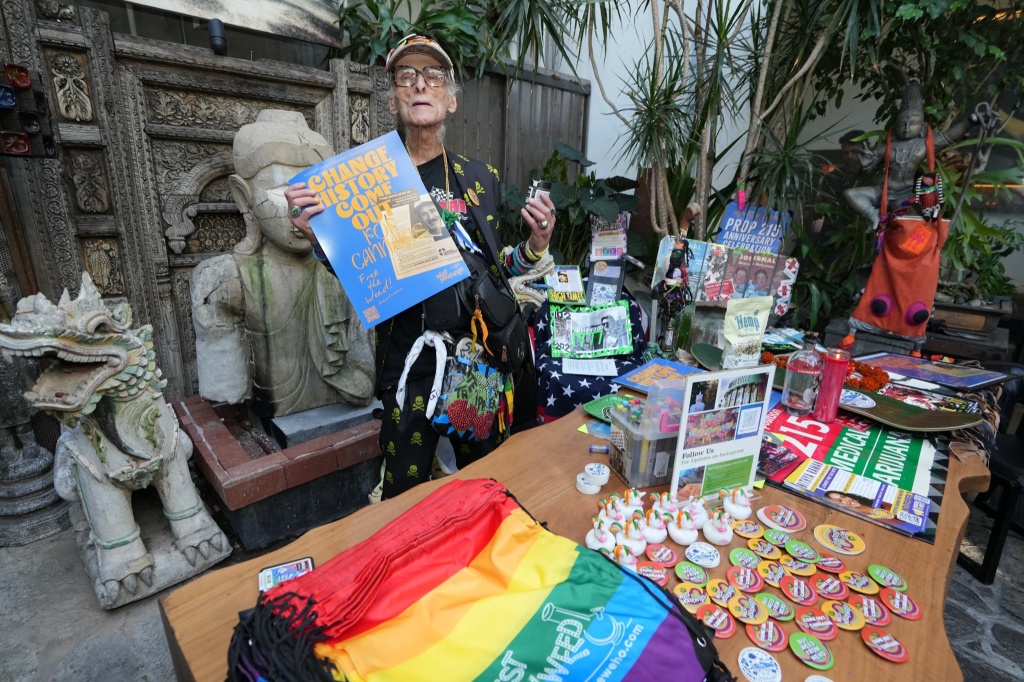
With the 30th anniversary of the passage of California Proposition 215 (the Compassionate Use Act passed at the ballot box on Nov. 5, 1996), it’s worth looking back at those earliest, messiest years of safe, legal access to medical cannabis. What was it like to be part of it? To live through it? To fight for it?
These are questions I’ve thought — and asked — about ever since the arc of my journalism career started bending toward the plant more than a decade ago. Recently, I had the opportunity to put my curiosity to work in a big way when I was tapped by the City of West Hollywood to conduct a series of on-camera interviews with some of the city’s cannabis pioneers with the aim of both preserving these first-hand accounts and making them accessible to a wider audience.
RELATED: Mark Twain’s ‘hasheesh’ awakening
Unveiled November 2 at a get-out-the-vote event at the Woods WeHo’s Ganja Giggle Garden, the West Hollyweed Oral Histories Project, presented by Emerald Village West Hollywood (the city’s cannabis-focused marketing organization) and THE LAVENDER EFFECT® ( a non-profit working to preserve LGBTQ culture and heritage), consists, at launch, of five 20- to 40-minute-long video interviews archived at the latter organization’s website.
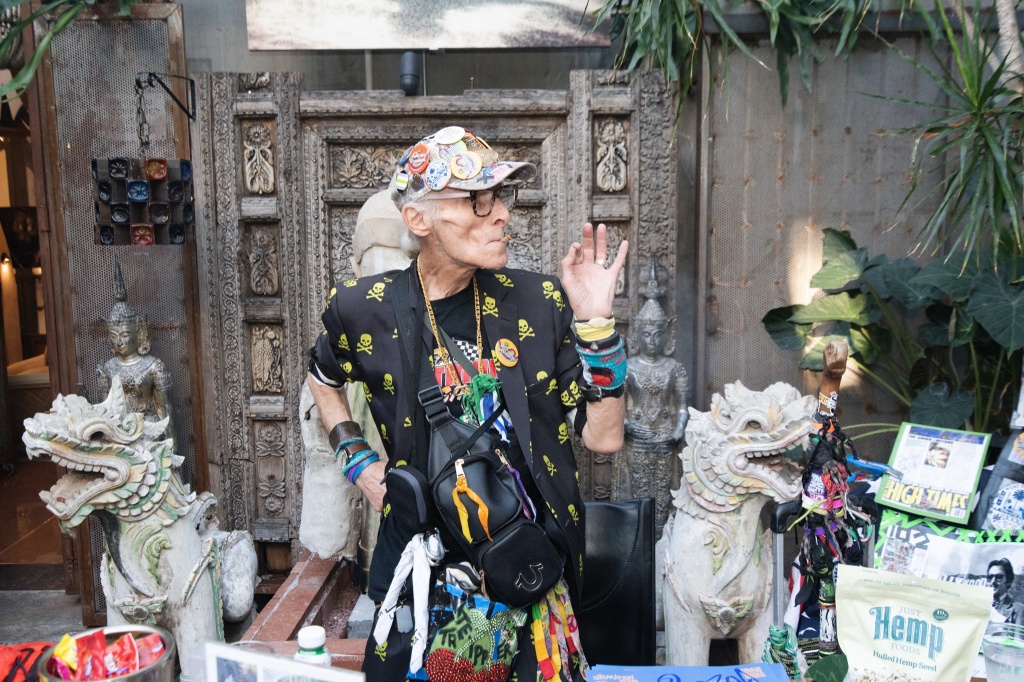
The first group of interviewees includes former West Hollywood City Council members Abbe Land (who served from 1986 to 1997 and again from 2003 to 2015) and Jeff Prang (after his 1997 to 2014 tenure he became — and continues to serve as — Los Angeles County Assessor), former Zen Healing dispensary operations manager Amy Pagel, AHHS dispensary owner Jason Beck, and medical cannabis activist, long-term HIV/AIDS survivor, icon and all-around colorful character, Richard Eastman.
Some of what went down in those early post-Prop. 215 years was familiar to me in a broad sense, and may be to you as well. But I guarantee the depth of detail delivered by these five folks will stick with you long after you’ve closed your browser window. For me, a few of those include Beck’s and Pagel’s granular accounts of the Drug Enforcement Administration raids on their respective dispensaries, Prang’s description of how some city assets were seized at the time and how “the city was basically branded a drug lord,” and Land’s explanation of how providing clear zoning ordinances was a key part of paving the way to safe, legal access to medical cannabis — in West Hollywood and beyond.
In addition to contextualizing the other four oral histories, Eastman’s account draws a straight-line connection between medical cannabis pioneer Dennis Peron helping HIV/AIDS patients in San Francisco and early efforts in the City of West Hollywood, as well as giving a first-hand account of the literal life-saving benefits of the plant for someone who received their diagnosis at the peak of the epidemic in 1994.
“I’m still alive,” Eastman says, staring into the camera toward the end of his interview, “due to the fact that marijuana keeps me eating [and] keeps me willing to walk five or 10 miles a day.”
Emerald Village West Hollywood Executive Director Scott Schmidt says the idea for the oral histories project came about as a way of “solemnizing the history of how we got here.”
“San Francisco gets a lot of the credit with Dennis Peron and Brownie Mary and all that,” he said before last night’s debut of the project. “And I wanted to tell the story about West Hollywood and what folks like Richard Eastman and Scott Imler and Jason Beck and our city leaders did because while San Francisco did the easy thing of saying medical cannabis should be legal, West Hollywood went through the effort to create the first zoning ordinances and all of those things to actually make it happen and make it functional.”
RELATED: Woody Harrelson wants cannabis to get back to its roots
Schmidt hopes these five stories are just the beginning. “Eventually, I want this to be a repository of the stories from across Southern California — how we got to where we are with cannabis legalization from the Los Angeles/West Hollywood perspective,” he said. “And I’d love to expand it to include the activists that helped get Prop. 215 passed, and Prop. 64. There are a lot of people who have put in a lot of effort and made a lot of sacrifices.
“But these five great interviews with five great people is an excellent start.”