


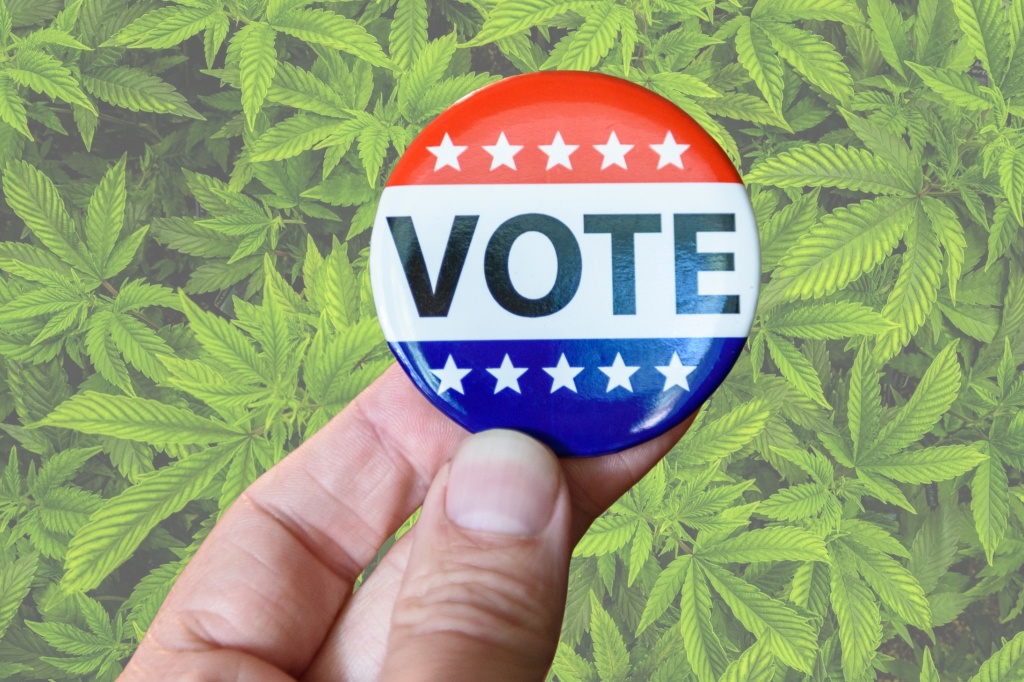
The 2026 midterm elections saw a blue tsunami overtake the country. Democrats upset Republicans in several key races, reclaiming control of Congress and claiming victory in many state races. Cannabis is poised to benefit from the blue wave in a major way, on both the federal and local levels.
Advocates believe a Democratic majority in both the House and the Senate could lead to broader cannabis reform that goes beyond the Trump administration’s rescheduling efforts. States like Pennsylvania and Wisconsin may also finally see cannabis legalized with the election of Democratic candidates.
RELATED: DEA issues first medical cannabis registrations
Here’s where the election could have the biggest impact on cannabis policy.
Texas
The Lone Star State delivered several election victories that could reshape the state’s approach to cannabis. An initiative in Houston to deprioritize misdemeanor cannabis possession passed with 70 percent of voters in favor. Democrat Gina Hinojosa defeated Republican Gov. Greg Abbott, while Vikki Goodwin was projected to unseat Lt. Gov. Dan Patrick, a prominent opponent of intoxicating hemp products.
On the federal level, Democratic state Rep. James Talarico won the U.S. Senate race. Talarico promised to work with President Donald Trump to legalize cannabis on the federal level should he be elected.
Wisconsin
Wisconsin could be one step closer to legalizing marijuana after Democrat David Crowley won the governor’s race. Crowley said he supported legalization during the campaign. Democrats also flipped both chambers of the state Legislature, giving the party unified control of Wisconsin government for the first time in 16 years. The shift could remove a major political obstacle to legalization, which has repeatedly stalled under Republican legislative leadership.
Pennsylvania
Pennsylvania Democrats won control of the state Senate while retaining the House and governor’s office, securing unified control of state government for the first time since 1993. The shift could give long-stalled marijuana legalization efforts new momentum. Democratic House Speaker Joanna McClinton said earlier this year that legislators could legalize marijuana if her party saw enough victories in the election.
RELATED: Lawmaker floats new plan to save hemp industry
Iowa
Democrat Rob Sand’s victory in Iowa’s gubernatorial race puts a legalization supporter in the governor’s office, but significant legislative hurdles remain. Sand said on the campaign trail that legalization could generate revenue for schools and reduce burdens on law enforcement. Iowa has a limited medical cannabis program, but the election of Sand could see broader reforms coming soon.
Massachusetts
While not a race to legalize cannabis, Massachusetts voters overwhelmingly decided to keep adult-use marijuana legal in the Bay State. Question 8, which would have eliminated the regulated recreational market, failed by a spectacular margin with nearly 77 percent of voters saying “No.”
Idaho
Idaho remains one of the last states without any form of legal cannabis, but voters have decided to keep their options open. A constitutional amendment that would have stripped Idahoans of the right to run ballot initiatives on drug policy reform failed, with roughly two-thirds of voters rejecting the proposal.
RELATED: Florida could get another shot at legalizing weed
The 2026 election didn’t legalize marijuana in any new states, but it may have changed the political calculus. Democratic victories in Wisconsin and Pennsylvania could clear the way for long-stalled legalization efforts, while voters in Massachusetts and Idaho sent a clear message about preserving existing cannabis rights and future reform options.
Whether the blue wave translates into a green one remains to be seen. With a divided federal government and competing priorities in statehouses across the country, the real test begins when newly elected lawmakers take office in 2027.
