


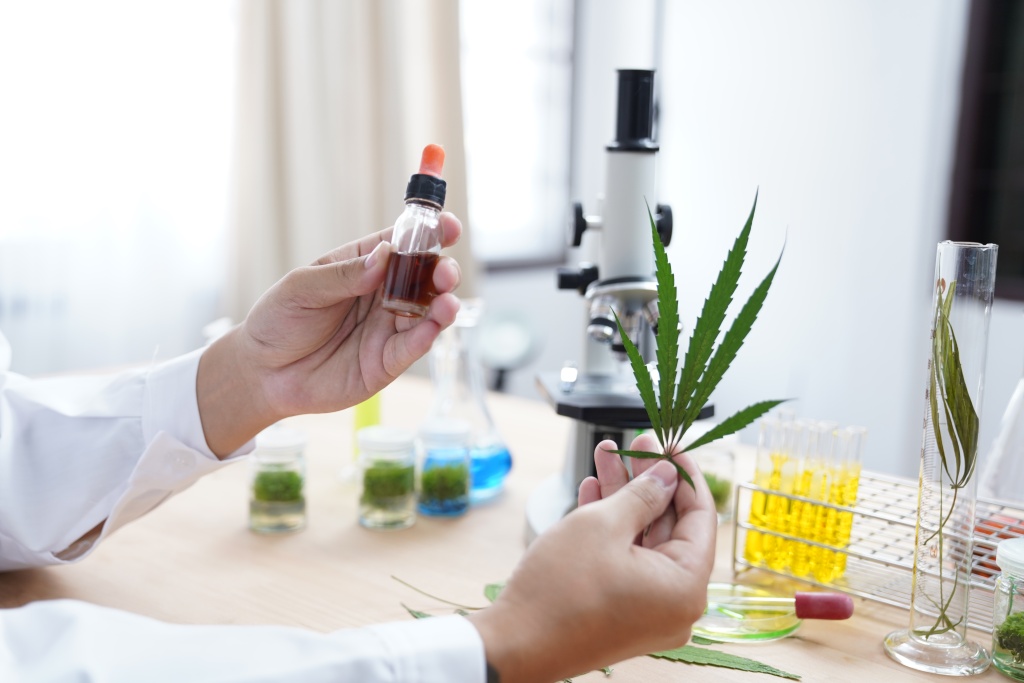
There is still a lot to discover about cannabis. One oft-debated theory is the entourage effect: the idea that cannabinoids, terpenes, and other compounds in the plant interact to influence its effects. However, a new review wonders if the theory still has a way to go before it’s proven.
An article published in Current Neuropharmacology sought to gather scientific evidence on the entourage effect. Researchers conducted a literature search for preclinical and controlled clinical studies examining whether terpenes or minor cannabinoids influence the effects of THC.
RELATED: Does cannabis really help ease stress? What the research says
The authors found that minor cannabinoids and terpenes often impact THC’s effects in preclinical studies, but the results often fail to translate to clinical human trials. For example, preclinical research suggested pinene might counteract some of THC’s cognitive effects, but controlled human research failed to demonstrate the same benefit.
For many other minor cannabinoids and terpenes, however, controlled human data were scarce or nonexistent, making it difficult to determine whether they meaningfully alter THC’s effects.
“Although interest in the clinical pharmacology of minor cannabinoids and terpenes has grown in recent years, the evidence supporting meaningful modulation of THC’s effects in humans remains exceptionally limited,” the authors wrote.
That doesn’t mean there aren’t unique human cases. For example, CBD has been found to increase THC levels in the blood when taken orally and in high doses. The cannabinoid THCV has also been shown to reduce some effects of THC. Additionally, evidence suggests the terpene limonene could reduce anxiety associated with THC consumption.
Where did the entourage effect come from?
A research team that included cannabis researcher Raphael Mechoulam first proposed the entourage effect, identifying it in a 1998 study. In this paper, the scientist’s team demonstrated that compounds naturally occurring in the body alongside an endocannabinoid could enhance that endocannabinoid’s activity in cells and mice.
RELATED: Ozempic and cannabis: what happens when you use both
Dr. Ethan Russo later expanded on the theory. In an influential 2011 paper, Russo highlighted several studies showing whole-plant cannabis extracts could behave differently than isolated compounds. He also identified research showing the independent effects of terpenes, theorizing they work synergistically with cannabinoids in the cannabis plant.
Anecdotal evidence also supports the entourage effect. Many consumers say products made from whole plant extract provide a more robust high than isolates.
The latest review does not negate the theory; it simply suggests more research is needed to confirm the entourage effect in humans. It’s also another confirmation that there’s still a lot to uncover about the cannabis plant.
