


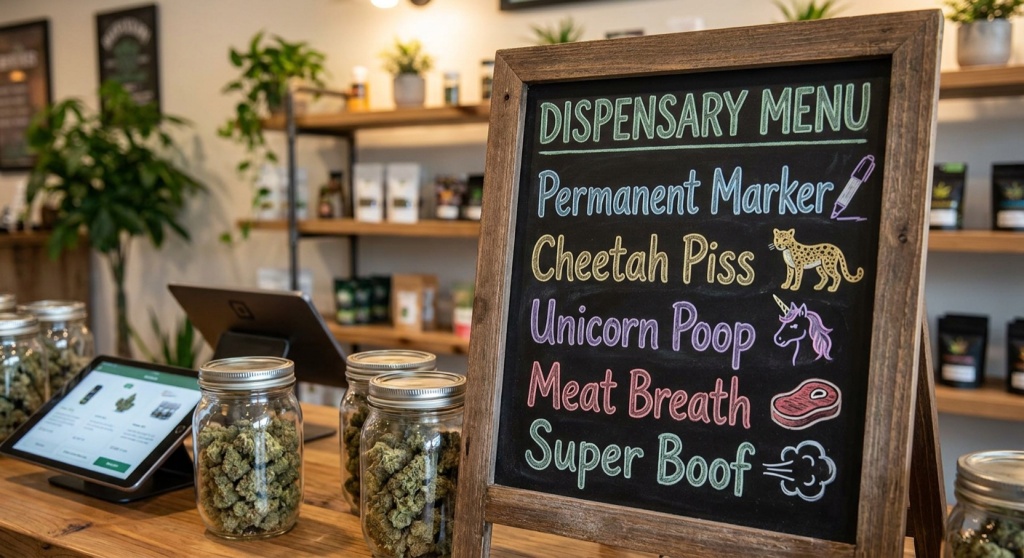
Today’s dispensary menus read less like botany and more like a streetwear drop. Alongside legacy varieties like Blue Dream and Sour Diesel sit confounding weed strain names like Cheetah Piss, Permanent Marker, Unicorn Poop, and Meat Breath.
As legal cannabis has matured, strain naming has evolved from underground shorthand into a full-scale branding strategy. Growers and brands are consistently competing for attention, and unforgettable, high-key ridiculous names have become part of the sell.
But the shift has also exposed a bigger issue within cannabis culture: strain names are often far less reliable (or understandable) than consumers think.
RELATED: Weed might be secretly changing your taste buds – here’s how
For decades, cannabis naming conventions loosely reflected lineage, aroma, or effects. Names like Pineapple Express or Granddaddy Purple hinted at flavor profiles, terpene makeup, or genetic backgrounds—hints that told you a little bit about the strain before you inhaled. While never scientifically standardized, many consumers still associate certain strains with those expected experiences.
The problem is that cannabis naming today operates with very little oversight. Unlike wine appellations or pharmaceutical products, there is no universal regulatory system verifying that the Gelato in Humboldt is genetically identical to a Gelato sold in New York City. Growers can rename cultivars, cross existing genetics, or market products under trendier labels with minimal consequences.
In some cases, names change for legal reasons. Gorilla Glue famously became GG4 after trademark disputes with the adhesive company. Meanwhile, strains inspired by candy or snack foods have drawn scrutiny as cannabis brands attempt to distance themselves from anything that could appeal to minors. But despite that pressure, the industry continues to embrace names that are intentionally loud, ironic, and downright weird.
RELATED: Your smartwatch might know when you’re high
Much of that shift can be traced back to the rise of Cookies: rapper Berner’s brand that has helped turn strain genetics into lifestyle branding. Cult-favorites like London Pound Cake, Cereal Milk, and Runtz reshaped the industry almost overnight, ushering in a wave of dessert-inspired and candy-adjacent naming conventions that still dominate dispensary shelves today. Soon after came strains like White Gummy, Gushers, Zkittlez, and Ice Cream Cake: names engineered to feel easy to remember, fun to photograph, and effortless to market online.
Soon after, the pendulum swung even further toward shock value. Strains like Pink Panties and Cheetah Piss brought us a new level of absurdity, while newer names like Permanent Marker, Super Boof, and Meat Breath seem designed less to describe the flower itself and more to stop consumers mid-scroll. In a retail environment driven by hype cycles and social media aesthetics, a memorable name can matter almost as much as the product.
That doesn’t mean strain names are entirely meaningless now. Within the industry, naming still functions as a kind of shorthand. “Cake” strains still suggest sweet, dense genetics, while “Diesel” continuously tends to signal gassy-forward terpene profiles. Experienced consumers are likely to recognize patterns tied to breeders or lineage, even when the branding itself borders on parody.
Still, many cannabis experts argue that the industry’s dependence on branding has outpaced its ability to educate consumers. Increasingly, shoppers are encouraged to focus less on catchy names and more on terpene profiles, cannabinoid ratios, and cultivation quality.
Because at this point, strain names are doing what all modern branding does: selling vibe first, product second.