


By Saturday afternoon, the entire town of Telluride, Colorado had evolved into a parading village of extravagantly costumed mushroom characters.
The 46th Annual Telluride Mushroom Festival touched down from Aug. 12 – 16 in the bucolic mountain resort town of Telluride, Colorado. Nestled in a box canyon in the picturesque San Juan Mountains, this is the oldest and biggest mushroom festival in the United States.
RELATED: Study reveals surprising truth about magic mushrooms
This year’s festival theme, “Rewild,” reflected a growing interest in restoring ecosystems and rebuilding relationships between humans and the natural world with fungi at the center of the picture. The concept of rewilding traditionally refers to returning plants and animals to landscapes where they once thrived; increasingly, fungi are becoming part of that conversation on both the community and international politics level.
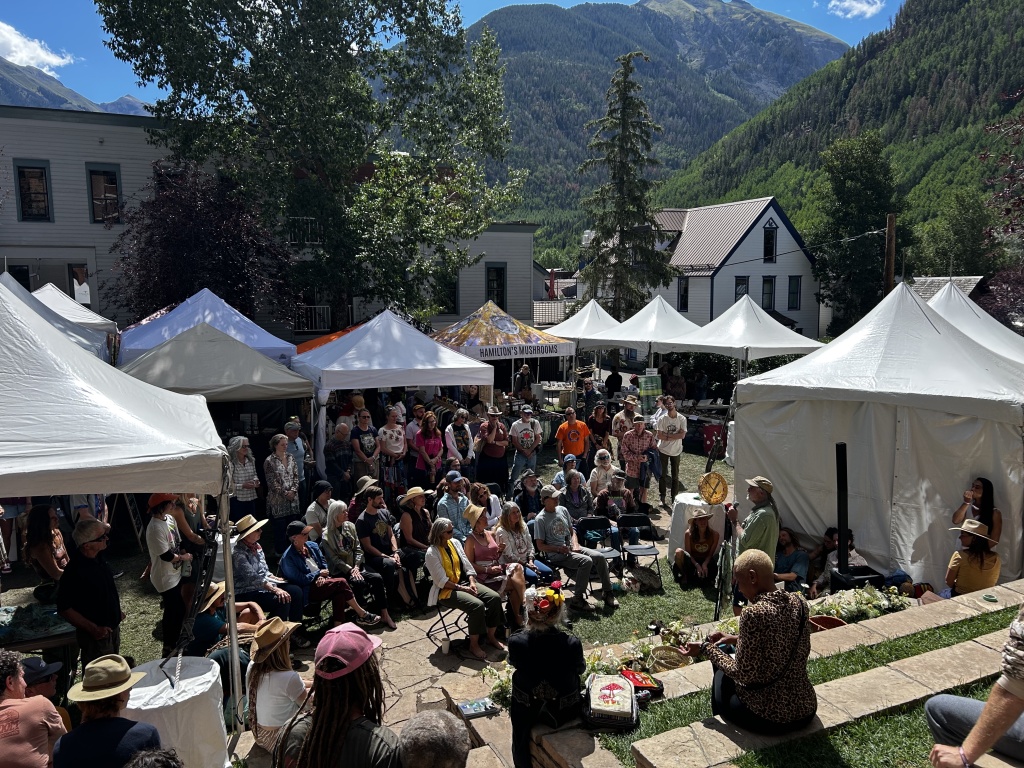
The theme is particularly fitting for Telluride, where attendees spend as much time outdoors as they do in lecture halls. For many visitors, the forests surrounding the town become a classroom where ecology comes alive through direct experience.
This celebration of all things mushrooms combines both mycological science and culture in ways that few events are able to do – it’s the type of event where serious academic scientists and accomplished industry veterans dress up in mushroom costumes and march down the main street of town in a hale of confetti and glitter, then dance among a sea of costumed revelers around a drum circle ringed by dramatic mountains in the background.
Telluride Mushroom Festival brings venerable mycology experts together
‘TMF’ has earned a global reputation as the place to be for fungi advocates and activists from around the world, but rising costs in its ritzy mountain resort town home have called the future vitality of the festival into question.
RELATED: Microdosing psychedelics jumps in U.S., according to report
While forthcoming iterations of the festival are all but guaranteed, this year’s TMF had no problem filling the town with attendees, vendors, truffle dogs, and talent who flocked from every direction to pay homage to their favorite earthly kingdom.
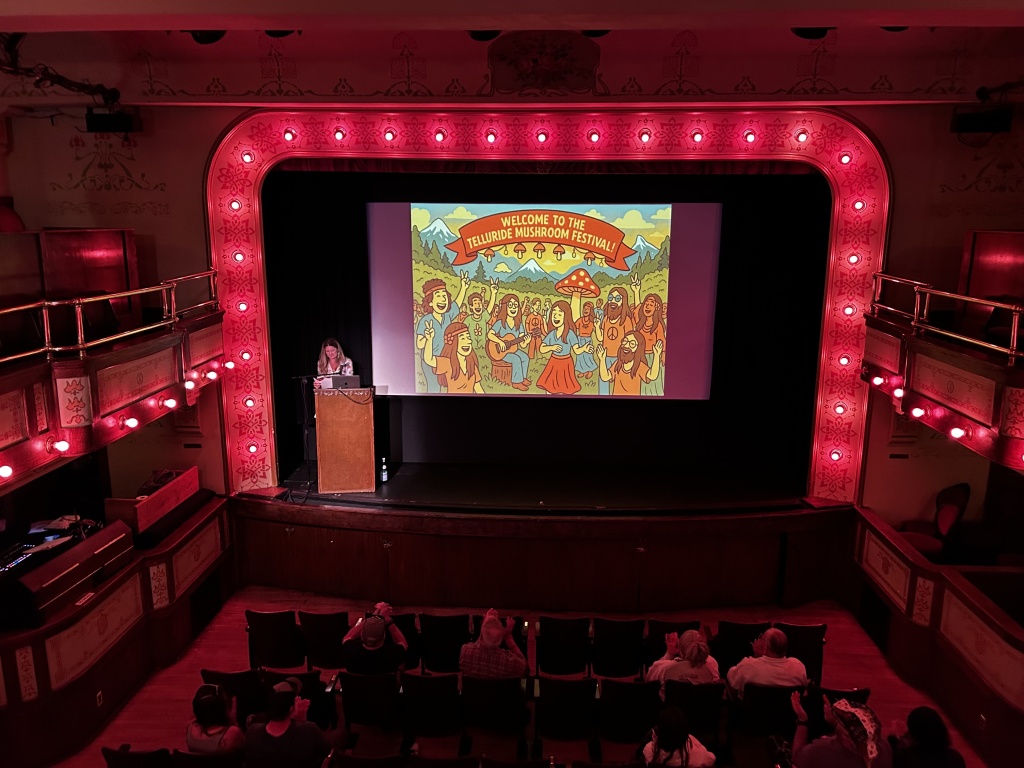
Keynote speaker Mark Plotkin delivered an engaging keynote presentation on “The History of Hallucinogens at Harvard” and followed up with a solo lecture titled “Rainforest Conservation and the Search for New Shamanic Medicines” at the stunning Sheridan Opera House, a 113-year-old vaudeville theater in the heart of downtown Telluride.
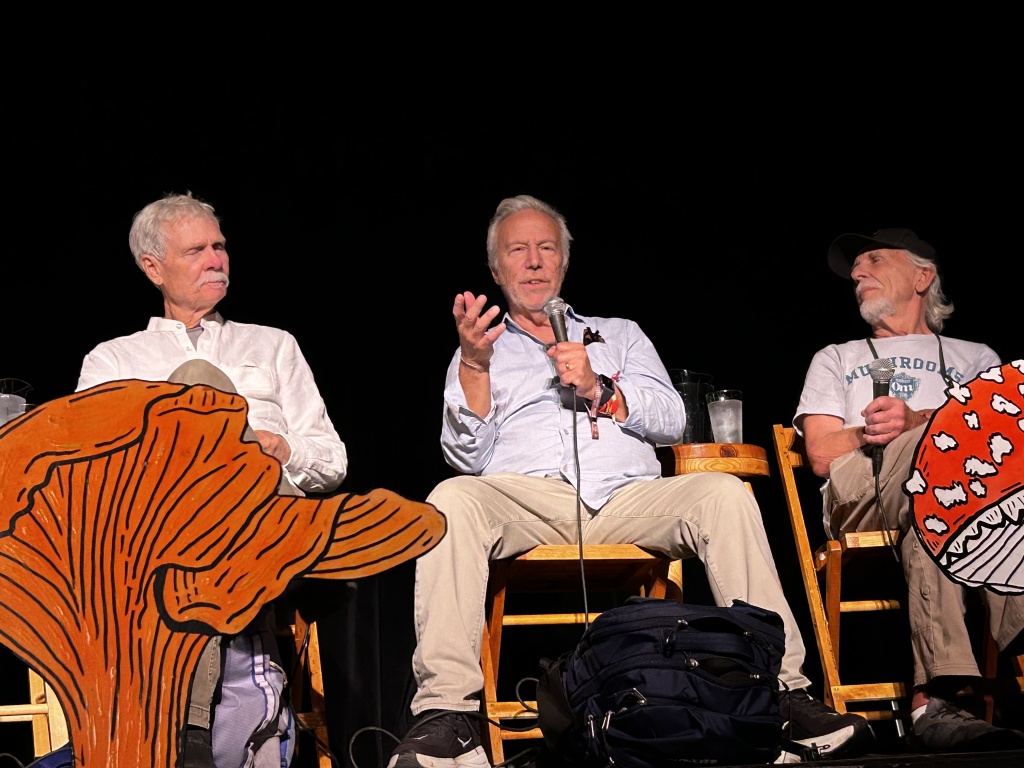
Maria Pinto shared about Black mycologists and the mushroom traditions of Africa and the African Diaspora globally, while fellow keynote Gabrielle Cerberville, aka “Chaotic Forager,” delivered a pair of presentations focused on decoding the language of fungi and ‘Conversations With Fungi: Gathering As Embodies Listening,’ in addition to leading wild mushroom forays in the mountains outside of town.
The mushroom forays are a popular point of interest in Telluride, where favorable meteorological conditions this year lent themselves to an accumulation of different wild fungi finds that were then spread across tables in the identification tent area alongside the various vendor booths. Resident fungi experts held court at these ID stations, graciously informing people what species they may have found and elucidating the characteristics distinguishing different types of mushrooms from each other.
This deep-seated fungal knowledge is still something humans seem to drastically outperform computers on, as cases of mistaken ID while foraging for fungi with AI-tech-enabled apps have led to a number of incidents in recent years, whereas human experts are able to pick up certain taxonomic and morphological features of fungi that could be the difference between life and death when people are intent on eating their finds.
Mycopreneur destiny
On Thursday, the Mycopreneur Happy Hour drew a wide array of mushroom entrepreneurs and business operators to the stylish and chic lobby at Hotel Telluride for an evening of networking, structured dialogue, and mapping out future collaborations.
In a humorous twist of fate, the Mycopreneur Happy Hour has been a feature of TMF programming long before I got involved with the festival; I attended the fest last year and was surprised when I kept bumping into people around town who told me they were going to my event later in the day. I hadn’t organized anything with the fest and was genuinely confused until I saw that there was a ‘Mycopreneur Happy Hour’, so of course I had to go check it out.
RELATED: The top mushroom podcasts & newsletters to follow in 2026
At the happy hour, numerous people came up to thank me for organizing and hosting the event that I had nothing to do with. No matter how many times I said it was just a funny coincidence that the event was called Mycopreneur Happy Hour and I had no prior knowledge of it, people throughout the week came up to tell me they had a great time at my event.
This year, the festival organizers asked me to actually host the Mycopreneur Happy Hour! We gathered in the chic and stylish western-themed Hotel Telluride lounge where enthusiastic networking and elbow-rubbing took place among mushroom entrepreneurs before I live-interviewed eight mushroom entrepreneurs from all over the U.S. in 3-5 minute increments for the group.
The Mycopreneurs ranged from event producers to functional mushroom supplement manufacturers to legal psilocybin therapy facilitators to substrate producers and more. Hob knobbing, cross-pollination, and general morale ensued as people connected with each other over mushroom-Infused drinks. Standout mushroom entrepreneurs whom I interviewed at the event include Mr. Fungitarian, a pioneer in the vertical mushroom farming space and popular mushroom advocate, Ian Bollinger of industry-leading analytical mushroom testing lab Tryptomics, and Omar Dasco-Uribe of the forthcoming Ojai Mushroom Summit.
“A loving community…”
One of the hallmark features of Telluride is its system of spectacular teletraffic Gondolas connecting downtown Telluride with the network of resort communities spread across the Mountain Village area outside of town. Commuting by gondola between the main part of town and festival keynotes in the Telluride Mountain Village made for spectacular sunsets and sweeping views of the town below, adding another dimension of magic to the event.
This year also saw the arrival of Truffle Dogs leading forays for native Colorado truffles, a series of walks which drew oversized crowds and which signaled widespread interest in an evolving space with few historic roots in the United States.
“I found such a loving community here during my first time at Telluride Mushroom Festival,” says Pete of Full Canopy Genetics. “The Telluride mushroom festival became a part of the town, as opposed to taking it over. I’ll definitely be coming back to this wonderful celebration of fungus in the mountains.”
Jasper Degenaars of the Fungi Academy had a standout talk titled “Why you should stop growing Psilocybe cubensis” that covered the rich tapestry of wood-loving and exotic psychoactive fungi which are growing in favor with cultivators worldwide. As the first mushroom festival in the U.S. to embrace programming around psychedelic mushrooms decades before anyone else in the often buttoned-up and academic mycology space was willing to do so for fear of having their reputations slandered, Telluride has long welcomed speakers to broach this stigmatized topic that has now become a worldwide touchpoint and area of legitimate scientific inquiry.
The porcini mushrooms came out in full force this year, as did the Amanita muscaria and other endemic species like the Puffball and the Chanterelle.
Festival favorite Poo Good Colorado made good use of the Proposition 122 framework in Colorado, bringing monotubs of fresh Hillybilly strain Psilocybe cubensis for attendees to pick themselves. The Poo God tent also sold out of their famous exotic manure mushroom cultivation substrate bags for the 5th consecutive year, marking them as one of the most in-demand vendors in town for the festival.
RELATED: Trump administration launches new magic mushroom study for veterans
For many, the crown jewel at TMF is the mushroom costume parade that takes over the town on Saturday. Costumed revelers shut down Telluride as they march to live drummers and cheering crowds of onlookers flanking either side of the parade route. Parade Grand Marshall and TMF Co-Founder Art Goodtimes led the crowd in cheers of ‘We… Love…. Mushrooms!!” in tandem with ‘Queen of Fungi’ and Telluride mainstay Giuliana Furci of the Fungi Foundation.
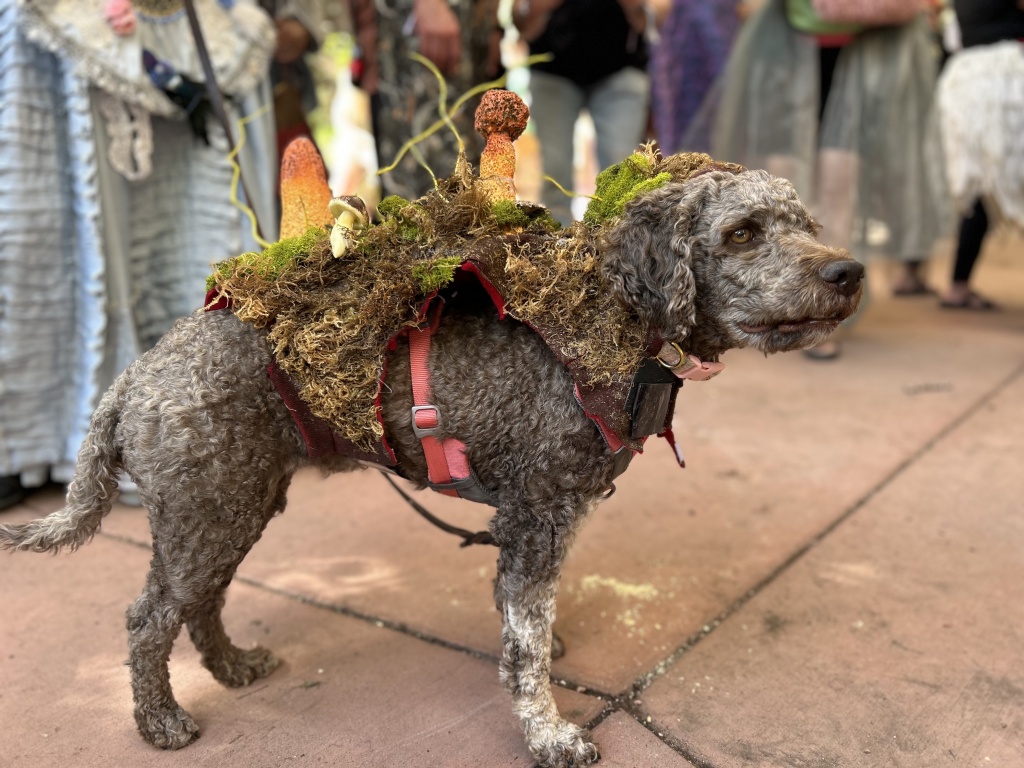
For the first time this year, the TMF parade also featured a pet costume contest courtesy of festival sponsor Real Mushrooms. Dogs dressed up as various mushrooms, such as Cordyceps militaris or Amanita muscaria, paraded around with their costumed humans, imbuing the festivities with an element of canine whimsy.
Spirit of Telluride Mushroom Festival lives on
Though the future of the festival remains uncertain in the light of rising costs and programming overhead associated with its mountain host town, the spirit of Telluride Mushroom Festival has been indelibly imprinted upon the mushroom space in the U.S. and around the world. Generations of mycophiles have been raised on this festival, and a diligent team of mushroom advocates and festival ‘lifers’ are working hard to ensure the preservation of the Telluride Mushroom Festival legacy and its continued operation for years to come. The influence of this festival continues to inspire and awaken people all over to the wonders of fungi, and connect people who arrived as strangers into a mycelial family ready to rewild our collective imagination together.
