



Part one of a three-part series on Washington State cannabis management agreements.
Washington cannabis companies are drowning. Perhaps not if you ask the average local, but those with industry knowledge know better. The media reported endlessly on a “Green Rush,” but few have struck gold.
Those passing through dispensary-zoned areas have likely seen one store advertising 50 percent off of all merchandise while another down the road displays signage indicating they will match prices. These doorbuster deal advertisements remain up year-round. However, if discounts happen every day in perpetuity, that’s no longer a special deal: it is the market price.
RELATED: Trump orders cannabis rescheduling – what happens next
Experts point to zoning and oversaturation as one culprit, but many believe that large retailers are to blame. The reality is that many issues are compounding while a few players are exerting undue influence and setting prices that change the landscape of the market.
And with the market price lower than ever, much of Washington weed is under threat of extinction. If things continue, there will be massive industry consolidation, and the root issues stem much deeper than discount signage.
Remembering the spirit of Initiative 502
Voters legalized cannabis with the approval of Initiative 502 (I-502) in 2012, making The Evergreen State one of the first to approve adult use. The milestone also tasked legislators with crafting a regulatory framework in a country with no working examples. Colorado and Washington were the first states to legalize adult-use, making them the first to attempt to regulate the plant. In Washington, the voter-backed initiative appeared to highlight small business ownership.
Micah Sherman, co-owner and operations director of cannabis garden Raven, recalled the messaging during the I-502 rulemaking processes in an interview with Cannabis Observer.
“I moved here after the initiative had passed, but before it went into effect,” Sherman said. “Part of why I did that was because the messaging that came out of Washington versus Colorado was that they were going to set up an industry that was focused on small businesses.”
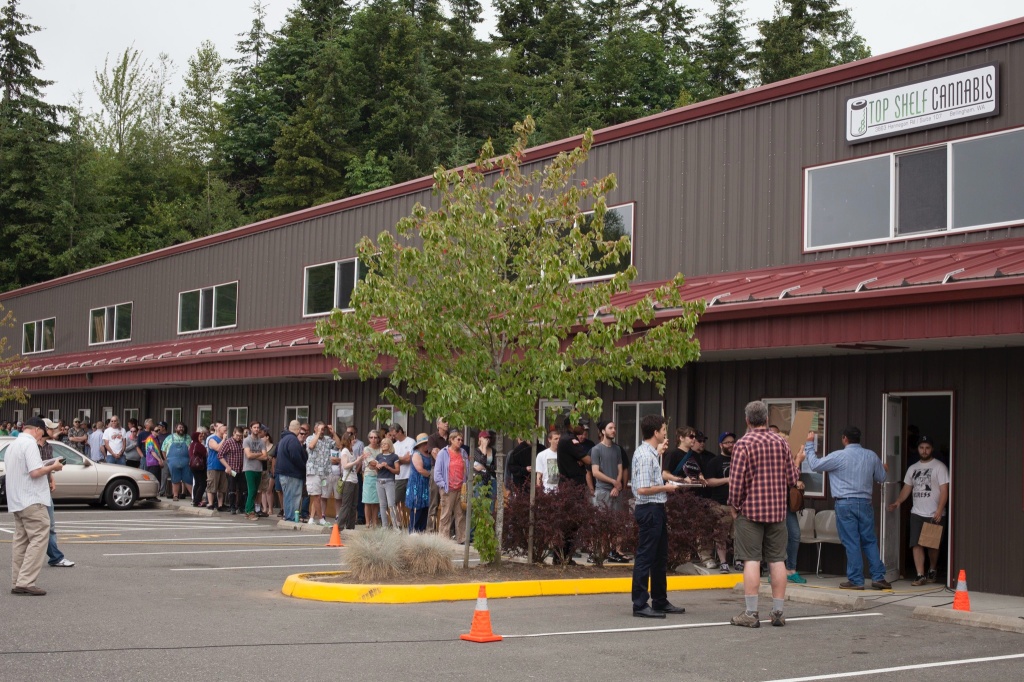
Current King County Deputy General Counsel Alison Holcomb was instrumental in writing the initiative over a decade ago.
She commented about the spirit of I-502 to Cannabis Observer, stating that rules such as a three-license limit were a means of “avoiding industry capture by a small number of well-capitalized individuals/organizations.”
The initiative was written to intentionally build a diverse cannabis industry. Companies could not vertically integrate in the hopes of optimizing logistics from seed to sale, mirroring state alcohol regulations. Individuals could either get licensed to handle the plant or run a store that sells it. No one licensee is permitted to do both.
RELATED: ‘Very messy’: New York cannabis rocked by regulatory chaos
Individuals were also barred from carrying more than three licenses in their chosen category, a cap that was eventually extended to five for retailers only in a 2017 omnibus bill. As years went by, new rules and regulations came into play. Now, gray areas in legal language have made space for an unlevel playing field where a “small number of well-capitalized individuals” are capturing a large share of the industry.
The practice of favorably interpreting unclear language to build large retail groups has rippled through a fragile ecosystem. Washington cannabis has a unique set of challenges, and dispensary owners exerting influence beyond five licenses is but one of them.
Unique obstacles pave road to the bottom
There are issues in cannabis business operations that are felt nationally, like banking. And like every state, Washington is brewing issues isolated within its own borders. At 37 percent, the state has the highest cannabis tax rate in the U.S. It is 17 percent higher than the next most expensive weed tax in Montana. Compounded by the state and local sales tax, some dispensary receipts pile up an additional 47 percent of the subtotal for government coffers – roughly a third of the entire cost of every product sold in I-502 stores.
Dispensaries commonly absorb this taxation into product pricing so customers can avoid sticker shock at the register. Most consumers have little idea how much of their purchase actually goes back into the dispensary. This fuels the idea that cannabis licensees are flush with overhead. Customers see how much they pay and figure most of it goes to buying more product, paying employees, and keeping the lights on. Instead, many dispensary owners are forced to operate under thin margins from the high tax rate, a reality only exacerbated by a discount war.
Zoning-driven dispensary oversaturation in certain areas may be partially to blame for the normalization of heavy discounts. Municipalities can vote to keep cannabis stores in certain areas of town. This has led to some towns having multiple stores a few blocks from one another. The unnecessary competition has many stores offering up to 50 percent off their products, coaxing the neighbors to do the same.
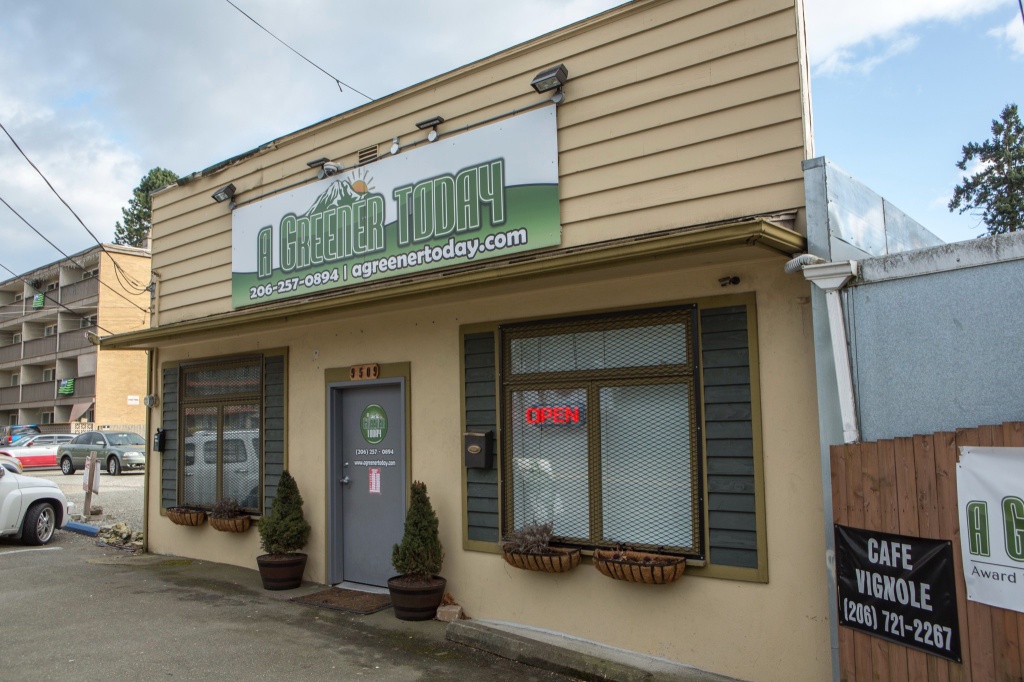
Getting customers in the door feels impossible to some unless they match the offering down the road, so they compete to keep up. As each business pushes the other into lower sale prices, growers feel the pinch. Some dispensaries discounting products to their lowest possible value siphon those savings from farms and processors by haggling for lower wholesale prices.
Dispensaries are the only outlet for cannabis companies to sell weed, edibles, tinctures, or any I-502 goods. Many producers have been scrambling to meet discount pricing to get their products on shelves, and they continue going out of business doing so. One of the main practitioners of haggling wholesale prices past breaking points for shelf space are dispensary groups.
RELATED: Feds ‘lack the resources’ to enforce new hemp ban
These groups are owned by families or investment partners who can individually hold up to five licenses each. Ultimately, they can extend their total reach beyond the allotted five licenses as a group and leverage that extension of power. These retail companies use licensing agreements to gain access to a large market share through what they view as legally compliant means. However, many claim that retail groups use that power to bully vendors into lower wholesale pricing. These low prices are driving producers out of business, and creating an unfair advantage over smaller dispensaries.
Cofounder and co-owner of The Herbery cannabis dispensary chain, Jim Mullen, shared more in an interview with Cannabis Observer.
“The larger retailers, some of them have used their sway and buying power to get bigger discounts from the vendors,” Mullen said. “Sometimes they pass that along. Sometimes they just take it as profit.”
Large retail groups with investment may have the cash to take a loss in order to wait out the competition’s ultimate failure. This is a common practice for corporations like Amazon. However, large entities akin to Costco were supposed to be ruled out of Washington weed by the license cap in the spirit of the voter-approved initiative.
Washington cannabis plagued by lack of clarity
License cap confusion first arose with the implementation of SB 5131, backed by large producers and the Washington CannaBusiness Association (WACA), which also legalized licensing agreements. The bill opened up space for intellectual property licensing and many more possibilities that were solidified in RCW 69.50.395 in 2019. These agreements are approved and managed by Washington State Liquor and Cannabis Board staff.
LCB communications director Brian Smith explained more about the implementation in a written interview with Cannabis Observer.
“What was not allowed was conferring ownership that resulted in a stake in the ownership. They would need to be on the license and therefore, limited to the five maximum licenses allowed by law. Not disclosing in that arrangement would likely be a violation of True Party of Interest of ownership on the license.”
Certain licensees have used these agreements to create retail groups which openly list up to 12 stores on their websites propped up by trademark license agreements that have been approved by LCB staff. But arrangements that are viewed as compliant under HB 1794 appear to be in direct conflict with the set limit of five licenses. While individual owners may only be associated with five licensed stores, shared store brands may be marketed together with upwards of 10 dispensaries. This is not what many, possibly including legislators, expected from I-502.

Adam Simon, owner of all three of The Reef cannabis stores, told Cannabis Observer what kind of leverage these practices create.
“People started finding ways to work around the limitation on five licenses and grow from five to six to 10 to 12 stores,” Simon said. “And with that level of buying power, they started to be able to negotiate special pricing, and also double the economies of scale, which allowed them to distribute their overhead over more stores. Somebody with 10 stores could offer cheaper pricing.”
These practices are instrumental in the considerable issues causing Washington cannabis businesses to shut their doors. And many believe that they are in direct violation of the license cap, and potentially WAC 314-55-018 which prohibits industry members from putting undue influence on another industry member. The rule also asserts that no industry member can advance through the receipt of discounts under any agreement.
RELATED: Death threats over cannabis bill shake lawmaker
A source close to the industry detailed a story where a Bellingham producer labelled an order for a Seattle store and delivered the product. Only when the driver arrived, the store with multiple locations claimed that they would only take it if the vendor took 20 percent off the wholesale price. Already there and hoping to expand customer reach, this vendor—and potentially many others—make that deal. It is believed that many stores making a profit while constantly running heavy discounts use this haggling practice. This is made possible by leveraging massive shelf space beyond five stores’ worth made available through licensing deals.
“This is a direct violation of the supposed arrangement that this industry is predicated on; it just destroys the sort of core of the legal logic of why it’s structured the way that it is,” Sherman said.
Smith said that LCB staff have received complaints about this issue “since the early days of Washington’s system,” but never sought clarification on the agency interpretation of the law from the legislature. In response, industry advocates brought Senate Bill 5403 to the legislature last session in hopes of leveling the playing field.
Will new law illuminate the gray areas?
SB 5403 seeks to close the loopholes that allowed retail groups to deploy licensing agreements to grow in influence beyond five stores. It explicitly states that no licensee can use RCW 69.50.395 to share any profits, coordination, marketing (like brands), hiring decisions, or operational control across more than five retail businesses.
Though they did not seek clarification before the passage of SB 5403, LCB staff state they are focused on creating a clear way forward now. The bill is in rulemaking, which means the public can comment on the rule language and clarity being proposed. Although the legislature focused on retail practices, the LCB draft rules and a lot of the discussion has centered around restructuring wholesale pricing to avoid non-compliant deals.
Unfortunately, reforming longstanding wholesale practices is proving more difficult than the timeline originally allowed. LCB rules will not be established by the time SB 5403 goes into effect on January 1.

Retail licensees whose practices don’t jive with SB 5403 have been asked to change their ways by January 2026. However, LCB staff have not clarified what they plan to do after January 1st, or if non-compliant practices will be allowed to continue until formal rules are set. Either way, retroactively enforcing retail market changes will likely be an arduous task.
“The damage of it is already done, and the ability to unwind it depends on a willingness of somebody at some level to essentially break up the illegal coordination that’s happening,” Sherman said.
RELATED: Rescheduling or not, banks are catching up with cannabis
Years of complaints passed without the LCB seeking clarification, and a lot of industry operators continue suffering the consequences. As a select few reap the benefits of walking in murky legal waters, those who have followed the rules are hoping that SB 5403 brings some relief.
With weeks until the new law goes into effect, one group openly utilizing licensing agreements to grow past ten stores has yet to pause. In fact, they added a new location the day after SB 5403 was signed. As rulemaking drags on, some wonder if LCB staff tasked with clarifying and enforcing the law will have the power to dismantle what has already been done.
This article originally appeared on Cannabis Observer and is reposted with permission. Continue reading the second installment of this three-part investigation, “Deconsolidated Manifold: a cannabis empire’s transformation before the law.”