


With the spring planting season upon us, cannabis operators have a renewed threat to contend with: Immigration and Customs Enforcement (ICE) raids. Last summer, ICE raids at Glass House Farms (GHF) preceded an incident in which a worker later died. GreenState spoke to immigration attorneys to help companies and workers know what to do in the case of an ICE raid.
RELATED: ‘Shocking’: Minnesota cannabis leaders decry arrest of Nekima Levy Armstrong for ICE protest
Familiar Raids, Different Enforcement Dynamics
Law enforcement raids are not new to cannabis businesses, but ICE-led operations differ in training requirements from earlier DEA-led raids. DEA agents ‘undergo a rigorous 19-week Basic Agent Training program,’ according to The Atlantic, which reported that during the Trump administration, ICE training was reduced from nearly five months to 47 days.
While limited training is often cited in cases involving new hires, some serious incidents involving ICE have involved veteran officers. Take the killing of Renee Good by Jonathan Ross, who is reported to be a 10-year veteran of ICE.
According to compiled media reports, the deaths of Renee Good and Alex Pretti are among at least 17 ICE-related shootings since Trump returned to office, resulting in five deaths and seven injuries.

Glass House Farms: A Cautionary Tale of Contracting
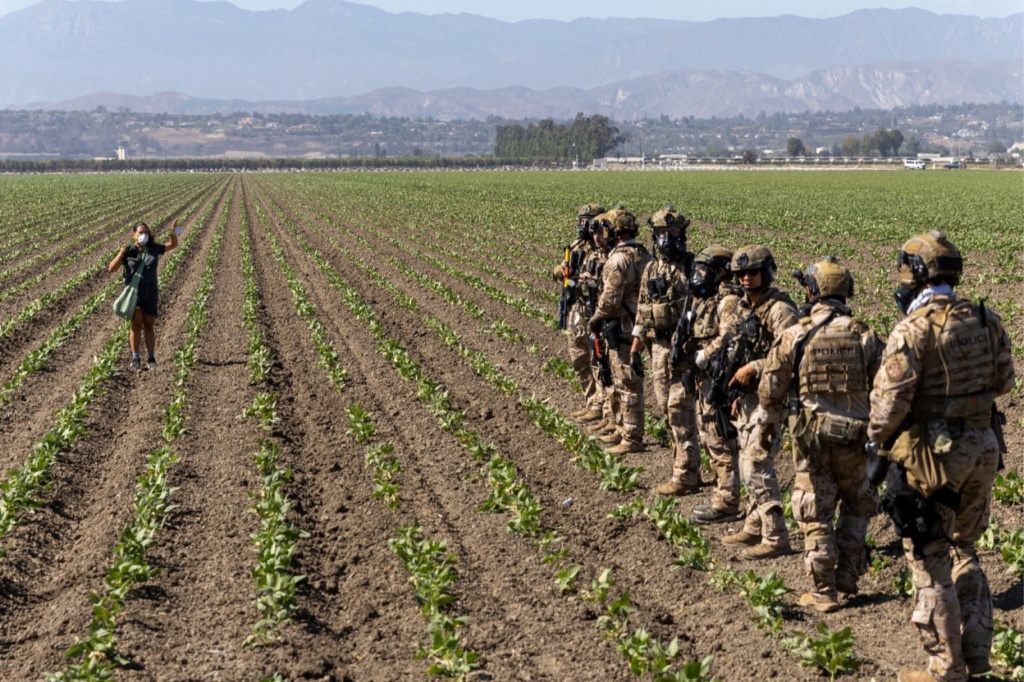
In addition to ICE-related shootings, a July 2025 ICE raid of two farms operated by GHF may have resulted in the first death linked to intensified immigration enforcement under the Trump administration when a worker, Jaime Alanís Garcia, fell to his death while fleeing federal agents.
The raid reportedly saw agents using rubber bullets, tear gas, and other less-lethal weapons against employees, contractors, and US citizens. According to an August 2025 press release by GHF, while “approximately 360 individuals were detained or arrested during the raids for immigration violations,” only “Nine employees of the Company were detained or arrested.” While it may seem surprising that so few employees were arrested in a raid of GHF’s farms. GHF said most of those arrested were protesters or contractors rather than company employees.
RELATED: The price of legal weed for those without power
As a result of the raids, GHF “terminated its relationship with the two Farm Labor Contractors” and improved age-gating controls. Federal authorities alleged “approximately eleven minors, ranging in age from 14 to 17 years old, were detained during the raids.”
Multiple attempts to reach GHF were unsuccessful. The company has faced claims that it has not helped any of the workers who were arrested in the ICE raids, including George Retes, an army veteran and U.S. citizen.
Words of Wisdom From Immigration Attorneys
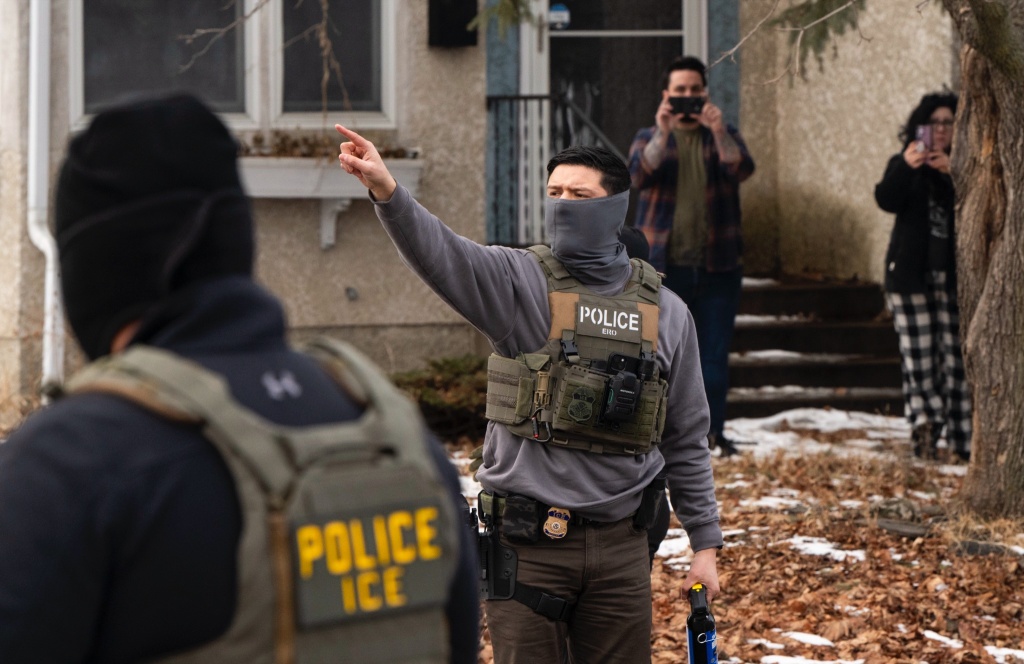
The same month that ICE raided GHF’s facilities in California, a group of local ICE monitors in Oregon reported federal immigration agents raiding multiple cannabis farms near Medford. Despite Oregon sanctuary laws forbidding local law enforcement from assisting federal agents in immigration enforcement, members of local law enforcement agencies were involved in the raids, with officers telling observers it was ‘a drug bust,’ not an immigration action.
Attorneys explained that such fears help explain why some workers flee during raids. Even if they are legal immigrants, they could still be deported.
Zachary Nightingale is a managing partner of Van Der Hout, LLP and a practicing immigration attorney.
“The federal government takes the position that if you work in the field or a dispensary, you are a drug trafficker,” said Nightingale, adding that those drug charges could be a barrier to obtaining citizenship or remaining a legal resident.
RELATED: ‘Very messy’: New York cannabis rocked by regulatory chaos
Nightingale contrasted examples of ICE raids at a tomato farm and a cannabis farm. At the tomato farm, if someone doesn’t have permanent status, while “…they may be scared, there isn’t an incentive to run, but folks at a marijuana operation have a huge incentive to not be caught by ICE.” Nightingale noted that he had encountered many immigrants who had no idea that working in the cannabis industry could be used to prevent them from obtaining citizenship.
In addition to co-authoring the Immigrant Legal Resource Center’s guide to Immigrants and Marijuana, which contains a lot of useful advice, Nightingale offered some additional guidance.
“I tell my clients to have a contingency plan, memorize a close family member’s phone number, and have a code word so they know you are actually you. Call your loved one who will answer the phone and have them call the attorney,” said Nightingale, adding, “Plan ahead for the worst happening.”
Andrea Anaya is a Partner with Kingston, Martinez & Hogan LLP, where she oversees their family-based immigration and removal defense practice and is handling a couple of pro bono cases related to the raids at GHF.
“This disconnect between state legalization and federal enforcement leaves non-citizens in a confused and vulnerable position, one where lawful behavior under state law can still result in life-altering immigration penalties,” said Anaya.
Echoing Nightingale’s sentiments, Anaya agreed that many non-citizens assume that if cannabis is legal under state law, it won’t impact their immigration status. Unfortunately, because cannabis remains illegal under federal law, any admitted use or connection to the cannabis industry could result in “detention, denial of benefits, or deportation.”
ICE Is Using Possession Charges To Deport Immigrants
In addition to ICE’s selective targeting of cannabis businesses, reporting by The Marshall Project has shown that ICE is using dated cannabis charges to deport otherwise-legal immigrants. Specifically, they found that as of August 2025, “more than 600 people have been deported whose most serious convictions were marijuana-related offenses, and in three out of four cases, the offense occurred at least five years ago.”
RELATED: New hemp bill in Congress could bring big changes
Partially thanks to their use of dated cannabis convictions, ICE is reportedly holding over 73,000 individuals, up over 84 percent from last January. To put that in perspective, that is nearly half the roughly 154,000 people incarcerated across the entire Federal Bureau of Prisons.
Some Cannabis Executives Continue to Support Trump
Despite last summer’s raids of GHF, some cannabis executives have continued to support Trump. The same month GHF was raided, the American Rights and Reform PAC (ARR) gave $1 million to Trump’s political committee.
Matt Harrell is the treasurer for ARR, the vice president of government affairs for the cannabis company Curaleaf, and reportedly donated $250,000 to Trump’s inaugural committee. GreenState made multiple attempts to reach Harrell before being told by a PR rep for Curaleaf that “Matt is not available for an interview.”
Even though GHF was raided by ICE just six months ago, their co-founder, Kyle Kazan, praised Trump’s recent action on cannabis rescheduling in a recent press release, saying, “We excitedly await the final execution of President Trump’s executive order by Attorney General Pam Bondi.”
ICE Raids in Cannabis Industry: Future Guidance
As soon as possible, immigration attorneys said cannabis businesses should train their employees and contractors about what to do if there is an ICE raid. Even without formal training, all workers (especially immigrants) should heed the advice of immigration attorneys and be prepared for the worst by having a contingency plan in place.