


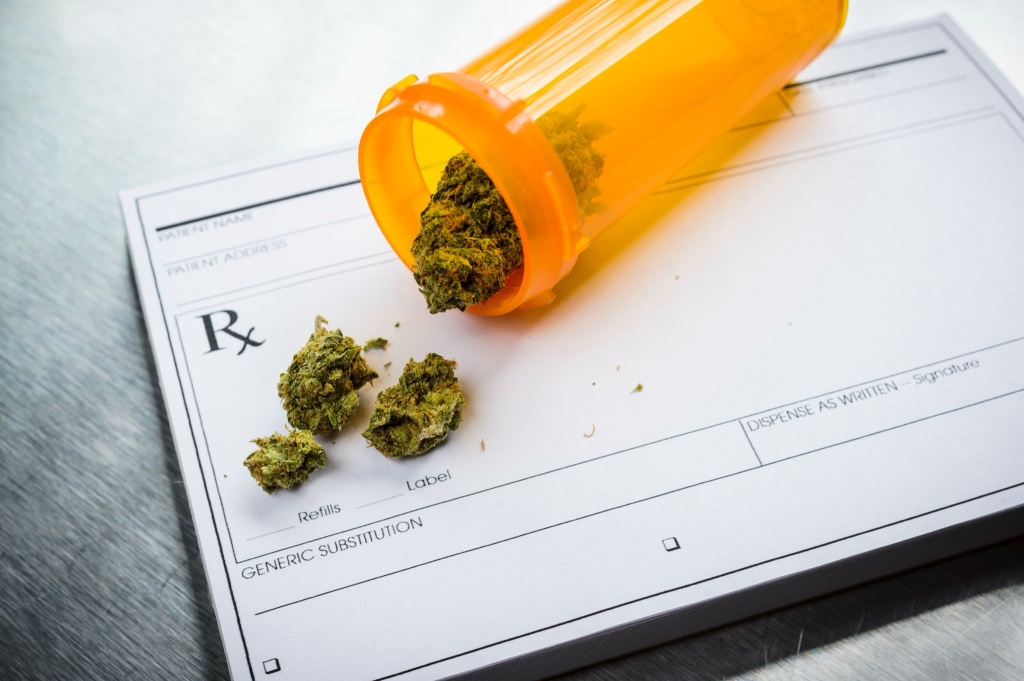
Medical marijuana has been legalized in the majority of states, and state-licensed medical cannabis is now officially Schedule III. However, the Food and Drug Administration (FDA) has only approved one cannabis based drug so far. However, a new plant-based THC drug has been granted Breakthrough Therapy status by the FDA, which could mean full approval is coming soon—and the news is a bigger deal than some may realize.
RELATED: Could CBD help prevent HIV transmission?
The drug in question is currently known as VER-01 and is being developed by German pharmaceutical firm Vertanical. The full-spectrum cannabis extract is meant to ease chronic lower back pain, serving as an alternative to opioids, which carry significant abuse risk and side effects.
“We believe VER-01 has the potential to change how chronic pain is treated and offer physicians a much-needed non-opioid solution,” said Dr. Clemens Fischer, founder of Vertanical, in a press release.
Why it matters
The Breakthrough Therapy designation is significant because VER-01 could become one of the first FDA-approved cannabis medicines containing clinically meaningful amounts of THC.
Epidiolex, the only FDA-approved cannabis extract, is nearly 100 percent CBD. While it does contain trace amounts of THC, the concentration is negligible. The drug is used to treat severe seizures.
VER-01, on the other hand, is formulated from a high THC cannabis sativa plant. Each dose of VER-01 contains about 2.5 mg of THC, along with much smaller amounts of other cannabinoids, including roughly 0.1 mg cannabigerol (CBG) and 0.02 mg of CBD.
In the Phase 3 low-back-pain trial, patients were titrated to individualized doses, and the average daily dose was reported to be about 19 mg of THC per day.
RELATED: CBD shows promise for Alzheimer’s in early study
For decades, cannabis was considered a Schedule I drug with no known medicinal value and high potential for abuse. As medical cannabis turns to Schedule III (alongside accepted medications like Tylenol with codeine), the VER-01 developments are another signal that federal attitudes toward cannabinoids are evolving.
Alleh Lindquist, CEO of cannabinoid manufacturing and formulation company FloraWorks, told GreenState the news represents another watershed moment for the future of cannabis-based medicines.
“The FDA’s willingness to advance a plant-derived THC therapy through the Breakthrough Therapy pathway suggests the agency is open to evaluating cannabinoids on the basis of science, safety, and clinical evidence rather than historical stigma,” Lindquist noted.
What the studies say
The designation was awarded after two successful randomized, controlled Phase 3 trials.
In one study, patients with back pain were randomly assigned to take Vertanical’s proprietary liquid cannabis extract or a placebo.
At the end of 12 weeks, patients taking the medication reported a nearly 2-point reduction in pain on an 11-point scale, compared with 1.4 points for those taking a placebo. The difference was statistically significant. Those getting the drug also reported improvements in sleep and physical function.
Patients who continued with a six-month extension phase continued to experience reductions in pain.
RELATED: Medical cannabis for seniors: a doctor explains what to know
In the other study, patients with chronic low back pain were randomly assigned to receive VER-01 or physician-selected opioid treatments.
After six months, patients taking VER-01 reported greater reductions in pain and larger improvements in sleep quality than those receiving opioids, with pain scores falling by 2.5 points compared with 2.2 points in the opioid group. Patients taking the cannabis medication were also about four times less likely to experience constipation, a common side effect of opioid use.
Researchers found the greatest benefits among patients with severe pain and reported no evidence of abuse, dependence, or withdrawal symptoms associated with VER-01 during the study period.
What comes next
Vertanical is planning another U.S.-based Phase 3 clinical trial to support its FDA approval application. If all goes according to plan, the New Drug Application will be submitted in 2028.
While that may seem far off, the pathway to approval is welcome news for those suffering from chronic pain looking for relief.
“Patients have waited far too long for meaningful progress,” Dr. Fischer added in the release.
