



As medicinal cannabis becomes more widely accepted, significant barriers to access remain. Among them is an issue that is rarely discussed in clinical terms but frequently raised by patients: odor.
RELATED: Ozempic and cannabis: what happens when you use both
The characteristic scent of cannabis flower can be a practical and social obstacle. For individuals undergoing chemotherapy, managing chronic pain conditions such as fibromyalgia, or living with epilepsy, cannabis may offer meaningful symptom relief. Yet the distinct smell associated with smoking or vaporizing flower can create anxiety about unwanted attention, stigma, or misunderstanding. In multi-unit housing, workplaces, shared living environments, or during travel, concerns about odor can discourage consistent use or complicate daily life.
Although public attitudes toward cannabis have evolved, cultural perceptions have not shifted uniformly. In some communities and professional settings, the smell of cannabis still carries strong associations that can expose patients to judgment or scrutiny. For certain families, discretion is not simply a matter of preference but of safety, privacy, or compliance with housing or travel constraints. As a result, odor remains an underappreciated barrier in the broader landscape of medicinal cannabis access.
While odor may not always be a concern for recreational consumers — and for some, it is part of the sensory experience they value — discretion is not limited to medical contexts. Even recreational users often acknowledge that there are situations in which they prefer not to draw attention to their use. This broader reality underscores that odor is not solely a medical issue, but a situational and social one that spans the full spectrum of cannabis consumers.
While options exist that address the odor issue, such as gummies, vaporizers, e-rigs, or cartridge vapes, many patients prefer whole-flower cannabis for its therapeutic profile and convenience. The complex interplay of cannabinoids, terpenes, and other bioactive compounds is believed by some clinicians and patients to contribute to symptom relief.
RELATED: The ‘drama weed’ effect: How Toad Venom became 2026’s hottest strain
However, many chemicals that are responsible for aroma are also central to the plant’s pungency. This creates a dichotomy between maintaining the characteristics of flower that patients value and addressing the practical challenges associated with its smell.
At the Hall of Flowers convention in Ventura in 2025, a new low-odor cannabis product was rolled out called Hushpuppy, developed through a collaboration between Seventh Wave of Humboldt, California, and High Sierra Technologies of Reno, Nevada.
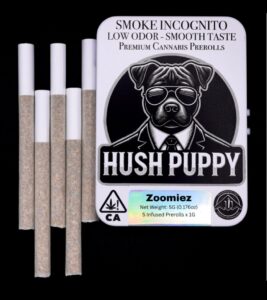
The product is described as using a patented, all-natural organic process that substantially reduces the characteristic cannabis odor while preserving the medicinal properties associated with whole flower. This is accomplished by removing less medically significant terpenes and sulfur compounds, while largely preserving the significant ones.
Early patient feedback, including from individuals managing chronic conditions, will help inform how such innovations are received in real-world settings.
Lydia Gutierrez, a fibromyalgia sufferer, had this to say after trying Hushpuppies:
“Years of living with fibromyalgia and recently with complex PTSD, cannabis plays an important role in managing my chronic pain, sleep disruption, anxiety, and autonomic stress responses. Compared to past treatments, it has been far more manageable in terms of side effects.
“After trying Hushpuppy, I appreciated having a discreet, low-odor whole-flower option. It allowed me to maintain the symptom relief I rely on while reducing concerns about unwanted attention or stigma, making consistent use much easier.”
RELATED: ‘Dry January’ is becoming a year-round lifestyle
Ultimately, the future of medicinal cannabis will depend not only on new formulations and therapeutic discoveries but also on incremental innovations that improve usability and accessibility. Addressing odor may seem modest compared to advances in pharmacology, yet for many patients, discretion directly influences adherence, mobility, and quality of life. Reducing practical and social barriers can help ensure that those who rely on cannabis for symptom management are better able to integrate it into their daily lives.
*This article was submitted by an unpaid guest contributor. The opinions or statements within do not necessarily reflect those of GreenState or HNP. The author is solely responsible for the content.