


A bulb of purple-striped Medici garlic and a unique type of pepper, a cross of Joe’s Long Cayenne and Hungarian Sweet Paprika, were not something I expected to buy at the cannabis sesh in Oakland, California.
RELATED: The secret to growing California’s best outdoor pot
It’s the first Friday in October, and the senior cannabis club, Tokeland Seniors, is having one of its regular gatherings, which take place on the first and fifth Fridays of the month. When I get there around 6 p.m., there are no seats left, and the Root’d in the 510 cannabis lounge is swirling with activity. The basketball game is playing on a theater-sized assemblage of eight TVs, and there are about 150 people, most of them senior citizens, seated at tables toking up.
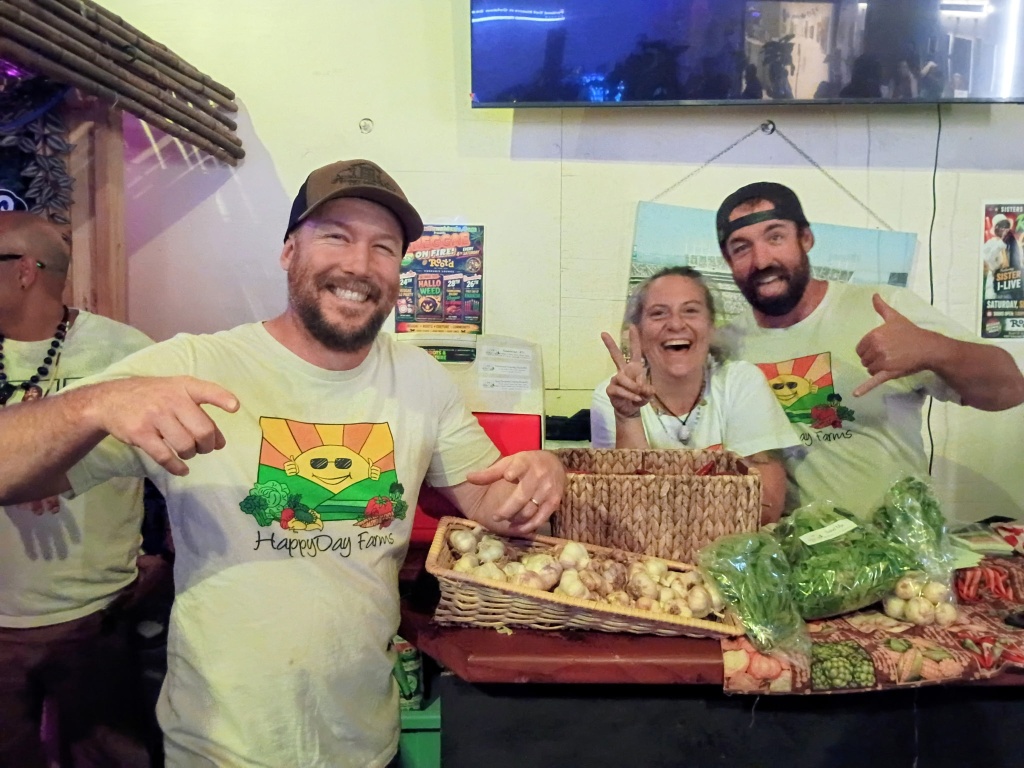
Through the haze of smoke and the rumblings of a party all around us, Casey O’Neill of HappyDay Farms is selling vegetables with his team from his Mendocino County farm. There are bags of apples, potatoes, and salad mixes on the table beside him.
“We can’t bring the weed to the farmers’ market, so we bring the farmers’ market to the weed,” O’Neill says.
The cannabis flowers HappyDay grows are at the front of the house in the dispensary. In the lounge, produce grown alongside the pot is being sold.
According to the rules, cannabis legalization for adult use in California does not allow direct-to-consumer sales at standard farmers’ markets. In 2024, Calif. Gov. Gavin Newsom vetoed a bill that would have allowed small marijuana farmers to sell at farmers’ markets, citing concerns that it would undermine the existing retail licensing framework.
Still, the model of sustainable cannabis providing access to local, seasonal, farm-fresh produce remains a part of the business model for HappyDays and other small California cannabis farms.
“Cannabis should be a fulcrum or a lever for the transportation of good food,” O’Neill says of his farm’s model of using cannabis as a portal to organic ingredients. “This is a little piece of what we thought legalization was going to look like.”
RELATED: Woody Harrelson wants cannabis to get back to its roots
O’Neill tells me he created the pepper he’s selling by accident. He discovered it after comparing its unique size and shape to the peppers he’d planted side by side. Like cannabis, peppers can be crossed to create hybrid types.
The founder and breeder behind Purple Caper Seeds, who goes by just Frank, is also at the Root’d event displaying the cannabis he put out this 2026 harvest season. He’s not selling anything and says his presence at the event is to foster community.
“We’re giving out free weed from this year’s harvest, all organic, outdoor,” Frank says as I examine mason jars filled with flowers.
His Purple Caper, a cross of Grand Diesel and Snow White, was created in 2008 and has now gone through eight successive generations of breeding.
“I just kept chasing that phenotype; it’s like cherries and tropical grape,” Frank says of the dark purple-hued buds.
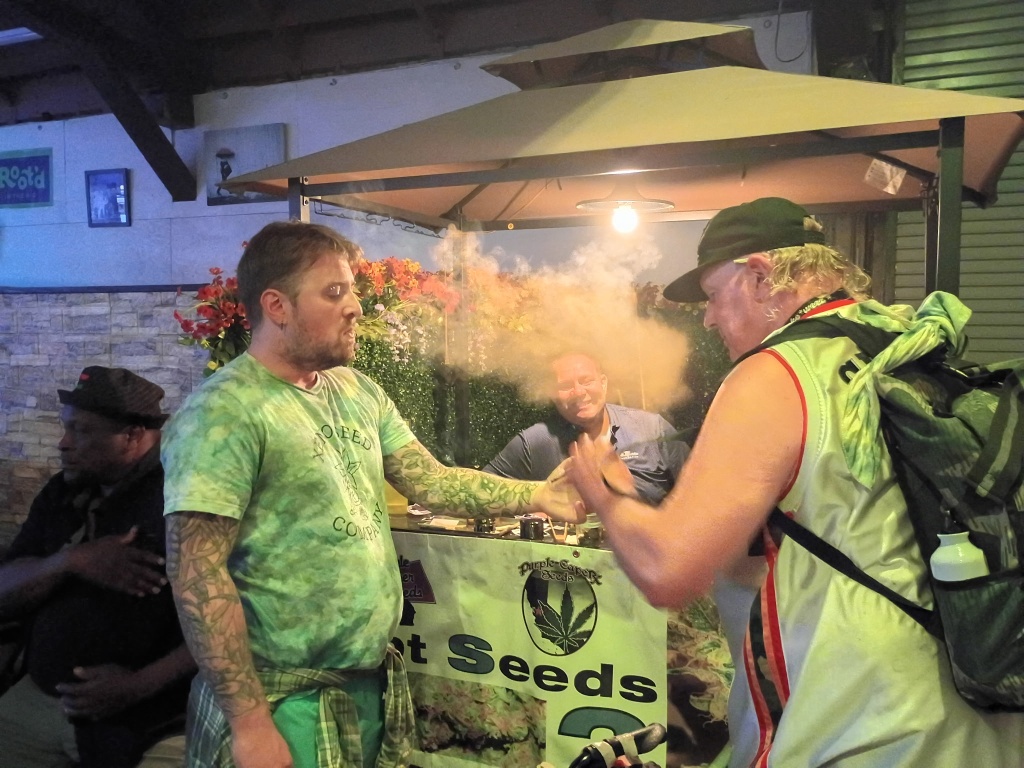
As the 2026 outdoor cannabis harvest comes to a close, cannabis farmers celebrate at gatherings like the one held in the Root’d lounge. With cannabis sales growing more corporatized in the adult-use era, the community spirit that began as a collective cannabis model remains.
Still, the work of community-building is never done, and aligning it with the earth’s natural rhythms, like harvest festivals, makes sense in terms of the cycles of work and rest. For outdoor farmers, of both cannabis and food, farming is not limited to only planting and harvest. The winter provides a time for repairs, maintenance, and planning for the future.
“Following the natural rhythm of the seasons yields the pleasure of each as it arrives, and I’m reveling in the abundance of fall,” O’Neill wrote in his farm’s monthly CSA newsletter.
“We’re clearing the beds of cannabis stumps as soon as we harvest, replanting the same day or within the first couple of days after harvest, for space is always at a premium, and the winter crops need every advantage they can gain when going in this late in the season… We’ll be planting our full garlic crop soon, but the cannabis harvest takes precedence…”