


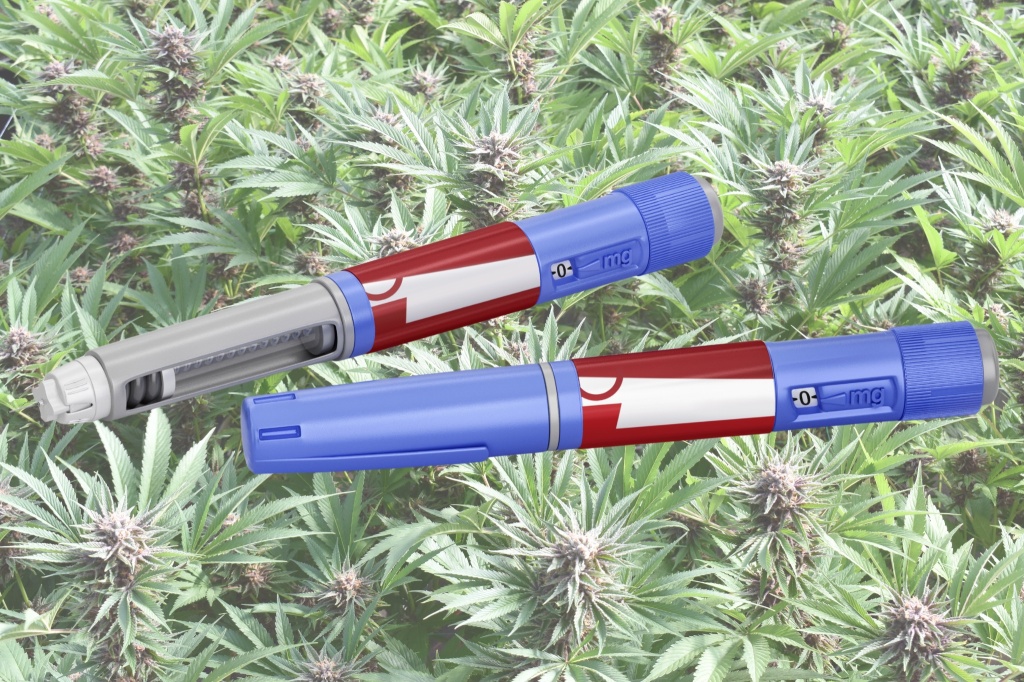
In recent years, medications like Ozempic and Wegovy have taken over conversations about weight, appetite, and metabolic health. Originally developed to treat type 2 diabetes, these drugs are now widely used for weight loss thanks to their ability to reduce appetite and increase feelings of fullness.
At the same time, cannabis has become a more normalized part of daily life for many people, used for relaxation, creativity, pain relief, stress management, or simply enjoyment. So, as more people use GLP-1 medications like Ozempic while continuing to consume cannabis, a new question has emerged: how do these substances interact inside the body and in real life?
RELATED: Your gut is getting high too: the surprising cannabis-microbiome connection
The short answer is that the science is still developing. But early research and clinical observations are beginning to give us some clues.
How semaglutide works (and why it matters)
Ozempic, Wegovy, and similar medications contain semaglutide, a drug that belongs to a class known as GLP-1 receptor agonists.
GLP-1 is a hormone your body naturally releases after eating. It helps regulate blood sugar, slows digestion, and sends signals to your brain that you’re full. Semaglutide mimics this hormone, essentially turning up those “I’ve had enough” signals and dialing down appetite.
This appetite-suppressing effect is the main reason these medications are so effective for weight loss. But it’s also why researchers are interested in how semaglutide might influence other behaviors tied to reward and craving, including alcohol use, nicotine, and cannabis.
Cannabis, appetite, and the brain’s reward system
Cannabis works through a completely different system: the endocannabinoid system, which helps regulate mood, appetite, pleasure, and stress response. THC is famous for increasing appetite and enhancing sensory pleasure. It can make food taste better, experiences feel richer, and relaxation come more easily.
RELATED: Medical cannabis for seniors: a doctor explains what to know
Because semaglutide and cannabis both interact with the brain’s reward and appetite pathways, researchers have started asking whether they might influence each other in subtle ways. Could semaglutide blunt cravings? Could cannabis override appetite suppression? Could using both feel different than using either one alone?
What early research suggests
A handful of early studies have produced intriguing, but very preliminary, findings.
One analysis found that people taking semaglutide were less likely to receive a diagnosis of cannabis use disorder compared to similar patients not taking the medication. Other studies have explored GLP-1 drugs as potential tools for reducing cravings or relapse risk for various substances, though this research is still in its infancy and not specific to casual or social cannabis use.
Importantly, this doesn’t mean Ozempic “kills your high” or makes cannabis ineffective. Researchers are careful to note that reducing problematic use is not the same thing as eliminating enjoyment. What these findings really point to is how deeply appetite, reward, and motivation are intertwined in the brain.
One big question still remains: do the munchies supersede Ozempic’s appetite-suppressing abilities? That remains to be seen, but anecdotal reports suggest it’s possible, with many cannabis consumers saying they still want to eat despite being on GLP-1s. Some also indicate the drug affects how THC-infused edibles work in their bodies.
Side effects and listening to your body
Both semaglutide and cannabis come with potential side effects, particularly around digestion.
Semaglutide commonly causes nausea, stomach discomfort, and changes in bowel habits, especially when first starting the medication. Cannabis can also affect gastrointestinal sensations and, at higher doses, contribute to dizziness or nausea.
When combined, those effects may stack in unpredictable ways. That’s why clinicians generally recommend paying close attention to how your body responds and keeping healthcare providers in the loop if cannabis is part of your routine.
RELATED: Study explains why some people have problems with pot
It’s also worth acknowledging that appetite isn’t just biological: it’s personal.
For some people, cannabis has played a supportive role in rebuilding a healthier relationship with food, appetite, or body awareness. For others, appetite suppression feels stabilizing or protective. Neither experience is universal, and neither cancels out the other.
What matters most is context: your history, your goals, and how these tools affect you individually.
What this means for you
There’s no one-size-fits-all answer to how Ozempic and cannabis interact. What we do know is this:
- Semaglutide influences appetite and reward signaling in ways that may affect cravings, though the science is still early.
- Cannabis and GLP-1 medications can send different signals about hunger and pleasure, and people experience that interaction differently.
- Personal health history matters, especially when it comes to food, mental health, and substance use.
As research continues, clearer answers will emerge. For now, the best guide is still the simplest one: listen to your body, notice changes without judgment, and don’t hesitate to talk with a provider if something feels off.
Cannabis and Ozempic may be having a moment together, but how that moment plays out is always going to be personal.