


As a pain management physician at a large orthopedic practice in Philadelphia, I have spent the past 16 years treating a broad range of patients with chronic musculoskeletal and arthritic pain. I trained during an era when long-acting opioids were aggressively promoted by pharmaceutical representatives. Over time, I witnessed the profound human and societal consequences of the opioid crisis firsthand.
RELATED: New cannabinoid discovered—and it has big potential
When Pennsylvania legalized medical cannabis (MC) in 2018, I became one of the first physicians in our region to offer MC as an alternative to long-term opioid therapy. Since then, I have certified more than 2,000 patients for medical cannabis. Many of them are older adults with degenerative orthopedic conditions whose pain progresses with age. And many of these chronic pain patients also suffer from increased rates of anxiety, depression, and poor sleep quality.
The demographics of aging are changing rapidly. More than one-third of adults over age 65 suffer from chronic pain, and by 2034, older adults will outnumber children in the United States for the first time in history. As the baby-boomer generation enters older age, the need for safe, evidence-informed pain management alternatives has never been greater.
I now see a growing number of elderly patients interested in exploring medical cannabis. Many have never used cannabis in their lives and express understandable concerns about intoxication or impairment. Yet, with careful guidance, older adults can often tolerate low-dose cannabinoid therapy remarkably well — sometimes better than traditional analgesics.
This guide is intended for patients, caregivers, and clinicians who want to understand how older adults can safely and effectively approach medical cannabis for chronic pain.
Why Are Older Adults Turning to Medical Cannabis?
After decades of opioid use in chronic pain management, many older adults are fearful of starting opioids or becoming dependent on them. They have also observed, either personally or through family, the risks opioids can pose in older age — including sedation, constipation, falls, respiratory depression, and increased mortality.
Medical cannabis offers an alternative approach with a different risk profile. In contrast to opioids, cannabinoids do not cause fatal respiratory depression, and many older adults find that low doses can provide meaningful relief from:
- chronic arthritic pain
- back and neck pain
- neuropathic pain
- sleep disturbances
- anxiety related to chronic illness
Importantly, older adults often respond to lower doses than younger adults, making slow, gentle titration a key component of safe prescribing.
Safety and Tolerability of Medical Cannabis for Seniors
Although high-quality randomized trials in geriatric populations remain limited, the evidence that exists is generally reassuring.
What the research shows
- A 2021 meta-analysis of cannabinoid-based medicines in adults aged ≥50 found that most adverse events were mild to moderate, including dry mouth, dizziness, and sleepiness. Serious events were rare.
- A 2019 review of older adult cannabis use concluded that cannabinoids may offer meaningful pain relief with “moderate and manageable” risks, comparable to many standard analgesics.
- A 299-patient observational study of adults ≥50 using medical cannabis for pain and sleep showed significant improvements in pain, sleep, and overall quality of life over six months with no serious adverse events reported.
- In a cohort of very elderly adults (mean age ~81), more than 84 percent experienced some improvement with medical cannabis, and side effects were mostly mild.
Common side effects
Older adults are more vulnerable to:
- dizziness or light-headedness
- sedation, especially with oral THC
- orthostatic hypotension
- dry mouth
- mild cognitive slowing
- balance impairment
These effects are dose-dependent and often avoidable with cautious titration.
Cognition
Emerging data suggest that low-dose, medically supervised cannabis does not significantly impair cognitive function in older adults. However, individuals with dementia or baseline cognitive impairment require closer monitoring.
Cardiovascular considerations
THC can transiently increase heart rate or lower blood pressure. Patients with arrhythmias, uncontrolled hypertension, recent heart attack, or stroke should proceed cautiously and in coordination with their cardiologist.
RELATED: Your gut is getting high too: the surprising cannabis-microbiome connection
Topical, Oral, and Inhaled Routes of Delivery: What Older Adults Should Know
Topicals
Many older adults prefer to start with THC or CBD topicals, which act on local cannabinoid receptors without entering the bloodstream — meaning no intoxication or impairment. They can be helpful for:
- knee and hand osteoarthritis
- localized muscle pain
- post-surgical scarring or soft tissue pain
Oral and Sublingual Products
Oral THC products (tinctures, capsules, edibles) have a slower onset but longer duration. They may take 30–120 minutes to take effect and last 4–6 hours or more.
RELATED: New cannabis-derived drug could revolutionize healthcare
Because oral THC is more psychoactive than inhaled THC per milligram, older adults should start extremely low and increase gradually.
Inhaled Cannabis
While inhaled cannabis works rapidly (within minutes and peaks in ~30 minutes), it is:
- harder to dose precisely
- more likely to cause dizziness
- inappropriate for patients with COPD or heart disease
In most older adults, inhalation should not be the starting point.
Choosing Cannabis Products: Understanding Potency, Labels, and Extraction Methods
Dispensary menus can be overwhelming. Older adults often rely on staff who vary widely in training. Key points to understand:
THC concentration matters—but so does extraction
- Full-spectrum extracts contain THC plus minor cannabinoids (CBD, CBG, CBN) and terpenes. Many patients find these to be more therapeutic.
- Distillate contains highly purified THC with few accompanying compounds. It may offer differing effects than full-spectrum.
Avoid dosing errors
Many patients misinterpret labels. For example, a package containing 100 mg THC may be divided into 10 mg per dose — but patients sometimes mistake their dose or don’t know how much they took.
Older adults should always ask:
- “How many milligrams of THC are in the individual dose I am supposed to take?”
Keeping a cannabis journal documenting dose, product, timing, and effects is extremely helpful.
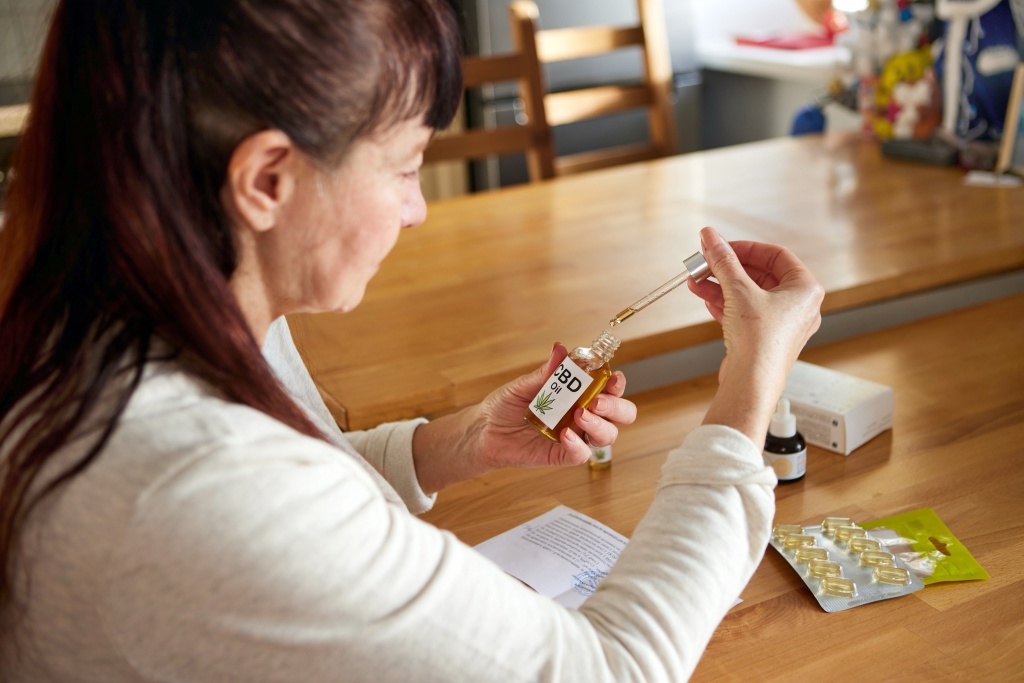
Hemp-Derived CBD and the Rise of Unregulated Delta-8 THC Products
Since the 2018 U.S. Farm Bill, hemp-derived CBD and Delta-8 THC have flooded the consumer marketplace. Unlike state-regulated medical cannabis, these products are not subject to consistent potency, purity, or quality testing.
This presents substantial concern — especially for older adults.
Problems With Over-the-Counter CBD Products
Studies show:
- Only 31 percent of CBD products sold online are accurately labeled.
- More than 20 percent of the products tested in one analysis contained measurable THC, even when labeled “THC-free.”
- Many products may be contaminated with heavy metals, pesticides, or residual solvents.
RELATED: Weed might boost your brain — here’s why
This is particularly concerning for older adults who may be:
- Immunocompromised
- On anticoagulants (CBD can elevate INR)
- Taking multiple medications metabolized by CYP450 enzymes
Whenever possible, CBD should be purchased from state-licensed dispensaries with third-party lab testing.
Delta-8 THC: A Risky Cannabinoid for Seniors
Delta-8 THC is often marketed as a “milder” version of THC. In reality:
- It is not naturally abundant in hemp and must be chemically synthesized from CBD.
- Chemical conversion can produce unknown byproducts that are not tested for safety.
- Products may contain high, unlabeled amounts of Delta-9 THC, leading to unexpected intoxication.
- Poison control centers have reported a marked increase in Delta-8–related emergency visits, including in older adults.
Because Delta-8 products are unregulated, potencies vary wildly.
For most older adults, Delta-8 products should be avoided entirely.
Clinical Recommendations for Hemp-Derived Products
For older adults:
- Avoid gas stations, vape shops, or unverified online CBD/Delta-8 products.
- Use state-regulated dispensary products with batch-specific third-party test results.
- If a patient chooses OTC CBD:
- Look for a QR code linking to lab results
- Confirm testing for potency, pesticides, heavy metals, and solvents
- Avoid Delta-8 THC, especially in patients with cardiac disease, cognitive impairment, or polypharmacy.
RELATED: Cannabis and organ transplants: what you need to know
Practical Dosing and Monitoring Strategy: “Start Low, Go Slow”
Initial approach
- Begin with topical or low-dose oral formulations.
- Introduce THC only at night at first, to avoid daytime impairment.
- Increase slowly (1-2 mg of THC at a time), over 1–2 weeks.
Monitoring
- pain severity and interference
- sleep quality
- dizziness or orthostatic symptoms
- cognitive changes
- fall risk
- interactions with anticoagulants or sedatives
When to discontinue
Cannabis should be reduced or stopped if the patient experiences:
- new confusion
- falls or unsteadiness
- uncontrolled anxiety or paranoia
- cardiovascular instability
- worsening cognition
- inability to follow dosing or storage instructions
When Medical Cannabis Is Not Appropriate
MC may not be suitable for older adults with:
- active psychosis or history of severe psychiatric illness
- unstable heart disease or arrhythmias
- severe dementia without caregiver support
- high fall risk
- inconsistent medication management or adherence issues

Medical Cannabis for Seniors: A Plant With Potential
Medical cannabis is not a cure-all, but for many older adults with chronic orthopedic pain, insomnia, neuropathy, or anxiety, it represents a valuable therapeutic option with a distinct risk–benefit profile compared to opioids or sedatives.
With proper education, cautious dosing, avoidance of unregulated products, and ongoing clinical monitoring, older adults can safely incorporate cannabinoids into their pain management plan.
As clinicians, our role is to guide patients through this evolving landscape with a balance of scientific evidence, clinical experience, and compassionate care.
*This article was submitted by a guest contributor. The author is solely responsible for the content. This content is meant to supplement, not replace, advice, diagnoses, and treatment from a healthcare provider. Always consult a medical professional when using cannabis for medicinal purposes, and do not disregard the advice of your healthcare provider because of anything you may read in this article.