


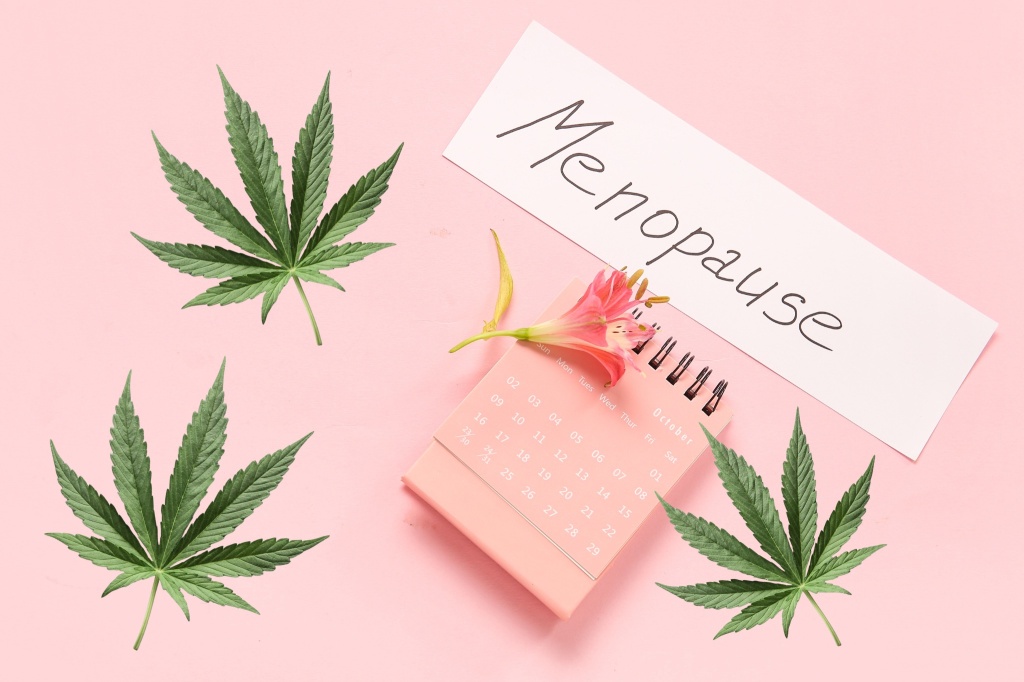
Menopause is inevitable for roughly half the world’s population. Still, the experience feels uniquely personal. It arrives slowly for many during perimenopause—the stretch of years when hormones weave in and out of sync—and then more fully as estrogen and progesterone drop.
Standard options like hormone replacement therapy (HRT) help many, but they aren’t right or safe for everyone, and they don’t address every symptom. So, people are looking elsewhere. And for a growing number of women, cannabis has become one of those options.
RELATED: Cannabis and memory loss? The data may surprise you
Of course, cannabis isn’t an FDA-approved menopause medicine. But both anecdotal evidence and still-emerging science suggest it might help with the everyday side effects of hormonal change for some people. Here is a snapshot of what we know in 2026 and how women are actually using cannabis for their health and wellness.
Why Cannabis is on the Radar
The body has its own endocannabinoid system (ECS), a network of receptors and signaling molecules that helps regulate mood, sleep, pain, temperature, and appetite. All of those functions overlap with menopausal symptoms, indicating that the ECS is intertwined with processes that shift during perimenopause and menopause.
For Anea Bogue, co-founder of the cannabinoid wellness brand CLEA Midlife, learning about the ECS was a turning point.
“I had this big ‘aha’ moment,” Bogue said. “So many of the most common symptoms associated with menopause are things the endocannabinoid system regulates. As estrogen levels decline during menopause, that system can be affected too, which may explain why women suddenly have trouble sleeping, regulating temperature, or maintaining emotional balance.”
Rather than a magic cure-all, cannabis is often seen as a multi-symptom option that addresses several complaints at once rather than a single issue. That’s one reason why so many women report using it.
Cannabis for menopausal systems: the use cases
Up to 60 percent of women report sleep disturbances during menopause, often driven by night sweats and insomnia. Many midlife cannabis users say low doses of THC, sometimes combined with CBD, help them fall asleep faster or stay asleep longer.
CBD on its own has been studied for anxiety and sleep support in adults, and THC at modest doses can reduce sleep latency for some people. It is not a universal fix, but when sleep improves, other symptoms often soften. Mood stabilizes, pain feels less sharp, and the day feels more manageable.
Speaking of mood: many women describe perimenopause as a time when their reactions feel outsized or unfamiliar. Hormones and neurotransmitters are deeply connected, and declining estrogen can influence serotonin and GABA, which help regulate anxiety and emotional resilience.
For Bogue, the emotional and cognitive changes were some of the most unsettling symptoms.
“I went from being a vibrant go-getter to feeling like I didn’t care about anything anymore,” she said. “The brain fog was the scariest part. I honestly wondered if I had early-onset dementia. I couldn’t always get thoughts from my brain to my mouth, and I do a lot of speaking for work.”
RELATED: Ozempic and cannabis: what happens when you use both
She eventually started experimenting with cannabinoids alongside HRT, which she says helped but didn’t resolve everything.
“My husband is an award-winning cannabis formulator, and he started creating specific capsules for me,” Bogue said. “Within about a week of using a CBG formula for focus, I noticed a huge difference. I could access my thoughts again.”
Other formulations helped with joint pain, anxiety, and sleep over time.
“Within a couple of weeks, I was going up and down stairs without my knees hurting,” she said. “And after about a month, the panic attacks had mostly disappeared.”
Hot flashes are more complicated. They are driven by changes in the brain’s temperature-regulation system, and while there is a theoretical link between that system and the endocannabinoid network, the clinical evidence remains thin. Some women report fewer or less intense hot flashes when using cannabis, while others notice no change.
Beyond the headline symptoms, cannabis may also be used for joint pain, which can increase as estrogen declines and inflammation rises. Some women use topicals for localized discomfort or pelvic pain. Others explore THC for libido changes, which may increase subjective arousal or sensitivity.
What’s most striking is that cannabis use during menopause is rarely about getting “high” in the stereotypical sense. Many older people prefer microdosing: taking just enough to take the edge off. They might use CBD oils during the day, a low-dose edible at night, or a vaporizer used sparingly before bed.
The Stigma Gap
Even as cannabis becomes more mainstream, stigma still shapes how many women approach it.
“There’s still a lot of cannabis shame and fear,” Bogue said. “We often use the language ‘hemp-derived cannabinoids’ rather than cannabis because some women feel more comfortable with that. And we still get emails asking basic questions like, ‘What exactly is a cannabinoid?’”
RELATED: New cannabinoid discovered—and it has big potential
That lack of public understanding is part of what motivated her to build a menopause-focused cannabinoid brand in the first place.
“I started feeling better and thought, I can’t be the only woman dealing with this. I wanted other women to have access to plant-based tools that might help,” Bogue said.
A Growing Menu of Options
Of course, cannabis is not neutral. THC can impair cognition at higher doses, and it can interact with certain medications. Tolerance also varies, and some people end up feeling anxious rather than calmer. As with any tool, context matters.
Still, the tone around menopause and cannabis is shifting from novelty to normalization.
Menopause has long been under-discussed and under-treated. Women have often been told to endure it quietly or power through it. The growing interest in cannabis reflects something larger: a desire for more options, more agency, and more individualized care.
Cannabis is not replacing hormone therapy, and for some women, it may do very little. But for others, it can become part of a layered strategy that includes conventional medicine, exercise, nutrition, therapy, and community.
What it represents, more than anything, is choice. In 2026, women don’t have to wait to make decisions about their own comfort. They are experimenting carefully, talking to their doctors, sharing experiences, and building a practical knowledge base around what helps.
Menopause is a biological inevitability, but how we navigate it is not.