


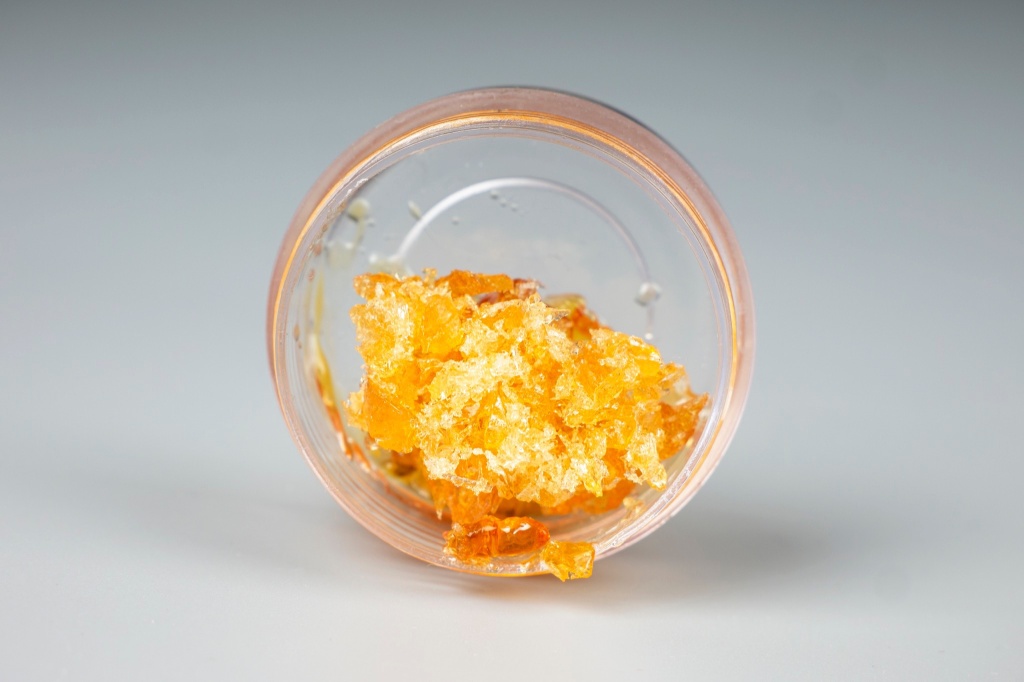
To many dispensary hands, from owners to budtenders and everyone in between, THCA concentrates are the rising star of the cannabinoid world. But, like with many of the things “the kids” are into these days, old heads don’t always know all the ins and outs of the hot new trends. If you’ve wondered what separates a rosin from a badder, or thought about proposing with a THCA diamond, this article will help you understand a segment of the market that is clearly here to stay.
RELATED: Live rosin: Is the premium pot extract worth the price?
Defining the Market
The first question many store owners have when considering THCA concentrates is whether it is worth it at all. Is this a passing fad or the shape of cannabinoids to come?
Sadly, I’m not exactly Nostradamus, so I can’t tell you for sure where the market will end up. But all the indicators are that interest in THCA concentrates is flourishing. A FlowHub study found that 17 percent of cannabinoid sales are in the form of concentrates. With concentrates representing nearly a fifth of sales, it’s pretty clear that ignoring them is perilous to the bottom line of your friendly neighborhood dispensary.
Size & Shape
So now that we know that there is a demand for the product, we have to ask what it is. With concentrates, it can get a little complex. But at its core, it’s a lot more straightforward than it looks.
Concentrates are cannabis products where the most desirable compounds, mainly cannabinoids and terpenes, are extracted and condensed into a more potent form. A helpful way to think about it: if flower is like beer, concentrates are more like spirits. Smaller amount, stronger impact.
RELATED: This separates top-shelf pre-rolls from the rest
Before getting into types, it helps to understand THCA itself. THCA is the precursor chemical to THC, the main psychoactive compound in cannabis. Unlike THC, THCA does not have notable intoxicating effects on its own until it is heated, which is what activates its effects.
From there, concentrates are made using a few different approaches, not just different types, but different processes that fall into three categories:
-
- Solventless Concentrates are made using heat, pressure, water, and ice. No chemicals are added, so they are a pure expression of the plant. Premium products like ice water hash and rosin fall into this category and are often seen as connoisseur-grade cannabis.
- Solvent-Based Concentrates use food-grade solvents to extract cannabinoids, which are then refined to remove any residuals. This category includes products like live resin, live badder, and live sugar, where texture differences come from whipping or crystallization, not strength. Wax, budder, and shatter are also part of this group, offering a range of textures and price points.
- Distillate-Based Products are more highly refined, focusing on cannabinoid content while removing most other plant compounds. These are commonly used in vapes and edibles and are valued for their consistency and potency.
- Solventless Concentrates are made using heat, pressure, water, and ice. No chemicals are added, so they are a pure expression of the plant. Premium products like ice water hash and rosin fall into this category and are often seen as connoisseur-grade cannabis.
Why?
Market research and definitional questions aside, there is one question that remains: why? Why, exactly, do cannabinoid consumers seek out THCA concentrates in an increasingly crowded market?
RELATED: From blinkers to video games: California targets next-gen weed vapes
Basically, four things: potency, purity, flavor, and price.
- Potency: It’s right there in the name – concentrates. The process that creates the product ensures that you’re getting the highest levels of cannabinoids, with no filler. For experienced consumers, that efficiency is part of the appeal.
- Purity: Many cannabinoid consumers are very concerned about the addition of other chemicals to things they ingest. The concentration process is all about removing everything but the good stuff, to the point where some methods, like rosin pressing, are entirely solvent-free.
- Flavor and Aroma: Concentrates can be made from cannabis that’s frozen immediately after harvest, also known as “flash-frozen,” rather than dried and cured. This helps preserve the plant’s freshness and retain higher levels of terpenes that can be reduced during curing. Live concentrates like hash and badder have more pronounced flavors and aromas, closer to the scent and taste of the living plant.
- Price: Concentrates have varying price points, and some options offer a step up from flower without top-tier pricing. Meaning you can get the same or stronger effects with a smaller amount. Price often reflects process, yield, and level of craftsmanship involved.
The Future and Beyond
With so many moving pieces, legal and otherwise, it’s difficult to chart the future course of cannabinoids. That said, the current market reach and customer satisfaction we’re seeing with THCA concentrates make it likely you’ll be seeing them in stores for a good long time.
*This article was submitted by an unpaid guest contributor. The opinions or statements within do not necessarily reflect those of GreenState or HNP. The author is solely responsible for the content.