


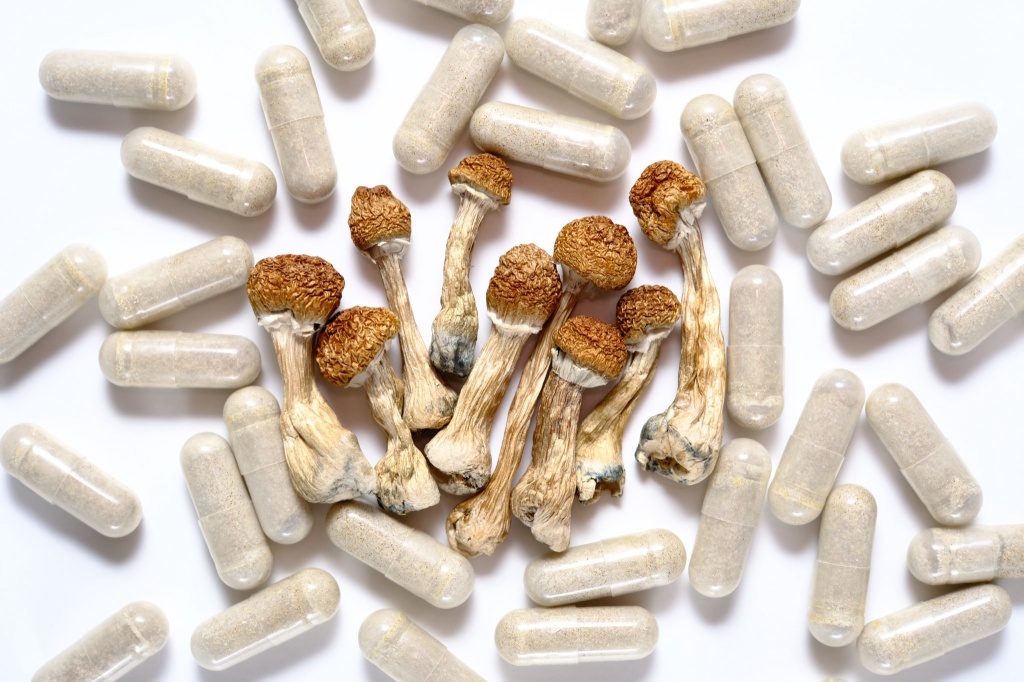
Psychedelics have gained traction as more Americans look for alternatives to address mental health concerns and mood. But how many people are actually using substances like psilocybin and LSD or engaging in psychedelic microdosing? New data offers a clearer picture.
RELATED: LSD for dogs? Study reveals potential
According to the 2025 RAND Psychedelics Survey, roughly 10 million Americans reported microdosing in the past year. Microdosing refers to taking a small, subperceptual dose of a substance to capture potential benefits without noticeable intoxicating effects. The practice has become more widespread, spanning demographics from tech workers to suburban parents.
The report found that psilocybin (aka magic mushrooms) is the most widely used psychedelic in America, with roughly 11 million adults consuming it within the last year. MDMA, Amanita muscaria mushrooms, ketamine, and LSD rounded out the top five.
That figure marks an increase from a similar RAND report, which estimated that about 8 million Americans used psilocybin in 2023. It could be that more people are willing to admit they use the drug or that societal shifts have led to wider consumption overall.
For the most recent report, researchers relied on a probability-based, nationally representative sample of 10,122 U.S. adults aged 18 and older. Participants were surveyed over the phone or online. The authors noted an oversampling of veterans, which will inform a separate, veteran-focused report.
“According to survey responses, we estimated that approximately 9.55 million U.S. adults microdosed one or more of psilocybin, MDMA, or LSD in the past year (about 3.7 percent),” the study authors concluded.
RELATED: How to microdose THC: finding your perfect weed dose
As more Americans turn to psychedelics and research into their potential benefits continues, lawmakers across the country are taking note. Several states have legalized the therapeutic use of certain psychedelic compounds, while a number of communities are moving to decriminalize psychedelics or deprioritize the enforcement of laws prohibiting them.
While widespread psychedelic reform may still be years away, data from the RAND survey suggest the scale of use is already difficult for policymakers to ignore.
