


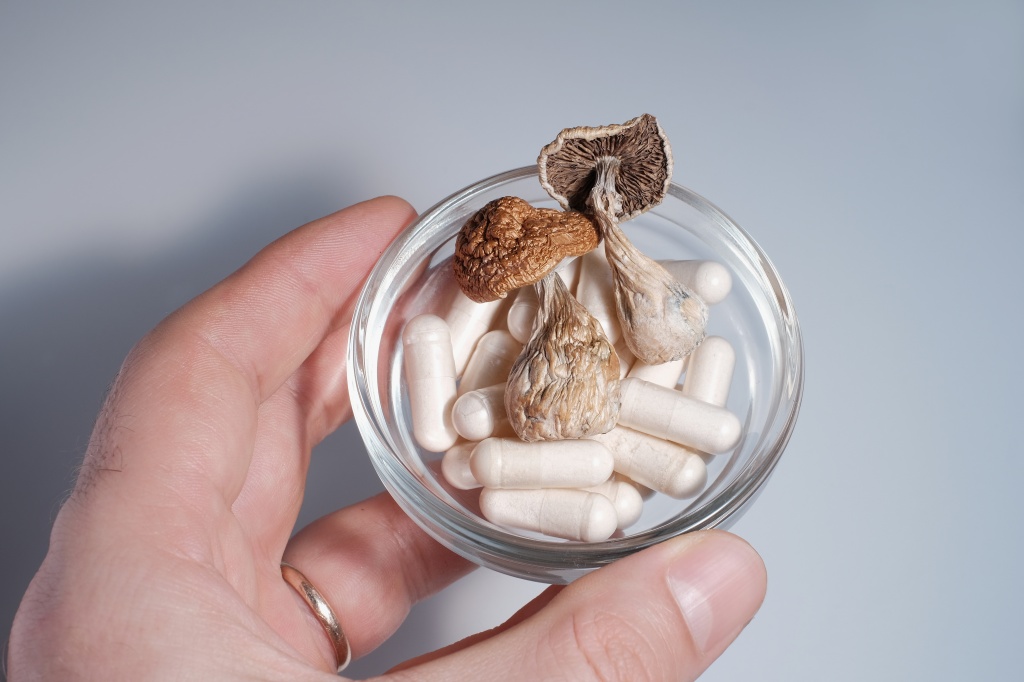
Oregon voters legalized the therapeutic use of psilocybin (the active ingredient in magic mushrooms) in 2020. Since the state’s licensed program was established, thousands of adults have taken part in facilitator-assisted psychedelic sessions. Now, a new study offers a clearer picture of just how the program is going.
A paper published in JAMA Network Open examined the safety and participant outcomes of Oregon’s state-regulated psilocybin program. The prospective cohort study followed 346 people who received psilocybin services at licensed centers.
RELATED: The first legal magic mushroom edibles have arrived
Researchers surveyed participants before their mushroom session and again one week, one month, and three months afterward. Participants sought psilocybin services for a variety of reasons and took an average dose of roughly 32 milligrams.
The results were promising. At the one-month follow-up, more than 92 percent of participants said they benefited from the experience. Even more striking: Nearly 60 percent ranked their psilocybin experience among the 10 most meaningful experiences of their lives.
After three months, moderate-to-severe symptoms of depression, anxiety, and post-traumatic stress disorder were significantly less common than at baseline. The percentage of participants who reported being satisfied with their lives also increased from 63 percent to more than 82 percent.
RELATED: Study reveals surprising truth about magic mushrooms
Serious adverse reactions were rare, with four participants experiencing behavioral reactions that required medical attention. All were new to psychedelics.
Even so, researchers were encouraged by the overall findings.
“These results are very reassuring,” study author Todd Korthuis told NPR.
The average age of participants was 49.5 years, and just over half were women. The vast majority were white and college-educated. More than 44 percent had never used a psychedelic drug before.
While the results suggest Oregon’s psilocybin program has promise, the researchers noted several limitations. The study did not include a placebo or control group, meaning researchers cannot say psilocybin itself caused the improvements. The authors called for larger studies to confirm the findings.
