


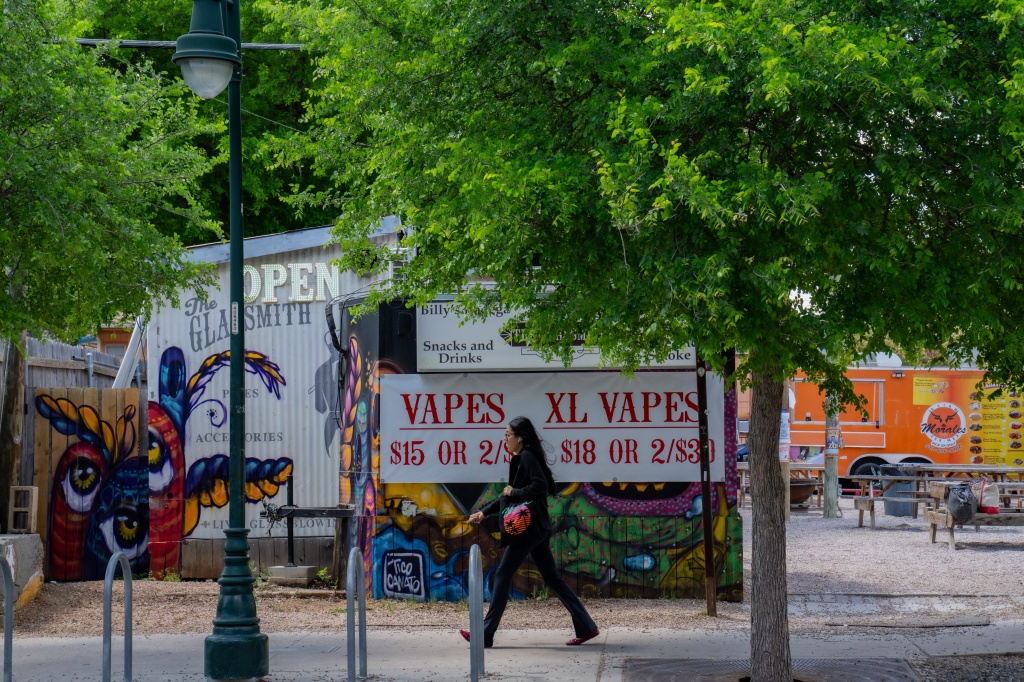
In Nov. 2025, President Donald Trump signed a government spending bill that included a provision changing the federal definition of hemp. Most of the changes, which could effectively ban most full-spectrum products like CBD oil and THC drinks at the federal level, were delayed to Dec. 11 of this year. But another component took effect last week, rendering certain hemp products illegal.
In addition to establishing a limit of 0.4 milligrams of total THC and certain other cannabinoids per container for finished hemp products, the 2025 bill also excluded certain hemp products containing synthetic cannabinoids from the federal definition of hemp. These are compounds that do not naturally occur in the cannabis plant, such as THC-O acetate.
RELATED: Hemp ban could wipe out two-thirds of businesses, new report finds
The provision that took effect Nov. 12 does not explicitly prohibit the chemical conversion process used to manufacture hemp-derived cannabinoids such as delta-8 THC and delta-9 THC.
Many intoxicating hemp products contain versions of these compounds created by chemically converting CBD. The restrictions taking effect Dec. 11 would exclude products containing chemically converted versions of these compounds from the federal definition of hemp.
Under the Nov. 2025 bill, the Food and Drug Administration was instructed to publish lists of all known natural and synthetic cannabinoids within 90 days. However, the agency has yet to comply.
This lack of guidance could create confusion in the marketplace as manufacturers and retailers debate whether certain compounds, like HHC and THC-P, are technically illegal. It may also make enforcing the new federal law difficult.
RELATED: DEA issues first medical cannabis registrations
Meanwhile, advocates are racing against the clock to prevent the wider restrictions on hemp products. Lawmakers have introduced several bills to delay or repeal the restrictions, while others have proposed establishing a federal regulatory framework for hemp-derived products. One Republican congressman is seeking to include another delay in broader spending legislation, although the effort has yet to succeed.
With less than a month before the hemp ban takes effect, the industry faces an uncertain future. And with no clear guidance from the FDA on synthetic cannabinoids, questions remain about what, if any, products are actually illegal.
