


Part two of a three part series on cannabis management agreements; read part one, “Washington weed divided as many reach breaking point.”
A handful of core issues are plaguing Washington cannabis. One problem at the center is store discount culture, a practice that leads to misleading constant “sales” and gouged wholesale pricing. Many blame large retail groups, but representatives of those groups disagree, arguing that all is fair under capitalism. Without change, attrition will continue towards massive consolidation of licensed cannabis businesses.
Under Washington state laws, individuals can hold up to five retail licenses. This number was set to limit the market share that one entity can leverage, but some groups use intellectual property and management agreements to bypass it. These agreements, which are reviewed by Washington State Liquor and Cannabis Board (LCB) staff, serve as a seemingly compliant bridge to connect operations of more than five licenses into retail groups with consolidated branding.
According to many industry insiders, cannabis retail groups use their buying power to haggle for lower prices with producers. This has pushed down the market price, which is driving both farms and smaller dispensaries out of business. Hopeful but struggling operators look to a new law established by Senate Bill 5403 (SB 5403) for potential reprieve, but its efficacy relies on compliance and enforcement.
Rise of the retail groups
Several retail groups—multiple stores that share branding, purchasing, and other procedures—operate across Washington. Kush21 and Zips were mentioned most frequently in the extensive interviews conducted for this series. At the start of the investigation, there were 12 Kush21 store menus linked under the ‘Locations’ drop-down tab of their website; Zips had eight.
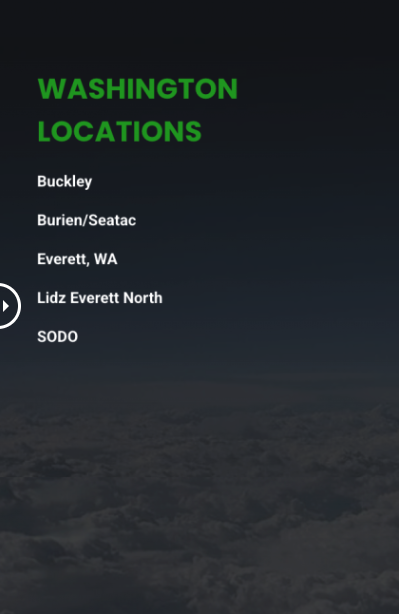
But a lot has quietly changed leading up to the new year. Now, Kush21 displays five Washington locations, one of which links to a Lidz store at the former Everett North location. Meanwhile, Zips still lists eight stores– but two redirect consumers to newly branded Kush21 websites and two links show stale Zips websites for locations which belong to new owners.
Since the May 2025 passage of SB 5403, retail groups with more than five stores have been selling, acquiring, and reorganizing licenses. The legislation moderates financial interests in the cannabis industry by limiting coordination possible through legal agreements. Some farmers hoped that it would break up powerful conglomerates accused of influencing industry pricing by forcing discounts.
Zips and its closely affiliated brand Lidz have sold many of their locations since the passage of the bill. Meanwhile, Kush21 has extended its reach according to data from the Washington Secretary of State (WA SOS), the Washington State Department of Revenue (WA DOR), and the LCB. Research showed Zips and Lidz sold a fair share of their licenses to a deconsolidated Kush21 network of owners led by Michale Beraki. At publication time, the Beraki family and close associates owned and operated 22 retail cannabis stores.
Early LCB enforcement against retail groups
LCB staff are charged with enforcing the license cap and eventually SB 5403. Around the time management agreements were being authorized by the state legislature, the agency showed its teeth in litigation against the Bud Hut chain of dispensaries.
When LCB staff intervened, Bud Hut owner Scott Hensrude had his arms around 11 locations with his trusted friends and family listed as governors on additional licenses. A multi-year investigation showed that Hensrude had control over licenses held by the other Bud Hut governors.
The state defines control as “power to independently order, or direct the management, managers, or policies of a licensed business.” The investigation showed that Scott Hensrude exercised control over the licenses owned by his son, Sullivan Hensrude, Gregory Wright, and Jason Wamsley. This made him a true party of interest (TPI) in more than five licenses. While the parties denied wrongdoing, they sought out settlement language which required Scott Hensrude to sell all of his licenses and pay a penalty calculated as 40 percent of each store’s monthly excise tax.
Flash forward to today, and a new weed family has ascended. The Seattle-based Berakis have grown their dispensary holdings since 2016, uniting under the Kush21 brand after management agreements were legalized by RCW 69.50.395.
(The owners of Kush21 affiliated stores did not respond to outreach by Cannabis Observer, or declined to comment before publication.)
Meet the Beraki family
Michale Beraki attempted to get one of the first cannabis adult-use retail licenses but was not chosen. Eventually, he made it happen through a partnership with Rainier Cannabis in 2016. Rainier had an operative license in Shoreline and another which was unable to open in Mountlake Terrace. According to a Federal Way Mirror article, Beraki also had access to a third license which could be located anywhere in unincorporated King County.
Michale worked as a translator for the U.S. Army captain who ultimately sponsored his move to the U.S. He left his family at 16 and moved to America in 2002. Michale started and sold businesses in transportation, healthcare, liquor retail, and money transferring services from Seattle to Eritrea. Weed is what stuck.
The Eritrean immigrant is achieving his version of the American dream.
“I heard a lot of great things about the United States from watching movies, that as long as you work hard, abide by the rules, and do the right thing, you can achieve success,” Beraki said to Marijuana Venture. “I felt like if anyone was going to stop me, it was going to be myself.”
Now, Michale and his brothers sit at the helm of one of the cannabis dispensary groups blamed for driving down the wholesale price of weed.
Management agreements enabled empire building
Three Beraki brothers built their own cannabis retail groups in the early years of I-502 before formally consolidating their efforts under the Kush21 brand in October 2023. A Kush21 website blog post mentions a drive to “strengthen our reputation in the cannabis industry,” delivering “better pricing and more value to our customers.” At the time, they brought together 11 locations in Washington and one in Illinois.
Individual ownership of more than five retail dispensaries is non-compliant with the I-502 license cap. But a group of retail owners can use intellectual property and management agreements to achieve brand consolidation across more than five stores. Cannabis Observer obtained a draft Kush21 agreement in a public records request to the WSLCB. The documents from early 2023 were still being negotiated with LCB staff, and indicated a desired financial arrangement which raised TPI concerns among some officials.
Agreements like this extended the Kush21 brand and model into other dispensaries. The Kush21 team sought to “provide access and daily assistance for operational support to implement operations as are approved by the Licensee” for operations like hiring practices, product purchasing, employee training, and standard operating procedures. WSLCB Director of Communications Brian Smith shared that WSLCB staff reviewed management agreements between Kush21 and six retail licensee locations from 2023 to 2024.
Former Kush21 regional buying manager Eric Latta described the arrangement in an interview with Cannabis Observer. Latta verified that Michale does not own over five stores, and instead shared Kush21 strategies and tactics as an independent contractor.
“We were being paid by the owners of these businesses to improve their businesses,” Latta explained. “So we were trying to improve every facet of their business, and we had to give reports to the LCB…we were turning it into the LCB, like a literal timestamp card, telling them what we’re doing for all of the companies.”
After achieving branded consolidation through intellectual property and management agreements, all of the Beraki-owned dispensaries were marketed under the same logo, website, and loyalty app. Until late 2025, the Kush21 online ordering drop-down menu on each store website led customers to any consolidated retail location on the map.
However, soon after SB 5403 was passed, each brother began rebranding their stores back into their respective silos while seizing the opportunity to expand towards their individual limits of five stores each.
The Kush21 Network, A Deconsolidated Manifold

(Image provided by Cannabis Observer and main contain use of AI)
“Manifolding” is an advanced cannabis cultivation method to increase yield in which a grower cuts off a main stem to encourage the budding of two branches just beneath it. The process can be repeated on each new branch, creating four avenues for growth, then eight, instead of just one main apex stem.
In a somewhat poetic move, Kush21 responded to the passage of SB 5403 by manifolding its primary business into eight independent brands owned by the brothers and their close associates. The 22 store locations collectively owned by the group amassed $125M in retail sales from September 2024 to October 2025. Here are the owners and their individual holdings heading into 2026.
Michale Beraki
The flagship Kush21 store opened in Burien near SeaTac Airport on October 1, 2016 in unincorporated King County with Michale Beraki in the captain’s seat. One year later, Kush21 stores in Vashon Island, Pullman, and Spokane opened their doors. The fledgling Kush21 brand had four well-earning retail locations by March 2020.
At publication time, Michale owns Kush21 locations in Burien, Buckley, Everett, and SoDo. Beraki assumed both the SoDo and Everett licenses from Zips in mid-2025 following the passage of SB 5403. Locals Canna House is also in his portfolio, totalling five licenses. Looking at the latest WSLCB retail sales figures reported to the Finance division for the year spanning October 2024 to September 2025, these store locations earned $52.6M in total cannabis sales.
When asked how many stores were operating in partnerships with or branded as Kush21, Communications Director Brian Smith replied via email, “According [sic] the frequently requests [sic] lists page on the LCB website, there are four active licenses branded with the name ‘Kush 21’ although there is some variation in the names.”
Daniel Beraki
Michale started this weed empire with his brother Daniel at his side after the pair partnered in a few liquor stores.
Now, the WA SOS database lists Daniel as sole governor for the Local Roots and Buddy’s stores. He holds licenses for four active dispensaries which earned $20.7M in the time period listed above. Daniel also partners with Michale in Kush & Glass Buckley, which sells paraphernalia.
Daniel remains in liquor via Kent Liquor & Wine. At the same location, he operates Melody Ventures LLC d/b/a Nova Bar, a (presumably nicotine) vapor products manufacturer according to a job description posted on Glassdoor. His brother Michale is a partner in the business along with their older brother, Woldu.
Woldu Beraki
Woldu also built his own cannabis retail empire. His first licenses were assumed from the original Kushman’s retail chain stores in Everett and just outside of Lynnwood, both of which were eventually rebranded as Kush21 stores. Now, the stores have been spun back out, reverting back to Kushman’s branding and still under Woldu’s governorship.
The same state datasets show Woldu as the new head of the Lidz dispensary chain. All three Lidz locations are formerly associated with Zips owners. In December 2025, the Kush21 Everett North license was rebranded as a fourth Lidz dispensary. All of the Lidz stores share a website, branding, and rewards program built by the same third-party companies which have established a similar look and feel for most of the brands in the deconsolidated Kush21 network.
Publicly available data from the State of Washington appears to put Woldu Beraki’s market share at six stores that earned $30.5M between October 2024 and September 2025.
While ownership of six stores might indicate a TPI violation, state data may not have caught up with the license shuffling and rebranding characterizing the latter half of 2025. However, the WA DOR shows the Kushman’s Lynnwood license as “On Hold,” a status controlled by WSLCB which can signify a missed renewal payment, paperwork error, active investigation, or something else, according to a DOR Business Licensing Service staffer who spoke with Cannabis Observer.
The flagship Burien/Seatac Kush21 store owned by Michale shows the same “On Hold” status – but both appear to be carrying on business as usual.
Solomon Tesfaye
At the time Cannabis Observer started this investigation, the old Kush21 Vashon license was owned by Solomon Tesfaye, along with his children Yohanna Seyoum and Yophtahe Seyoum, who operate the store under the name Vashon Times. Tesfaye formed Solster Ventures LLC in February, and was licensed to open the KushTribe Mukilteo location in May. On December 11th, Tesfaye registered the tradename “KushTribe Vashon” for the Vashon Times business, indicating the network may be erecting a new brand silo.
Before 2025, Tesfaye was the registered agent on most of the cannabis retail licenses owned by the Berakis. The registered agent serves as a point person between the owner/governors and State agencies. More recently, Teddy Teklemichael is seen as a registered agent on Beraki-owned licenses, while Solomon appears to be shifting to an ownership role. LCB data shows his stores earned $2.3M from October 2024 to September 2025.
Jerusalem Beraki
Jerusalem Beraki created new businesses to assume the Kush21 Pullman and Spokane licenses in November 2024, two of the original four Kush21 locations.
In a similarly timed exit as Zips Cannabis, established retail chain Apex Cannabis sold all three of its locations to the Beraki family. Jerusalem added Apex Moses Lake, Apex Spokane, and Apex Otis Orchards to his portfolio, rebranding the Kush21 Pullman and Spokane stores in the process. Interviewed farmers speak about the Apex chain as if it is owned by Kush21.
Acquiring Apex brought Jerusalem’s license count to five operating dispensaries on the east side of the state. These store locations earned $18.4M according to LCB data recorded from October 2024 to September 2025. This number is available because Apex stores reported cannabis sales to the WSLCB Finance division, but WSLCB Cannabis Central Reporting System (CCRS) data shows a different story. It’s a short one because there is no data.
Jerusalem’s three new Apex stores, as well as the two Zips locations that were transferred to Michale, have failed to report sales data into CCRS since they were issued licenses earlier in 2025.
LCB Enforcement and Education staff reiterated the legal obligation to track cannabis from seed to sale in a recent press release announcing a producer/processor license suspension.
“Under state law, all cannabis plants, products, test results, transportation logs, and sales records must be accurately reported to LCB’s Cannabis Central Reporting System (CCRS) to ensure cannabis is not diverted to the illicit market and can be tracked and tested for pesticides, heavy metals and other harmful contaminants prohibited for cannabis in Washington. LCB’s investigation found significant discrepancies between on-site evidence and CCRS records submitted,” the release read.
None of the Beraki-owned, Kush21-affiliated dispensary sales numbers reported to the LCB Finance division match those reported to the CCRS. In many cases, the two sums differ by millions of dollars indicating potential violations of RCW 69.50.342 and WAC 314-55-083.
Kush21 built an empire with management agreements, but the group has been proactive in complying with the most visible provisions of SB 5403. As they trim the larger Kush21 brand, their network has been manifolded like a well-trained cannabis plant, increasing surface area and yield.
New laws, new landscape?
The law created by SB 5403 goes into effect on January 1st and stops profit sharing and purchasing coordination. It targets shared branding, social media, and website design, operational control, marketing or advertising expenses, or employment and hiring, including shared employment between more than five stores.
A legislative goal was to limit the pricing control of a few powerful entities believed to be driving wholesale prices down. Authors also aimed to halt the discount wars between neighboring dispensaries. Wholesale discounts, normalized in part by Kush21, are believed to be part of the fuel driving market prices down. Zips is consistently named as one of the culprits that started the heavily discounted weed store model taking over the state. But Kush21 has taken the baton, and they’re running at a sprint.
Those flashy consumer-facing discounts come at a price for farms and processors. Vendors are asked to reduce wholesale prices for access to store shelf space. Then, the store marks up the product around four to six times and puts it on the sales floor at up to 50 percent off. The cannabis industry used to run on a three times markup from the wholesale price. High profits for retail dispensaries and low prices for consumers leave little to no margins for vendors.
Adam Simon, owner of The Reef dispensaries, lamented the impact of these constant discounts in an interview with Cannabis Observer.
“Everybody’s now focused on getting into these pricing levels that are just unsustainable for the market,” said Simon. “Vendors are going out of business because they can’t sustain their grow operations, and retailers are struggling. Every retailer that I know is struggling right now.”
Change requires compliance and enforcement
SB 5403 advocates hoped the impending law and rules would break up retail groups that are driving the race to the bottom. But there may be unintended consequences. Kush21 has debranded from a consolidated group of stores to a network of Beraki-owned or Beraki-affiliated entities. The outward co-branding problem seems to be solved, but many wonder how things will change behind closed doors.
Farmers speak of enjoying Kush21 buyer interactions, but even then, there is an unspoken power imbalance that drives them to provide discounts, whether the farm can afford the cut or not. Some farms allege that a wholesale discount is required to do business with Kush21 stores. Coveted retail shelf space is the only place to move products in the current I-502 framework.
Limiting the financial influence of retail entities motivated the passage of SB 5403, but WSLCB rulemakers have become intent on reforming wholesale business practices. That is proving difficult and making implementation timelines slip. With approved rules pushed back into late Spring 2026, many wonder what the sector will look like by then.
SB 5403 was written to help stabilize the cannabis industry. Implementation now lies in the hands of LCB staff. Many of the farms struggling with low wholesale pricing are not hopeful that the agency will take meaningful action against less compliant retail groups. The Bud Hut case shows that they have the power to uncover collusion, but will they?
With only days until the law comes into effect, LCB staff have yet to indicate whether they will enforce it immediately or wait. Time will tell.
This article originally appeared on Cannabis Observer and is reposted with permission. Read the final installment of this three-part investigation, “Power, pressure, and the fate of Washington weed.”