


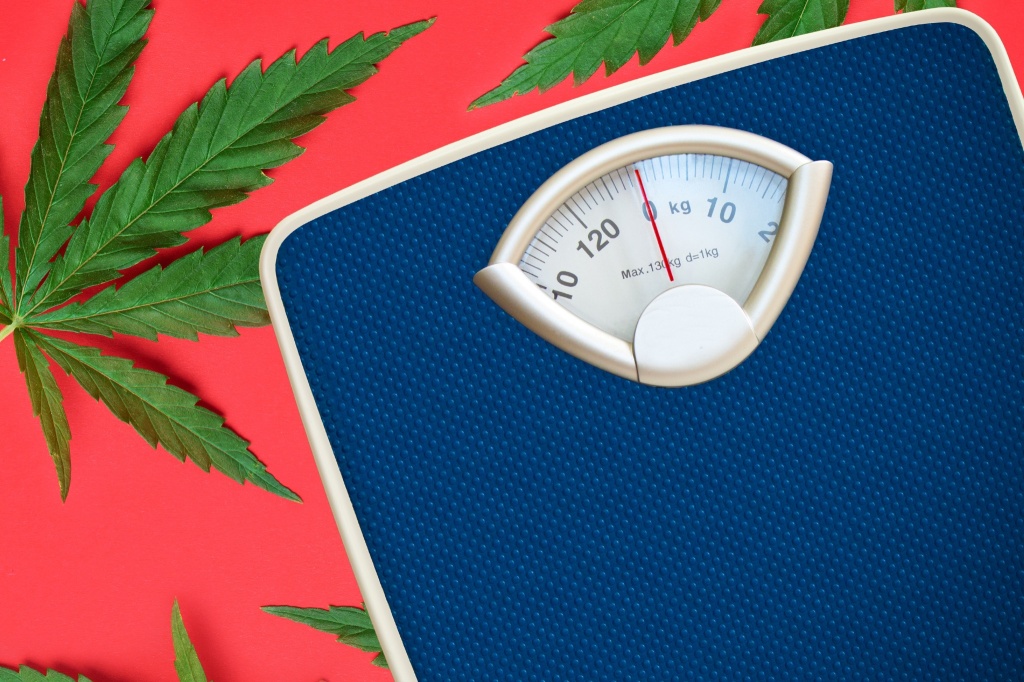
Cannabis has a reputation for turning the weirdest combination of snacks into a five-star meal. Smoke a joint, and not long after, the bag of chips in your pantry is calling your name…and asking to be paired with ice cream and bacon.
With unpredictable munchies like these, you’d think regular cannabis consumers would weigh more than the people who abstain. But oddly enough, research has repeatedly suggested the opposite.
RELATED: New study finds evidence cannabis could treat obesity, diabetes
Chronic cannabis users tend to have lower body weights and a reduced risk of developing type 2 diabetes, despite weed’s well-known ability to make people hungry. It’s a strange little cannabis paradox, and the scientists at the University of California, Riverside wanted to figure out what might be going on. Turns out, THC may only be part of the story.
In this recent preclinical study, researchers compared pure delta-9 THC with a whole-plant cannabis extract containing the same amount of THC, plus the other compounds that are naturally found in the plant.
Researchers gave either to obese mice using a model designed to mimic human dietary patterns; both groups lost significant weight, but only one saw the same improvement behind the scenes.
The mice given THC alone continued to have trouble regulating glucose: an important factor in type 2 diabetes. In contrast, those given the whole-plant extract not only lost weight but also saw those metabolic problems reversed. That might suggest that something besides THC is helping drive cannabis’ effects on metabolism.
One possible explanation involves a conversation happening between fat and the pancreas. Fat cells send signals that help the pancreas know how much insulin to release, but obesity and type 2 diabetes can scramble that communication. In the study, whole-plant cannabis extract helped get those two systems talking again more effectively than THC alone.
RELATED: These cannabis compounds have an unexpected impact on liver health
So, which of cannabis’ many compounds is responsible? Scientists don’t know yet. Researchers now want to isolate individual non-intoxicating compounds to see whether any could offer metabolic benefits without getting people high.
This definitely doesn’t mean cannabis is the next Ozempic. The research was conducted in mice, not humans, and researchers are not suggesting that anyone use weed to lose weight or treat diabetes. Human studies are still needed before scientists can determine whether these effects translate beyond the lab in a real way.
But the findings do add another wrinkle to one of weed’s great contradictions. Cannabis may inspire you to absolutely demolish your snack cabinet, but what it’s doing inside the body appears to be a whole lot more complicated than simply making you hungry.