


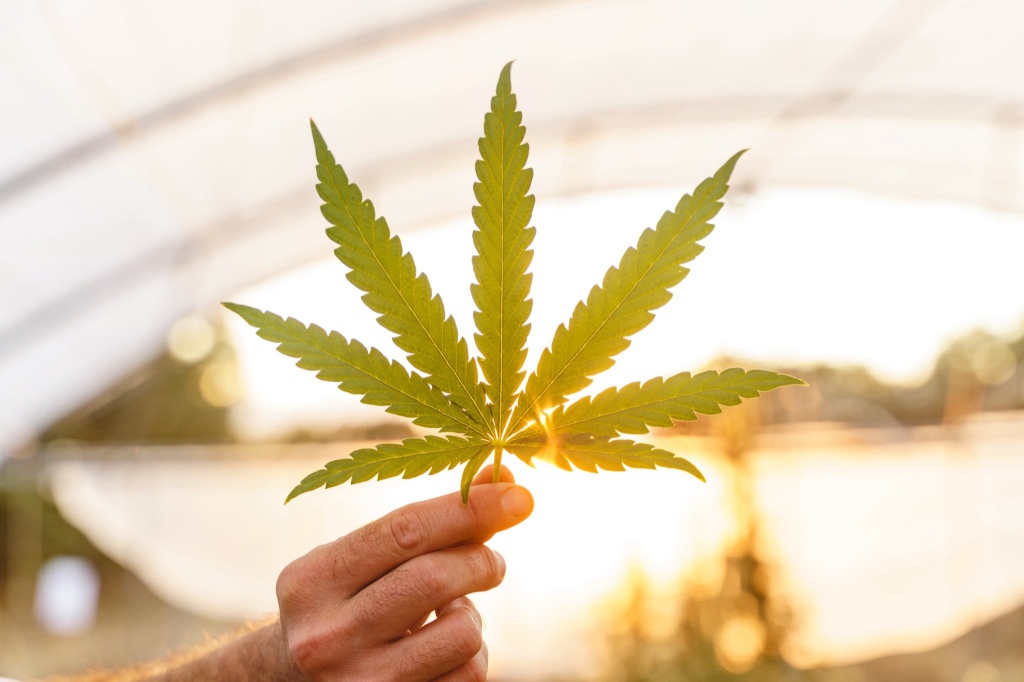
Attitudes and laws around hemp products have changed drastically in the last decade. And certain state and federal laws still place many hemp-derived products that continue to exist in a legal grey zone. So, where is that blurry line when it comes to THCA vs CBD, THC, flower, and the law? And how does it vary?
RELATED: The next big cannabinoid isn’t THC or CBD
THCA and THC: What is the Difference?
When looking at hemp products, you may automatically assume that THC and THCA are the same thing. THCA is a mostly non-psychoactive compound found in raw cannabis. THCA may provide some of the same benefits as THC, without the overt high.
THCA does convert into THC when treated with a heat source, and it is not legal in all 50 states.
Is CBD Legal Everywhere?
CBD derived from hemp is federally legal under the 2018 Farm Bill, provided it contains less than 0.3 percent delta-9 THC. So does this mean you can easily access all CBD products in any state? Not quite.
RELATED: Your vape’s THC number is lying to you
The 2018 Farm Bill, which legalized CBD at the federal level, does not cancel out an individual state’s Controlled Substances Access. Several states have placed restrictions on smokable hemp or ingestible CBD products, though enforcement and interpretation vary and continue to evolve. Also, a 2025 spending bill is set to change the federal definition of hemp in November 2026, which could further shake up the market.
CBD also has many potential health benefits. Such as aiding in sleep, easing aches and pains, and alleviating stress. It is just one of the many helpful compounds found in the cannabis plant.
What is Hemp?
Hemp is a variety of the cannabis sativa plant. The plant is known for its long and strong fibers, and is used in industrial applications, textiles, fabric, and more. CBD can be derived from the hemp flower, and its seeds are abundant in nutrients and used in supplements.
Hemp has a low psychoactive content and is not used in the same way as marijuana is. Both plants simply hail from the same family, leading some to mix up their identities and purposes.
One Plant Family, Many Uses
Cannabis sativa is an often-misunderstood species with a wide range of industrial, medical, and recreational applications. Although the marijuana plant hails from this family, it does not mean that every compound derived from it will have overt psychoactive effects.
RELATED: Weed might be secretly changing your taste buds – here’s how
CBD and THCA are mostly non-intoxicating in their raw forms, and hemp refers to cannabis cultivated for low THC content and industrial or wellness use. If an adult over 21 wants to partake in THC in a state where it is legal to do so, that is perfectly fine. But these other compounds do not hold the same effects, and they are often conflated, despite having distinct legal and functional differences.
*This article was submitted by an unpaid guest contributor. The opinions or statements within do not necessarily reflect those of GreenState or HNP. The author is solely responsible for the content.