


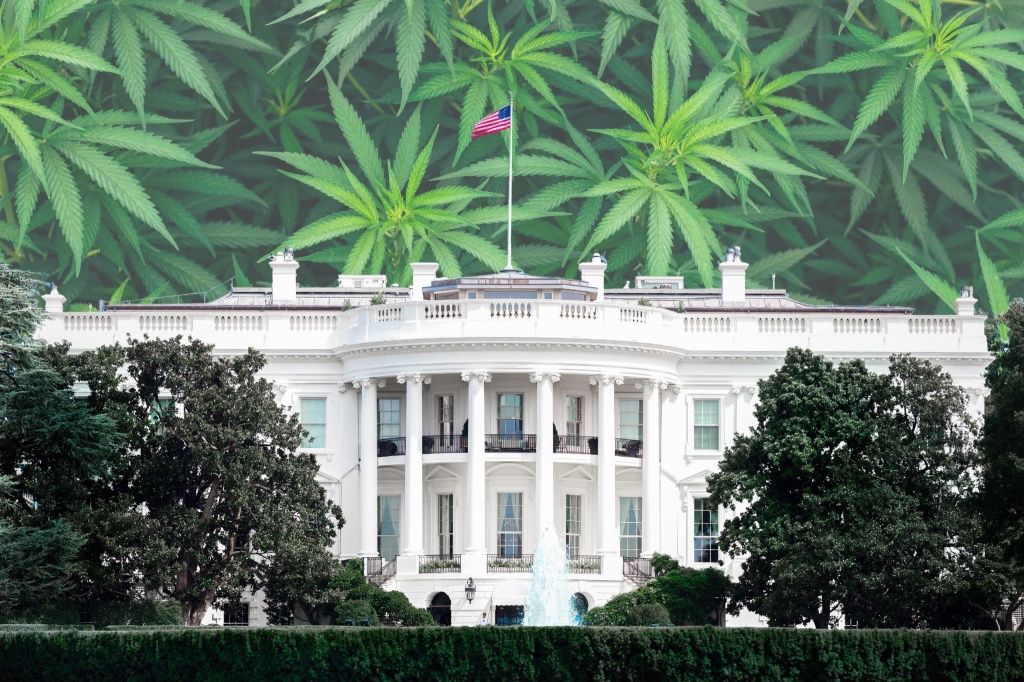
The Trump administration appears to be sending mixed signals on cannabis policy.
Even as the administration signals support for cannabis rescheduling, officials continue warning about marijuana-related crime, health risks, and federal illegality. The contradiction has become more apparent in recent comments from White House officials and health leaders.
RELATED: DEA opens cannabis registration, but key questions remain
On one hand, the administration’s move to reclassify certain medical marijuana products to Schedule III suggests a federal shift toward recognizing cannabis’ potential in medicine. Rescheduling cannabis to Schedule III should ease federal restrictions on research and medical access, but adult-use marijuana would remain illegal under federal law.
On the other hand, officials continue to emphasize that marijuana is criminalized under federal law while touting its perceived risks.
For example, a White House fact sheet said rescheduling aligns with the Department of Health and Human Services’ position that marijuana has accepted medical use, a major departure from Schedule I classification. But the White House’s 2026 National Drug Control Strategy also included cannabis in its broader plan to “defeat the scourge of illicit drugs.” The document warns that “high-potency” cannabis poses serious risks and links its use to psychosis and suicide.
“Marijuana products are today of unprecedented high potency, are often highly processed, aggressively advertised, and often packaged to appeal to minors,” the document reads.
RELATED: From blinkers to video games: California targets next-gen weed vapes
Meanwhile, Office of National Drug Control Policy Director Sara Carter directly stated that, despite rescheduling, marijuana is “still illegal.” Carter has also warned about illegal cannabis grows, cartel activity, and foreign-linked operations, reinforcing the administration’s tougher rhetoric around marijuana enforcement.
The conflicting messages — framing marijuana as both medicine and a public danger — could create confusion for patients, cannabis businesses, and state regulators trying to interpret federal policy.
In one context, cannabis is framed as medicine. In another, it is treated as a dangerous, illegal drug.
The result is not a simple pro-cannabis or anti-cannabis position. Instead, officials appear to support limited medical access while maintaining a traditional “tough on drugs” posture. That balancing act may be politically useful, but it also leaves patients, businesses, and voters with an unclear picture of the administration’s broader cannabis policy.