


The hope for our attention spans is bleak. The average time a reader spends on a digital article is about 60 seconds max, and, judging from our average screen time per day, the world speaks in images much more than it does written words.
Still with me?
RELATED: What if weed had vintages like wine? California is making it happen
The organizers of the Get to the Bag art show argue that the often uncredited and largely unknown graphic designers who create the art on the plastic bags that cannabis flowers come in are the true scribes of cannabis culture. This art, and its association with Harry Anslinger’s “marijuana menace,” pushes the boundaries of what society deems acceptable. Lawmakers say the design elements present on cannabis packaging—cartoonish characters, bright colors, fruit flavors—need to be prohibited because they tempt children.
Explore the lurid art of cannabis packaging if you dare, but be sure to also be 21 and over because there will be weed around.
Art Unbound
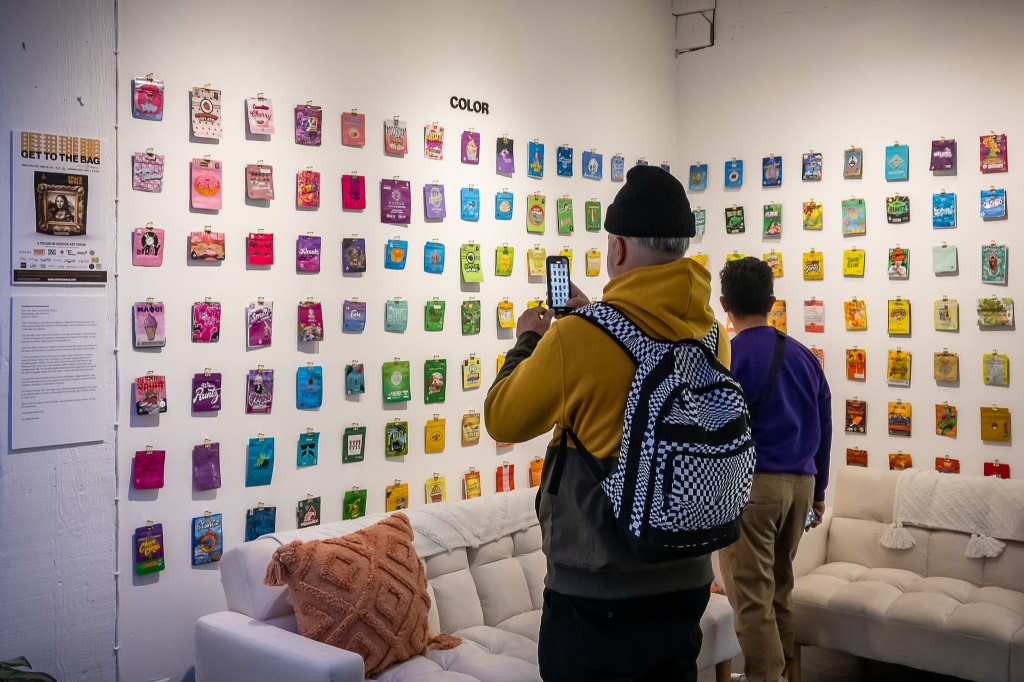
Opening tonight, and up by appointment throughout the month of April, Get to the Bag is being held in conjunction with SF Space Walk, a week of weedy activities throughout the city set up like a beer or restaurant week. Now in its third iteration at Mirus Gallery in downtown San Francisco, Calif., the art show is provocative on a few levels. Firstly, because of its assertion that commercial art can be appreciated like fine art.
“When you look at the whole collection and what goes into the design, it’s clearly more than packaging,” producer David Downs said. “It would be like imagining if General Mills put out a different Frosted Flakes box every week. There’s a tempo and a metabolism to the production that’s far outside purely commercial interests. No one should be working this hard on their packaging if they weren’t in dialogue with the broader visual culture of their time.”
Unpeeling the petals further, the show represents a silent dialogue between the connoisseurs of fine cannabis flowers: one that travels between the naughty and the nice, what’s allowed and not allowed. By displaying Mylar bags from underground and regulated markets, Get to the Bag thinks outside of the box, pushing against censorship in cannabis commerce.
RELATED: California Cannabis Awards returns at industry inflection point
While regulators of the legal market continue to attempt to rein in cannabis products that are “attractive to children,” several studies show teen cannabis consumption is down. Cited in attempts to impose more aggressive enforcement of cannabis packaging in recent years is an increase in children consuming cannabis edibles, which, like cannabis flower, is sold in child-resistant packaging in adult-use shops.
“[The state’s] enforcement seems arbitrary and capricious and heavy-handed, and it’s part of a trend to erase many pieces of cannabis culture from the legal market,” Downs said. “Many great pieces of art, from William Burroughs to famous works from the Renaissance and beyond, have been deemed a danger to society in their time. And it’s very telling that they would use this concept of the thing they threw at Socrates, which was corrupting the youth, when it comes to this packaging.”
Packaging as a Cultural Conversation
Mylar is a trademarked name, but in weedy vernacular it’s universally understood and used to mean smell-proof, heat-proof, air-tight bags made of polystyrene plastic. The use of the word Mylar as a catch-all term is also evolving as the industry looks towards biodegradable options.
The other most common way you’ll see cannabis packaged is in glass jars. Mylars are growing in popularity because of economic reasons, such as lowered costs for producers. They’re also practical for cannabis storage because they block light that can degrade flowers over time.
RELATED: 6 hash trends coming to your sesh from Puffcon 2025
Seeing groupings of these bags on display together communicates trends in cannabis flavors, strains, and marketing styles.
“We all knew that these cannabis bags, these Mylars, this packaging, was an art form, the way rock posters were or rave flyers or stamps or baseball cards,” Downs said. “This is the Louvre of cannabis art in modern times.”
To coordinate the show, Downs called upon his college buddies: designer Conor Buckley (known for his work with festival Outside Lands), North Bay artist Eric Lister, and San Francisco web developer and artist Keith Woody.
“The volume is really the challenge at this point in that what we want to do is share our collection of 1,800 plus bags,” Lister said of hanging the show. “We would like [visitors] to be able to, in our dreams, pick up each bag, turn it over in their hand, be like, ‘This makes me think of a time I smoked this weed,’ and this is the closest we’ve come this year.”
Iconic & Unknown Design
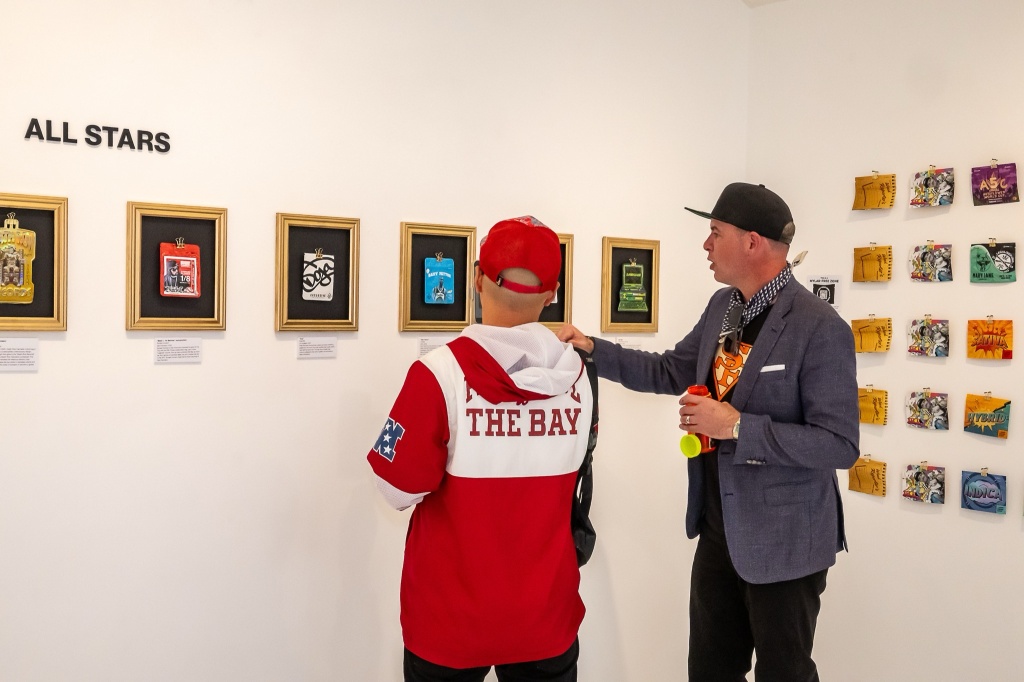
The evolution of the show comes in its increased curation. Downs said they are searching for the greatest bags of all time, the Mickey Mantle of baseball cards, the Mona Lisa of the art world.
“This year we have stepped out of our role of just showing [visitors] a little bit and have taken the opportunity to use our main wall as, ‘These are the best drawings. These are the best food bags. These are the best vehicles on bags,” Lister said.
An additional element of this April’s show will allow visitors to flip through all the bags in the curated collection, explore bags from another noted collection, and help discover the art’s origin stories by contributing their own community knowledge.
“Something that is a mystery about many of these bags is the source from which they came,” Lister said. “It’s like, ‘Was this an artist? Was this a team of designers? Was this an AI bag?’ You know, like, ‘What did we feed this idea to?’”
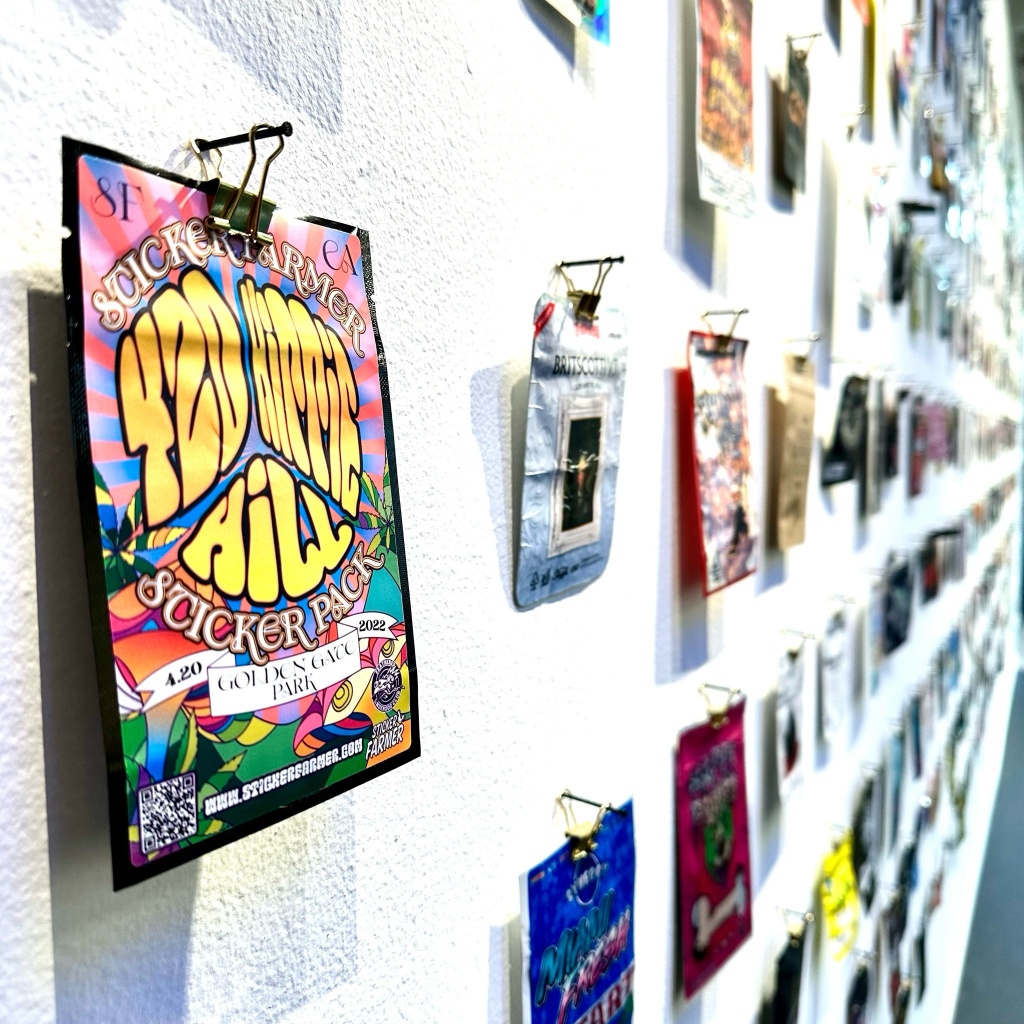
Get to the Bag also dives even deeper into weed nerd realms when it comes to looking at cannabis packaging as art by featuring a section of die-cut bags, which are sliced into unique shapes. Downs called die-cut selections the “most expressive subgenre of this art form.”
“A lot of these die-cuts don’t really work that well as a marijuana package device,” he said. “If you wanted to be avant-garde about it, you can make completely non-functional die cut bags that are impossible to actually use as a bag, but they’re great to communicate your art design.”
RELATED: Weed might be secretly changing your taste buds – here’s how
A longtime artist, Lister said the reaction from the art world at large when he talks about the show has been mostly dismissive. He said the interest in the show comes from cannabis smokers who saw a pretty bag, smoked it, enjoyed the effects, and couldn’t bear to give the packaging away.
Downs said that many people have contributed their bags to the collection. He sees the display as a mirror into the psyche of cannabis culture and a way to highlight the democratization of design in the modern world.
“The whole world is this petri dish of competing designs, competing symbols, competing memes, like viral ideas,” Downs said. “The most fit memes, the most fit ideas, the most fit designs, are replicating rapidly and being taken up by others and remixed and shared. And you see that in the show.”