


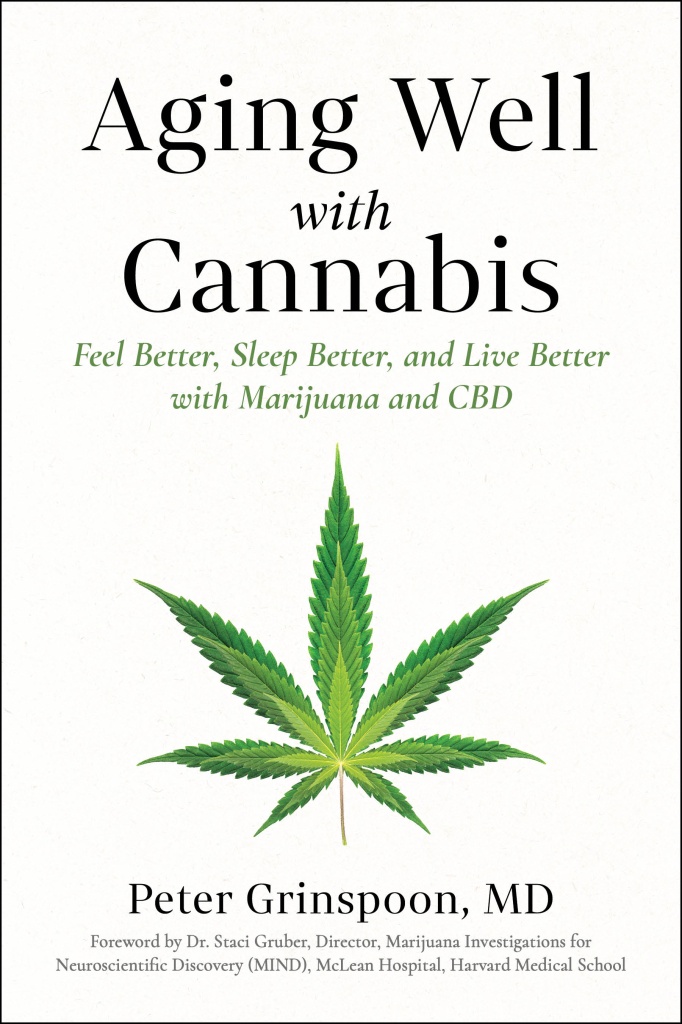
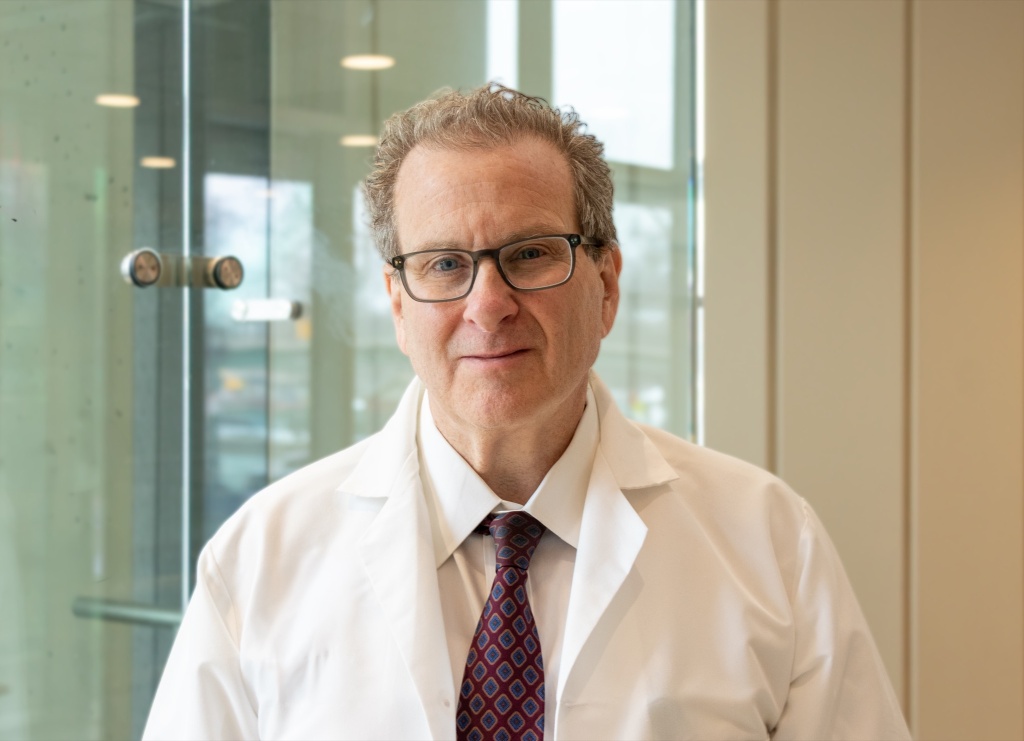
When it comes to seniors utilizing cannabis for medical purposes, Dr. Peter Grinspoon believes it’s important to focus on the modality and the milligram count. Grinspoon, a board-certified addiction specialist at Massachusetts General Hospital and an instructor in medicine at Harvard Medical School, has a new book focused on the plant’s rapidly growing consumer base. Aging Well With Cannabis is designed to provide guidance on how to use cannabis to alleviate common negative symptoms associated with aging.
“I feel like education helps undermine stigma,” Grinspoon said of writing the book. “Doctors are coming around. They’re generally starting to meet patients where they are. At this point, 93 percent of Americans support legal access to medical marijuana.”
RELATED: Cannabis in assisted living: What seniors and families need to know
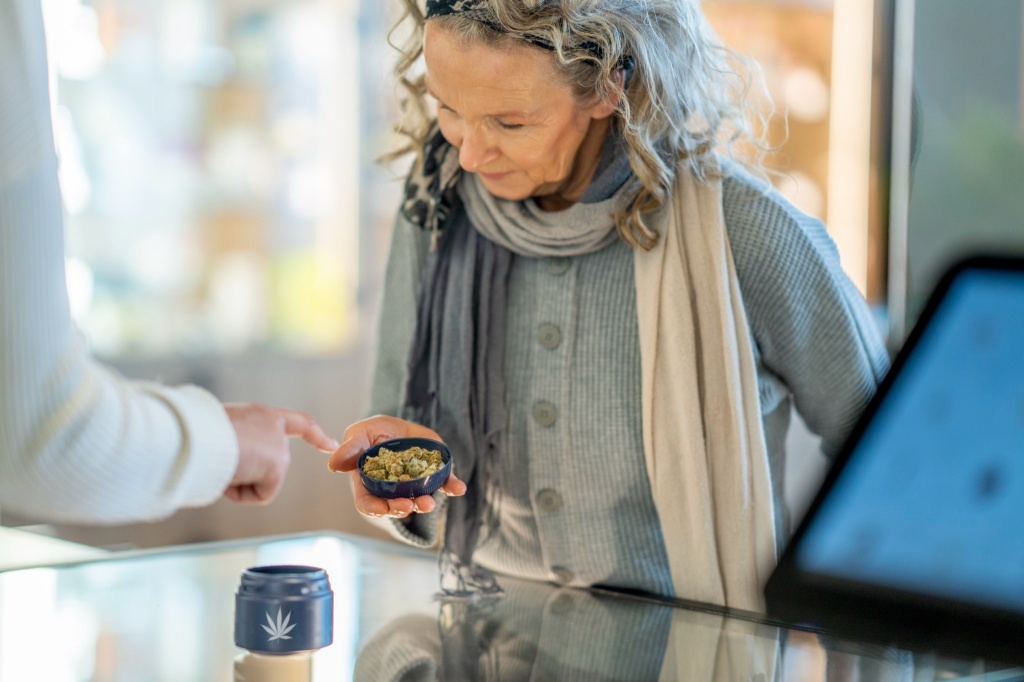
Seniors are increasingly turning to cannabis for medical use. According to research reported by the AARP, one in five people over 50 who participated in a 2024 poll conducted by the University of Michigan said they had used cannabis at least once in the previous year. The most common reason that poll respondents said they tried cannabis was for relaxation, while also citing pain relief, help with sleep, and improved mental health.
Start Low, Go Slow
Within his new book, Grinspoon looks at both the risks and benefits of cannabis and provides instructions for effective and safe use. In terms of his recommendations for the best ways to consume cannabis, Grinspoon advised against smoking and said the best method to discover what dose works best is to “start low and go slow.”
“Any kind of smoke is unhealthy for your lungs and potentially for your heart,” Grinspoon said. “We start people gently with a low dose, usually with a tincture or a small dose of an edible. And also, the topicals are very low-hanging fruit, because those are very safe.”
RELATED: Seniors are already using cannabis – policy needs to catch up
Vape pens, he said, haven’t really been studied, and so it’s unknown how safe they are.
“At the same time, I’m sympathetic to someone who is on chemotherapy, and they feel nausea coming on right away,” Grinspoon said. “They can’t take an edible and wait for an hour. They’re going to throw it up. They might want to take a discrete puff and immediately get relief from this awful experience of chemotherapy-induced nausea and vomiting. Or someone with a migraine, when you have a migraine, you don’t absorb medications very well.”
Getting beyond the delivery method, Grinspoon said the most important piece of information to focus on with cannabis is the dose of THC, followed by the ratio of cannabinoids.
“We usually start with just CBD that helps people with anxiety, insomnia, chronic pain.” Grinspoon said. “If that’s not strong enough, we might switch. Add in some THC.”
RELATED: Free CBD for seniors? What the Medicare proposal actually says
It’s important for seniors to pay attention to the level of THC present in cannabis flowers as THC levels are higher than they used to be, he said.
“I mean, I’ve definitely been at parties where once it got legalized, for example, in Massachusetts, Baby Boomers would take the same three bong hits they took in college, but they hadn’t done it for 30 years, and when they took it in college, 30 years ago, it was four percent THC, and now it’s 20 percent THC, so it’s five times stronger,” Grinspoon said.
“So instead of taking their three bong hits, they’re actually taking 15 bong hits, and they freak out because it’s way too high a dose. So I think the high levels of THC are an unfortunate invitation to over consumption, and that people do have to be really, really careful.”
Paging Dr. Grinspoon
Grinspoon is the son of noted cannabis researcher and author Lester Grinspoon, a Harvard psychiatrist who became a celebrated advocate for reforming marijuana laws. Lester Grinspoon wrote the seminal book, Marihuana Reconsidered.
“My dad’s writings inspired me,” Peter Grinspoon writes on his blog. “My dad was challenging the way things were, especially the War on Drugs, right when it was gearing up, as well as the political and intellectual complicity of the medical establishment.”
RELATED: How to have “the talk” with your parents about using cannabis
A personal connection to a person who utilized cannabis for medical purposes also steered Peter Grinspoon’s career path.
“My brother Danny died of childhood leukemia when I was eight, and my parents procured cannabis for him illegally in the 1970s because they were tired of watching [him] suffer, and the cannabis made a drastic impact on his life,” Grinspoon said.
“During his chemotherapy, he was able to eat. It helps with the nausea and the vomiting. He was able to maintain weight, and he was able to participate in life, and for the last year of his life, it was drastic how much the cannabis helped him, and I witnessed all that. So I always knew from an early age that cannabis can be a helpful medicine.”