


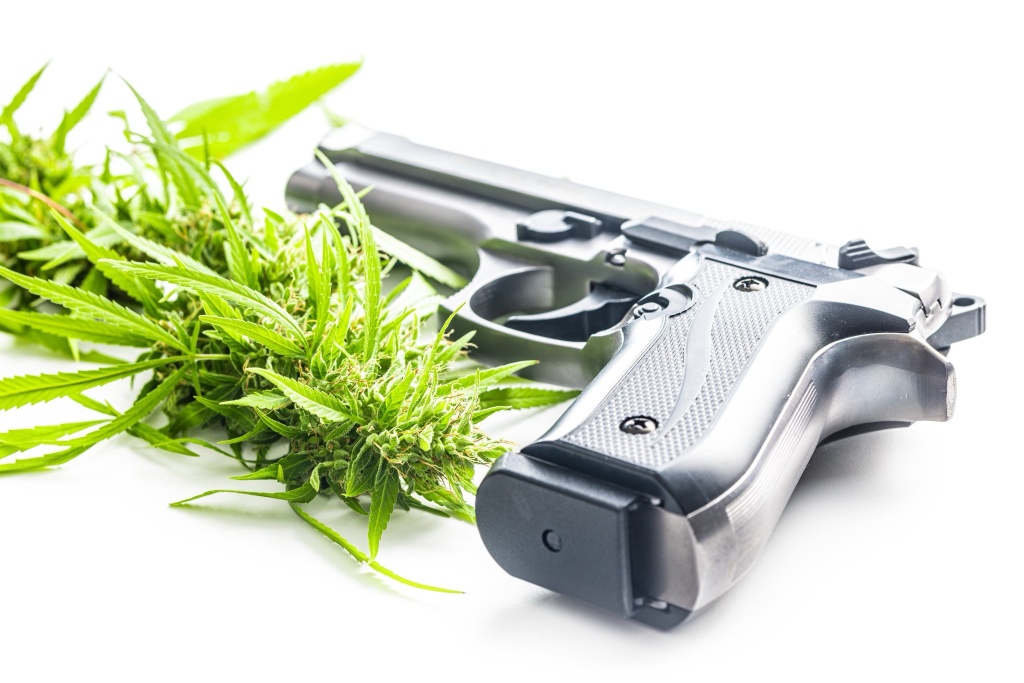
As questions continue to emerge around the intersection of cannabis and guns following recent U.S. Supreme Court arguments, legal professionals say the issue remains complex and highly dependent on how existing federal law is interpreted. The issue has drawn increased attention as both legal cannabis use and firearm ownership have expanded across the United States. Today, most Americans live in states where cannabis is legal in some form, even as federal law continues to treat cannabis differently.
RELATED: Cannabis rescheduling faces fresh doubts in new federal report
Jeff Toppel, an attorney at Bianchi & Brandt who advises clients on regulatory and compliance issues, says one of the most misunderstood concepts involves what is known as “constructive possession,” particularly in situations involving spouses or shared households.
“Constructive possession isn’t about who owns the firearm,” Toppel explained. “The legal question often comes down to who has access to it. If someone who uses cannabis can reasonably access the weapon, a prosecutor could argue that possession exists even if that person is not the registered owner.”
Because of that interpretation under current federal law, Toppel notes that households should be mindful about how firearms and cannabis are stored.
“Under the law as it currently stands, the most prudent step is separation,” Toppel said. “If firearms are stored in a safe, the cannabis user should not have access to that safe, and cannabis products should be stored separately as well. The goal is to eliminate any argument that the cannabis user had access to the firearm.”
RELATED: Federal hemp ban fails to get Farm Bill lifeline
While the Supreme Court’s future ruling could provide additional clarity, Toppel cautions that the legal landscape remains unsettled and that individuals should be careful about assuming how the law will ultimately evolve.
Since laws and enforcement practices can vary significantly by jurisdiction, individuals should consult with a qualified attorney in their state to understand how these issues may apply to their specific circumstances.
Disclaimer: The information provided here is for general informational purposes only and does not constitute legal advice. The comments above reflect general observations about existing legal interpretations and should not be relied upon as guidance for any specific legal matter. Individuals should seek advice from a licensed attorney in their jurisdiction for legal guidance.
*This article was submitted by an unpaid guest contributor. The opinions or statements within do not necessarily reflect those of GreenState or HNP. The author is solely responsible for the content.