



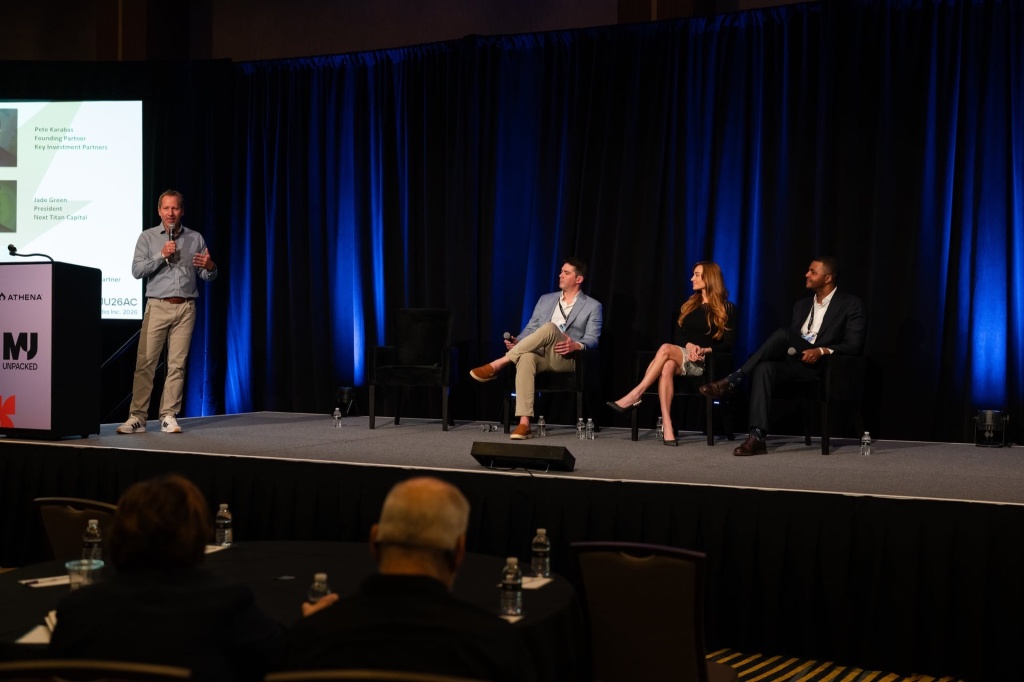
MJ Unpacked recently returned to Atlantic City, New Jersey, where one question kept coming up: Is there investor interest? Investors took the stage to share where they see opportunity, what they are waiting for, and how operators can best position themselves as the legal landscape continues to shift.
During the “Ask the Investors” panel led by Patrick Rea, Managing Director of Poseidon Asset Management, operators sought answers on when capital might start flowing again and whether federal rescheduling has meaningfully shifted investor appetite.
The consensus: cannabis remains a hyper-fragmented industry that is still difficult to scale, which continues to keep many investors cautious as they wait for broader federal reform. But panelists agreed that rescheduling has started to move the needle, particularly by drawing more attention from outside investors who may have previously stayed on the sidelines.
RELATED: Pot stocks on uneven ground after Schedule III move—here’s why
Where’s the Money?
Jade Green, President of Next Titan Capital, said one of the biggest mistakes operators make is misunderstanding what kind of capital their business is actually suited for.
Is your business in a position to take on debt with high interest rates, or would an equity partnership make more sense? Green stressed that while more lenders, including banks and credit unions, are entering the cannabis space, debt remains expensive and difficult to secure.
“If your company has enough cash flow to service debt, that market is opening up,” Green explained. But most lenders still require real estate, strong sponsorship, personal guarantees, or existing cash flow. For startups without assets or operating history, qualifying can be extremely difficult.
That reality is why many founders still begin with family-and-friends capital or strategic partnerships.
Green pointed to creative deal structures as one way to bridge early-stage gaps. For example, an experienced license holder might partner with a property owner who contributes real estate in exchange for equity. That property can then help unlock mortgage-based financing to build out operations.
The money may be out there, but founders need to understand exactly what problem they are solving and what type of capital best fits that need.
Why Investors Are Still Cautious
Pete Karabas, Founding Partner at Key Investment Partners, reminded attendees that while cannabis has attracted substantial investment over the last five years, many of those investments have yet to produce meaningful returns.
As a result, much of that capital remains tied up rather than recycled into new opportunities.
Green added that mainstream institutional interest is still limited. Her firm is not yet seeing major movement from traditional U.S. investors, though Canadian and other international cannabis operators are actively exploring U.S. market entry.
RELATED: Federal lawsuit targets Trump cannabis rescheduling order
For now, Big Alcohol, Big Tobacco, and Big Pharma remain on the sidelines.
“I still think we need a little bit more reform and a little bit more of the complexity to be solved on the compliance and on the supply chain side before we see those big guys come in,” Green said.
According to both Green and Karabas, these industries are unlikely to move aggressively until there is clearer federal reform, stronger interstate scalability, and less state-by-state fragmentation. Still, with shifting consumer behavior around alcohol and tobacco, large corporate players are paying close attention so they are positioned when conditions improve.
How Brands Stack Up
Karabas said his firm will first look at top-performing brands with meaningful upside, but revenue alone is not enough. The bigger question is whether a company has proven it can scale successfully across multiple states.
Can the business replicate its model? Can it produce a consistent product across markets? Is there a repeatable operational system behind the brand?
Those are the signals investors are looking for.
Carter Lewis, Founder of Aquinnah Capital, urged founders to think even further ahead by building with a specific exit strategy in mind. Companies that understand who their likely future acquirers are and what those buyers value may be better positioned to attract future capital.
Does Hemp Have a Plan B?
What happens to hemp-derived beverage companies if the regulatory ground shifts beneath them? Green’s observation that hemp operators are eyeing marijuana acquisitions was echoed and expanded on during the panel, where investors explored what would happen if the beverage sector were forced to pivot.
Patrick Rea posed a hypothetical scenario: What if a successful hemp-derived beverage company, heavily concentrated in just a few states, decided to pursue medical marijuana processing licenses as a hedge against future regulatory disruption?
Pete Karabas acknowledged that while he may not initially back a company built on that exact strategy because of the risk, the reality is that many hemp operators may eventually have little choice.
“If your back’s against the wall,” pursuing cannabis licensure may become less of an option and more of a necessary survival plan if hemp regulations tighten or carveouts disappear.
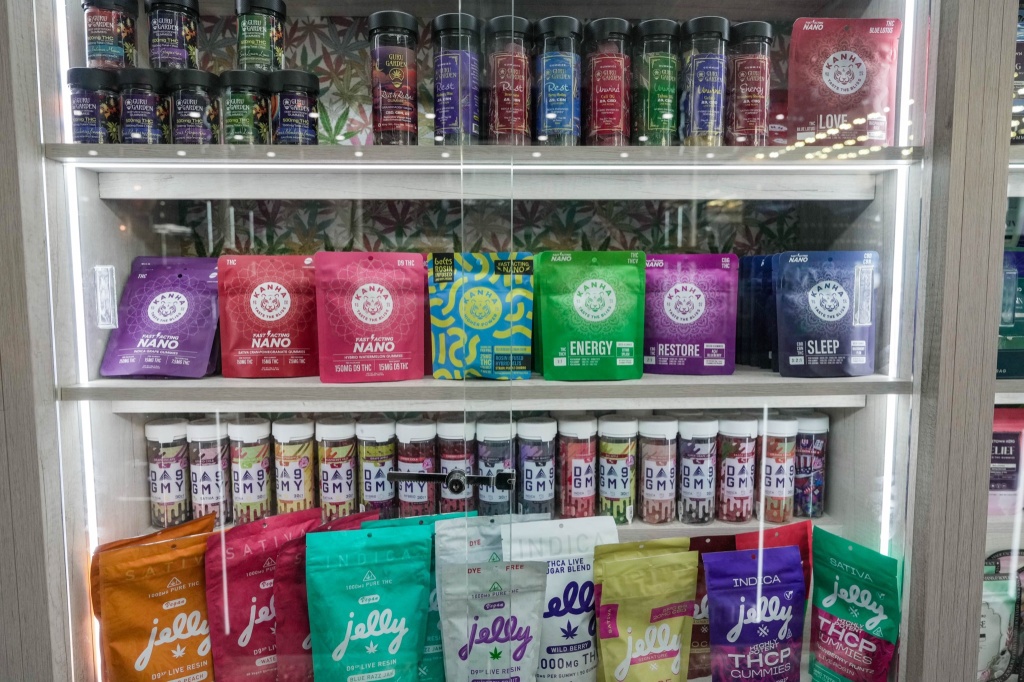
Carter Lewis argued that a profitable hemp operator with strong brand traction may actually become a more compelling investment if it successfully transitions into a licensed marijuana model. Rather than disappearing in a worst-case hemp crackdown, these companies could potentially de-risk by translating an already proven consumer brand into a more federally aligned or state-protected system.
Rea also highlighted dual licensure as a potentially major unlock, particularly if states ease barriers between medical and adult-use markets. In many markets, adult-use operators remain excluded from the tax advantages available to medical businesses. Expanding dual licensure could give existing operators a pathway to medical participation, potentially reducing 280E tax burdens while creating a more profitable operational model.
Protecting the Brand Before the Boom
Jessica Gonzalez, Associate Attorney at Rudick Law Group, added another strategic approach during MJ Unpacked’s “Brand Licensing and the Path to State-by-State Growth” panel, where she outlined a legal and branding hedge for hemp beverage companies navigating uncertainty.
Rather than waiting for intoxicating hemp regulations to potentially tighten, Gonzalez said she is advising some clients to proactively launch CBD beverage versions of their brands and continue building consumer awareness while the broader legal framework evolves.
Gonzalez also urged brands preparing to scale, license, or eventually capitalize on broader reform to get an intellectual property strategy in order.
RELATED: DEA opens cannabis registration, but key questions remain
As investor panels examined who is most likely to attract capital, Gonzalez focused on what may ultimately become one of a company’s most valuable appreciating assets: its trademark portfolio. Before brands get excited about entering new states or licensing deals, they need to ensure that what they are licensing is actually protected, she advised.
Many cannabis operators still rely primarily on common law trademarks, which may work locally but often do little to protect a business as it expands across state lines. Gonzalez encouraged founders to think beyond plant-touching products alone and to build trademark portfolios around adjacent goods, services, and brand infrastructure that may qualify for broader protections under current laws.
That includes logos, creative assets, websites, formulations, trade secrets, and other intellectual property that can grow in value over time, unlike facilities or equipment that may depreciate.
The investors in the room may still be waiting for clearer federal rules before deploying capital at scale. But cannabis and hemp operators are doing what they have always done, adapting to fragmented rules and finding ways to work within the system they have, rather than the one they hope is coming.
*This article was submitted by an unpaid guest contributor. The opinions or statements within do not necessarily reflect those of GreenState or HNP. The author is solely responsible for the content.