


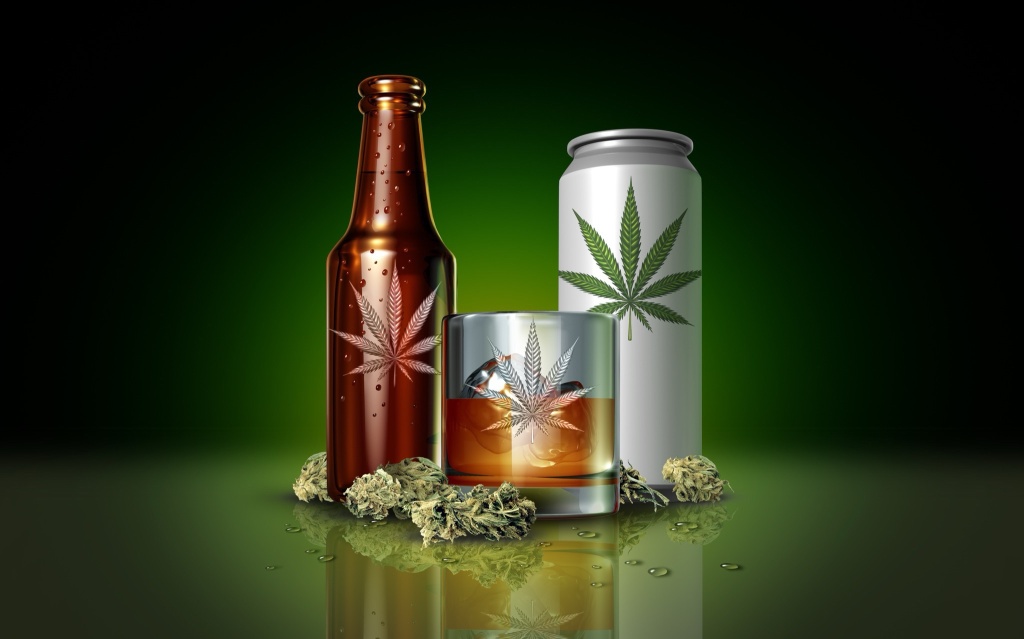
While Congress just voted to end the longest government shutdown in US history, one unintended consequence of that vote was a new federal definition of hemp that could result in a ban on most products. In the aftermath of the congressional vote to ban hemp-derived THC, lawmakers in Ohio, Florida, and Illinois are resuming efforts to ban hemp-derived THC under state law, and major businesses are putting the brakes on selling hemp products.
RELATED: These states want to make weed illegal again
Now, many are wondering, can the most popular market segment, THC drinks, survive the ban? And if they do, will it be at the expense of the rest of the hemp industry?
Alcohol As a Model
Jake Bullock, the CEO and co-founder of popular THC drink company Cann, is bullish on the future of hemp drinks.
“This isn’t a ban — it’s a one-year shot clock to finally get the rules we’ve always wanted,” said Bullock, adding, “our vision has been to sell Cann alongside alcohol wherever it’s sold.”
Bullock looks to the past to inform the future, adding, “Alcohol has been doing this for nearly a century, and we should leverage their rules as a model for these adult beverages, to create smart, sensible rules.”

Bullock isn’t alone; even Matt Huffman, the Republican state House Speaker for Ohio, admits that hemp-derived THC beverages are likely to remain available at gas stations.
“Are we going to go around and start cuffing 17-year-old clerks at gas stations?” Huffman rhetorically asked ABC-5, adding, “No, but we’ve got to get this thing in shape.”
Not everyone is as optimistic. Mike Simpson, the co-founder of Lovewell Farms, Rhode Island’s only USDA organic hemp farm, says this new ban “might be the final straw.” Compared to others, Simpson faces additional burdens as a USDA organic farm, which means fewer options for purchasing compliant seeds. Like Cann’s Bullock, Simpson looks to the alcohol industry as a model: “We regulate alcohol. We should do the same with hemp.”
Friend or Foe?
While some hemp executives hope their products can join alcohol on the shelves, it remains an open question: Do alcohol companies want that? Constellation Brands, a multi-billion-dollar alcohol company, owns a large percentage of the Canadian cannabis company Canopy Growth, and its competitor, Pernod Ricard, is reportedly in talks with a rival company. Numerous other alcohol companies have licensing agreements or some other involvement in the cannabis or hemp industries.
RELATED: ‘One community’: weed and alcohol align at Denver conference
According to Democratic Senator Dick Durbin, the hemp language was added to the government shutdown bill by Republican Senator Mitch McConnell. News pundit Chris Cuomo speculated that Senator McConnell added this language to the shutdown bill to “please his bourbon pushing buddies.”
While it isn’t clear if Senator McConnell was recently lobbied by the alcohol industry, he has received $889,254 across his entire career from alcohol interests, but only $12,800 during the 2024 election cycle. That roughly $890,000 in donations is much less than that of Democratic politicians such as Joe Biden, Kamala Harris, Barack Obama, and Hillary Clinton. Beyond the donations, Senator McConnell has an established history of working with the alcohol industry, including receiving the Kentucky Distillers Association “100 Proof” Award.
Moving Towards a One-Plant Future
Jonathan Miller, general counsel of the US Hemp Roundtable, told GreenState the trade organization is working with Senator Ron Wyden and Representative Morgan Griffith on a sensible federal hemp policy that would supersede a ban.
“We are working very hard to get legislation passed that will reverse it and replace it with a strong regulatory approach,” Miller said. He added the Roundtable is also working with prominent hemp beverage businesses who “agree it isn’t about carving out one form factor.”
Jim Higdon is the chief communications officer of Cornbread Hemp and is working with Miller on legislation.
“In this time of crisis, it’s important for all stakeholders in hemp and marijuana to find common ground and stick together,” he told GreenState. “It’s important for the hemp beverage community to see value in the hemp dietary supplement community, and vice versa.”
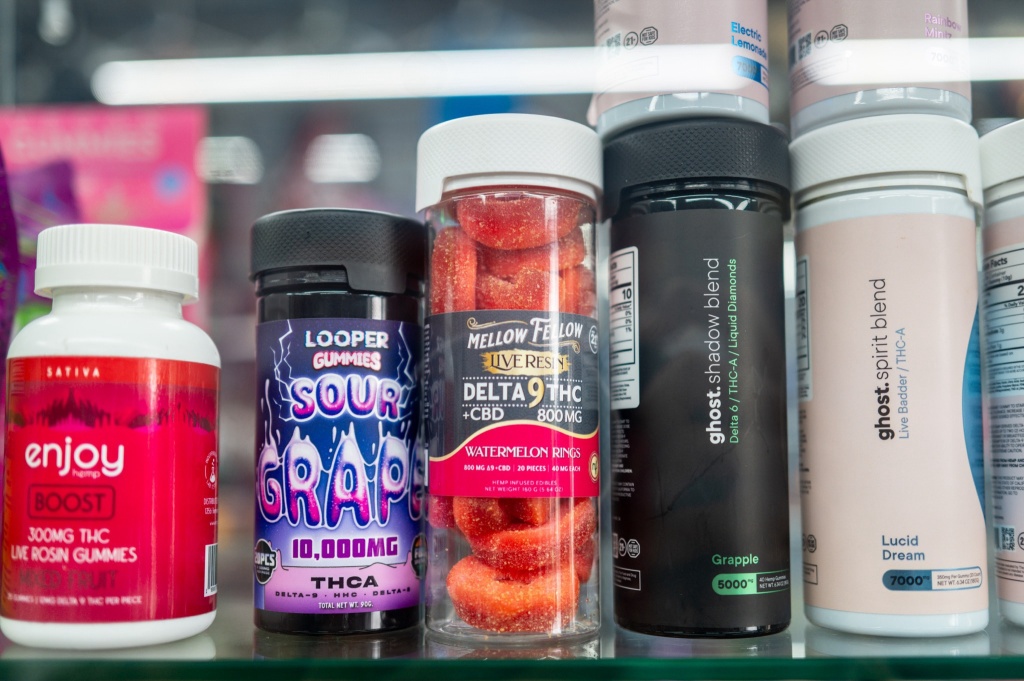
Rod Kight, the founder and principal of Kight Law Office PC, anticipates anti-hemp lobbying to employ a “divide and conquer” strategy and also urges unity in this critical moment.
“Hemp beverages are a strong and growing sector within the hemp industry,” Kight told GreenState, adding, “It would be dangerous and short-sighted for one sector of the hemp industry, such as the beverage sector, to promote its interests over the interests of the other sectors.”
RELATED: Hemp fallout and rescheduling uncertainty dominate D.C. cannabis conference
While Steve DeAngelo is best known for founding Harborside, he opened the hemp store Ecolution years earlier. The latest chapter of DeAngelo’s cannabis activism is focused on spreading the ethos of the One Plant Alliance (OPA) to create a unified cannabinoid market for cannabis and hemp under one common-sense regulatory framework.
“Consumers want safety, affordability, and access,” DeAngelo told GreenState. “The goal of the OPA is to unite all sectors into one industry, under the three golden pillars of testing, labeling, and age gating.” The “three golden pillars” is a concept that was first pitched by Kight, but the OPA wants to see it become law.
“People talk about gas station weed,” DeAngelo mused, “but gas station alcohol has been a reality for a long time, and it is a much more harmful substance.”
Like many, DeAngelo is skeptical of the alcohol industry’s motives.
“I am not opposed to them being at the table, but creating a carve-out for Big Alcohol to join this market that they had no hand in creating would not be fair at all.”
A Final Sip
What is clear about the new federal definition of hemp is that it could be an extinction-level event for the industry. What is less clear is whether the hemp industry remains united, or whether the politics of “divide and conquer” manage to separate the hemp drinks sector from the rest of the industry.