


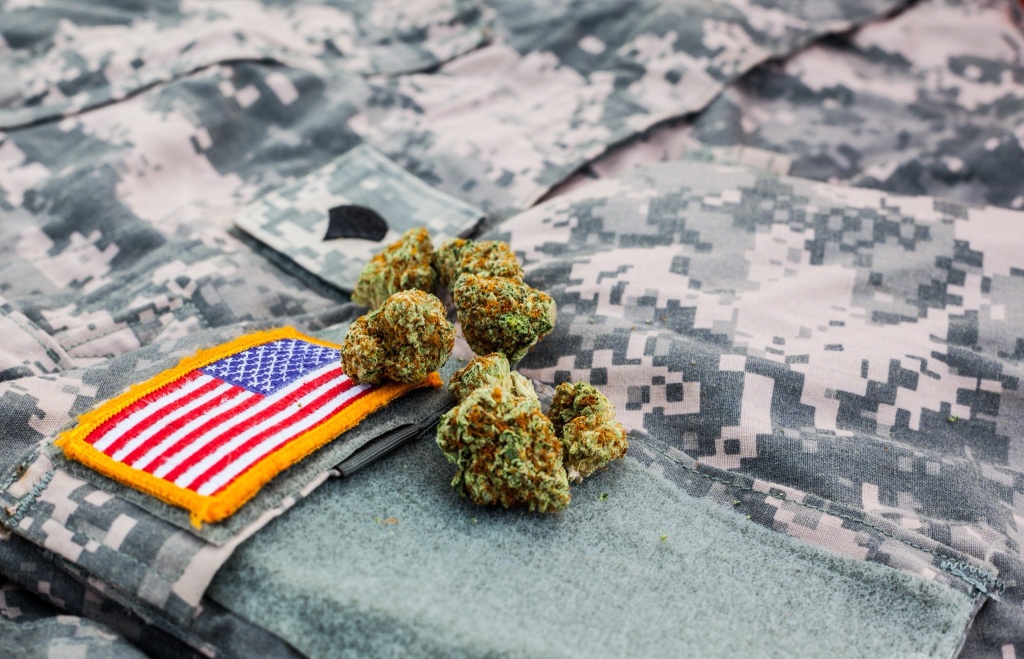
Cannabis occupies a precarious position in the U.S. military. Service members are prohibited from using cannabis, and violations can result in a dishonorable discharge. Veterans only recently gained access to medical marijuana in legal states, though barriers remain. Now, the Army is updating its cannabis policy in an effort to boost recruitment.
RELATED: Gen Z’s weed habits are flipping the cannabis industry
The new guidance removes barriers for applicants with a single conviction for marijuana possession or drug paraphernalia. Previously, Army recruits with this type of record needed a Pentagon waiver to proceed. They would also be subject to a two-year wait before enlistment.
The military does give new recruits a second chance if they test positive for cannabis during their initial physical. However, if they fail again after the 90-day waiting period, they will not be able to enlist.
The Army is also raising its maximum age for recruits from 35 to 42. Other updates expand acceptable documents for verifying Social Security numbers and extend authority to approve major misconduct waivers to more officials.
RELATED: Supreme Court to decide if cannabis users can legally own guns
The changes appear to be in response to declining recruitment. The Army has missed recruitment goals by significant margins in recent years, and fewer young people qualify for service overall.
The military has likely been mulling updating its enlistment policies as marijuana use becomes more mainstream. Most Americans live in a place with some form of legal cannabis, and a 2021 study showed that recruits who have a history of minor marijuana use perform no worse than non-pot-using peers.
While cannabis, including intoxicating hemp, remains banned in the military, the Army’s new recruitment policy signals a shift as federal reform inches closer.
